Wallops pad 2 second launch site
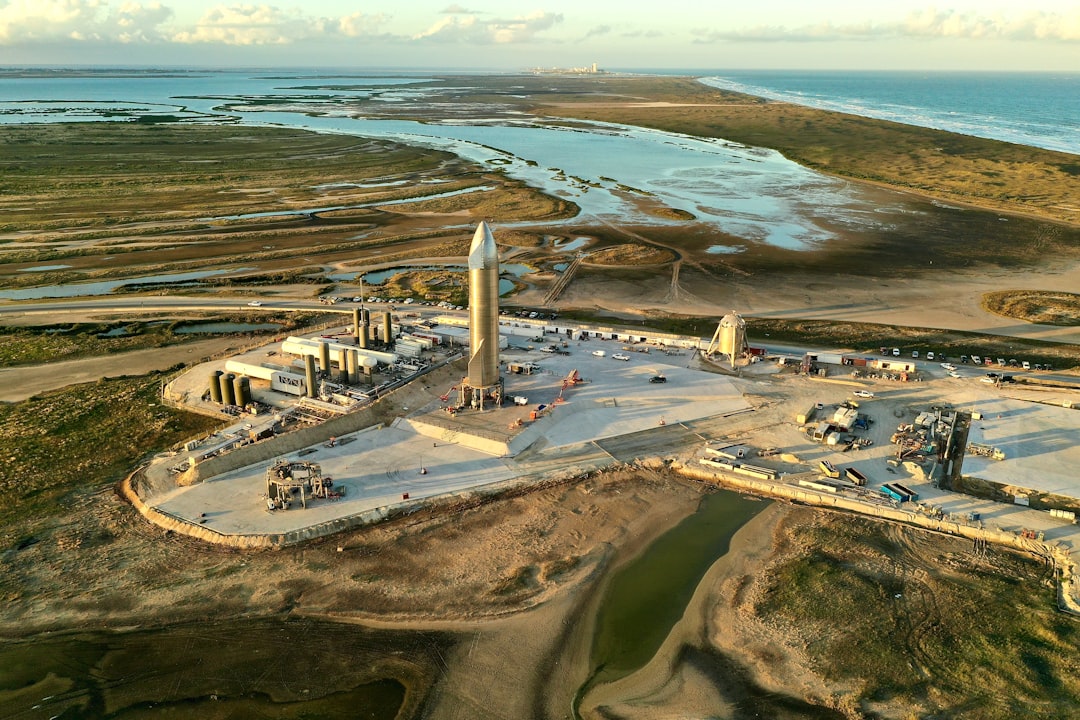
The key word here is agencies. Unlike Rocket Lab’s original New Zealand pad, which flew early commercial missions and gained cult status for its rapid pace, Wallops Pad 2 was built from the ground up specifically to serve U.S. government customers. The National Reconnaissance Office, the Space Force, NASA, and the Department of Defense all have high-value small satellites that need to get to orbit fast and on schedule. Until now, those agencies often had to ride along on larger rockets, wait for rare rideshare slots, or rely on foreign launch sites. That inefficiency is over.
Rocket Lab’s Electron rocket, the workhorse of the small satellite industry, can lift up to 300 kilograms to low Earth orbit. That may sound tiny compared to a Falcon Heavy or a Vulcan Centaur, but the realities of modern space operations are that most payloads are shrinking in mass and growing in capability. A single reconnaissance satellite or a communications node the size of a mini-fridge can now do what a bus-sized satellite did twenty years ago. Pad 2 is designed to turn that smaller size into a strategic advantage. The agencies using it are not launching for fun; they are launching for persistent coverage, rapid revisit rates, and resilient architectures that can survive a conflict.
What makes Wallops Pad 2 different from other small launch attempts is that it is not a startup’s gamble in a desert or a converted oil rig. It is a permanent, hardened facility inside a federal launch range. That means agencies get the same security, telemetry, and tracking infrastructure that the big Atlas and Delta rockets enjoyed. They also get schedule priority. When the Space Force needs a satellite up in weeks instead of months, Electron can roll out, fuel up, and fly. The pad is designed for a 24-hour turnaround. That is not just a marketing number; it is a warfighting capability.
The site itself sits on the Atlantic coast, which gives it access to a wide range of orbital inclinations. Polar orbits, sun-synchronous orbits, and low-inclination orbits are all reachable without overflying populated areas. That matters for classified payloads. If you are running a sensitive mission for the NRO, you do not want your rocket’s trajectory tracked by foreign ships or reported on public flight-tracking apps. Wallops handles that with restricted airspace and secure operations.
For the casual space enthusiast, the real takeaway is that small satellites are no longer a side show. They are the backbone of modern U.S. space architecture. The agencies that control communications, navigation, intelligence, and missile warning all rely on constellations of small, cheap, replaceable satellites. Wallops Pad 2 is the dedicated launch pad for that architecture. It is not about tourism or Mars dreams. It is about operational capability delivered on a weekly basis.
Rocket Lab has already flown multiple missions from Pad 2, including the first fully classified payload for the National Reconnaissance Office in 2024. That flight demonstrated that a small commercial rocket could handle the exacting requirements of America’s most sensitive spy agency. Since then, the cadence has increased. The company has publicly stated that it aims for a rate of one launch per week from Wallops by 2026. If that sounds ambitious, remember that Electron has already proven it can fly at that pace from New Zealand. The difference now is that every one of those launches serves U.S. national interests directly.
There is also the question of competition. Other companies like Relativity Space and Firefly Aerospace are building their own pads and rockets for the small satellite market. But none of them yet have the operational track record or the agency relationships that Rocket Lab has built. The fact that Pad 2 is sitting inside a NASA facility, with NASA range safety and NASA infrastructure, gives it a legitimacy that a private site cannot match. Agencies trust agencies.
Looking ahead, Wallops Pad 2 will also host Rocket Lab’s larger Neutron rocket, currently in development. Neutron will be able to lift up to 8,000 kilograms, putting it squarely in the medium-lift category. That means the same pad that launches today’s microsatellites will eventually support crewed capsule launches and heavy constellation replenishment. For a site that was originally mocked as a “small rocket pad,” that is a hell of a future.
So if you are watching a Rocket Lab livestream and you see the blue Virginia sky behind the vehicle, know that you are watching more than a launch. You are watching the U.S. government shift its entire space strategy onto smaller, faster, more resilient shoulders. Wallops Pad 2 is the front door for that transformation. And it is wide open.
Space News
Latest Articles
New rockets, upcoming launches, and the stories shaping humanity's push off this planet. No astronomy degree required.