Watch auctions and the flown piece premium
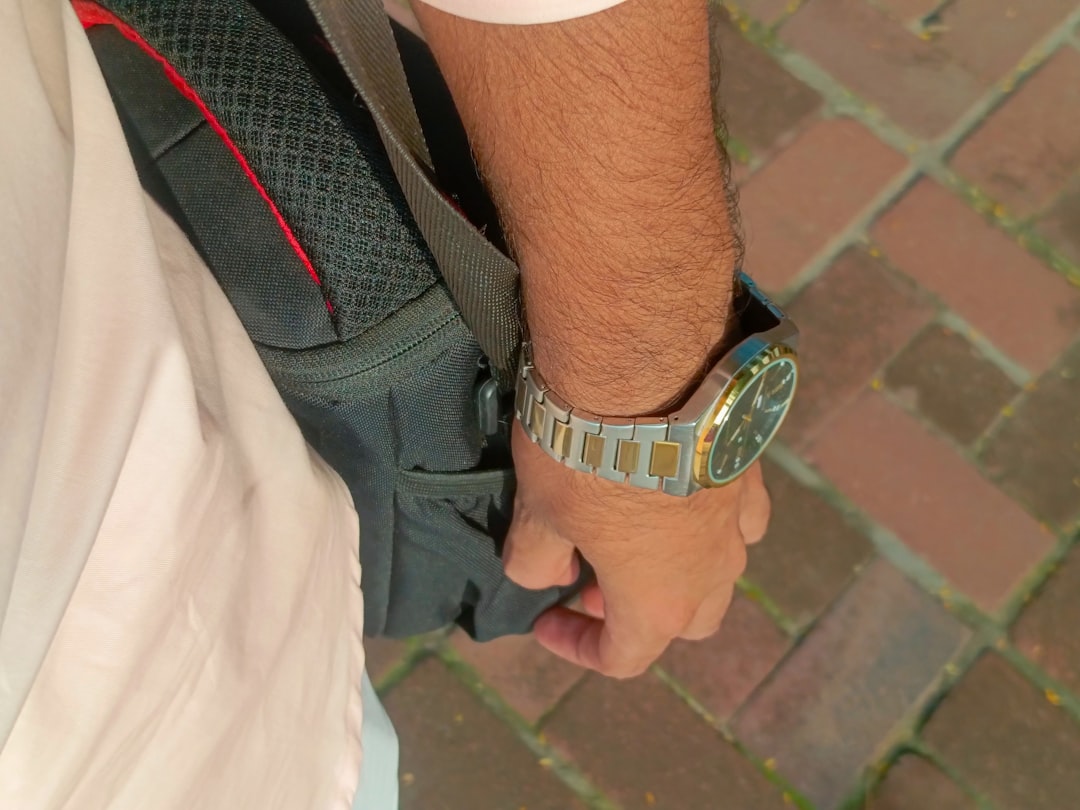
The term “flown piece premium” refers to the additional value tacked onto a watch because it has been in space. This is not a subtle bump. A standard, non-flown version of a Speedmaster Professional might trade for a few thousand dollars on the grey market. A Speedmaster that actually went up on a NASA mission, with documented provenance, can easily clear six figures at auction. A Bulova that spent time on the Moon? The same. A Gruen or a Citizen that rode a Mercury or Gemini capsule? Forget about it. The premium exists because the watch did not just sit in a display case or on a celebrity wrist. It was strapped to a human being riding a controlled explosion through the vacuum of space, subjected to thermal swings of hundreds of degrees, microgravity, cosmic radiation, and the chaos of re-entry. That is not a story. That is a stress test.
For the American man in his twenties, this is the part that matters. You are surrounded by gear that is marketed as “tactical,” “extreme,” or “mission-ready.” Most of it has never been within a hundred miles of a real mission. A flown watch is the opposite. It is not marketing. It was built to a spec that could not afford failure. The Omega Speedmaster did not become the Moonwatch because of an ad campaign. It got the nod after NASA put it through a battery of tests that destroyed practically every other watch on the market. Heat. Cold. Shock. Vibration. Vacuum. It passed. Then it went to the Moon. Every flown Speedmaster is a six-digit trophy because it survived the test that broke its competitors. The premium is the price of proof.
But the premium is not just about survival. It is about the specific environment the watch endured. A diver’s watch is tested to depth. A pilot’s watch is tested to altitude. A flown watch is tested to space. The conditions are fundamentally different. In space, there is no gravity to keep the balance wheel oscillating properly. Lubricants evaporate or freeze. The absence of air can cause the crystal to pop off or the crown to unscrew. Mechanical watches are not designed for this. The fact that a few of them worked anyway is a freak of engineering. The few that actually did the job are rare, and rarity drives price. There are only a handful of flown watches from the Mercury, Gemini, Apollo, and early Shuttle programs. The supply is essentially fixed and shrinking. Collectors are not buying a watch. They are buying a physical artifact of a moment when human survival depended on a piece of gear that cost a few hundred dollars.
Let us be clear about what you are actually paying for if you ever find yourself with the bankroll to chase one of these. You are not paying for the brand. You are not paying for the condition, because most flown watches are beat to hell. The hands are faded. The crystals are scratched. The crowns are worn. The lume is dust. You are paying for the paper trail. A flown piece without documentation is just a beat-up vintage watch. The premium exists only if you can prove it went up. That proof usually comes in the form of NASA transfer documents, logs, or signed letters from the astronaut. Without that, you have a story. With it, you have a piece of history that cannot be faked because the registry of flown watches is small and heavily scrutinized.
For SpacePilgrim readers, the takeaway is simple. If you are serious about gear that actually matters, the flown watch is the ultimate benchmark. It is not about telling time. It is about knowing that your wrist has been somewhere only a few hundred humans have ever been. The premium is not speculation. It is the market recognizing that some gear is irreplaceable. Every Space Shuttle flight produced a handful of personal watches that went along for the ride. Every mission to the Moon produced even fewer. Those watches are not investments. They are trophies from the edge of human performance. And that edge is where the real premium lives.
Space News
Latest Articles
New rockets, upcoming launches, and the stories shaping humanity's push off this planet. No astronomy degree required.