Water recovery and the closed-loop system
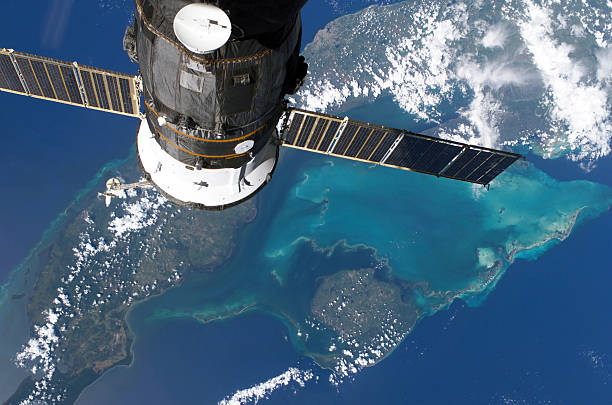
First, the cold math. A gallon of water weighs over eight pounds. Launching it into orbit costs thousands of dollars per pound. A crew of four on the International Space Station needs about four gallons of water per day for drinking, hygiene, and food prep. That’s over thirty pounds of mass per day, every day. If you had to rocket that up from Earth, you’d go broke before the crew finished breakfast. So the only sane option is to capture, clean, and reuse every drop you already have. This is the closed-loop system—a technical term meaning nothing gets dumped overboard.
The heart of modern water recovery on the ISS is the Environmental Control and Life Support System, specifically the Water Recovery System. It does three things: capture humidity from the air, process urine, and recover water from hygiene waste. The air part is straightforward. Humans exhale water vapor and sweat it out through their skin. Condensers pull that moisture out of the cabin air, chill it, and collect liquid. That’s the easy job.
Urine is the hard part. Astronauts pee into a specially designed funnel that uses airflow to pull the liquid into a storage bag. That bag feeds into the Urine Processor Assembly. The urine is first treated with a chemical to prevent bacterial growth and then heated under low pressure to evaporate the water. The vapor is distilled, leaving behind a concentrated brine that gets dumped overboard or stored for later study. The distilled water is then mixed with the condensate from the air and sent through a series of filters and a catalytic reactor that blasts any remaining organic molecules with high temperature and oxygen. The result is water cleaner than most tap water on Earth. It tastes fine. Astronauts drink it every day. If they can choke it down in zero gravity with no privacy, you can handle a sip of recycled tap water on Earth.
But the closed-loop idea doesn’t stop at water. It extends to oxygen and carbon dioxide. The same system that recovers water also extracts oxygen from water via electrolysis. Electricity splits H2O into hydrogen and oxygen. The oxygen goes into the cabin air. The hydrogen is combined with carbon dioxide exhaled by the crew in a separate reactor to produce methane and more water. The water gets fed back into the electrolysis unit. The methane is vented overboard because it’s useless for breathing. So the system recycles nearly all the oxygen and water, but it still loses some mass—about half a pound per person per day. That waste has to be supplied by cargo resupply missions. For a long trip to Mars, where resupply isn’t possible, you’d need even better recovery rates.
Current technology recovers about ninety-three percent of water from urine and humidity. NASA wants to hit ninety-eight percent for deep space missions. That means squeezing every last molecule out of the brine instead of dumping it. Recent upgrades to the ISS system include a Brine Processor Assembly that dries out the urine waste using heat and vacuum, extracting the last few ounces of water. Every drop counts when you’re millions of miles from the nearest faucet.
The implications for your life as a space enthusiast are simple. These systems are not sci-fi. They are in orbit right now, humming away, turning sweat, piss, and steam into drinking water. They prove that humans can support themselves off Earth without a constant umbilical cord to the home planet. The same tech scales down for lunar bases or asteroid habitats. It also scales up: a closed-loop life support system for a Mars mission would be a larger, more redundant version of what’s on the ISS, with better recovery rates and fewer moving parts to break.
If you’re looking for a reason to bet on space colonization, start with the water recycler. It’s not glamorous. It doesn’t explode. But it’s the most critical piece of hardware between you and a slow death by dehydration. The future of life support is about closing the loop tighter and tighter until nothing is wasted. That’s engineering. That’s not dying.
Space News
Latest Articles
New rockets, upcoming launches, and the stories shaping humanity's push off this planet. No astronomy degree required.