Aluminum-lithium alloys and the shuttle external tank

Let’s cut the fluff. The Space Shuttle’s external tank was the only part of the vehicle that wasn’t reused. It launched, burned up in the atmosphere, and fell into the ocean. That means every pound of that tank was a one-time cost. And in the brutal economics of spaceflight, weight is money. The heavier the tank, the less payload the shuttle could carry to orbit. NASA needed to shed mass without sacrificing strength. That’s where aluminum-lithium came in.
Traditional aluminum alloys had been the workhorse of aerospace for decades. They’re strong, they’re light, and they’re familiar. But adding lithium to the mix changes the game. Lithium is the lightest metal on the periodic table. By blending just a few percent of lithium into the aluminum, you drop the density of the alloy by about 10%. That might not sound like much, but when you’re talking about a tank that weighed over 30 tons empty, a 10% weight savings is enormous. That’s thousands of pounds you can put into payload instead of structure.
The specific alloy used for the external tank was known as Al-Li 2090 and later variants like 2195. These weren’t just lighter; they were stiffer and stronger than the old 2219 aluminum that had been used on the earlier shuttle tanks. The material allowed engineers to reduce the tank wall thickness while still handling the insane pressures and cryogenic temperatures of liquid hydrogen and liquid oxygen. The external tank had to withstand the vacuum of space, the vibration of launch, and the thermal shock of being filled with -423°F liquid hydrogen. Aluminum-lithium handled it.
But here’s the thing about this material: it’s not easy to work with. Lithium is reactive. That means welding aluminum-lithium requires extremely tight control of the environment. Contamination could lead to cracking, and a crack in the external tank during launch was a death sentence for the crew. The tank had to be welded with specialized techniques, often in controlled atmospheres, and every joint was inspected with X-rays and ultrasonic testing. The tolerance for error was zero. And still, the tank performed flawlessly through over 130 launches after the switch to Al-Li on the Super Lightweight Tank in the late 1990s.
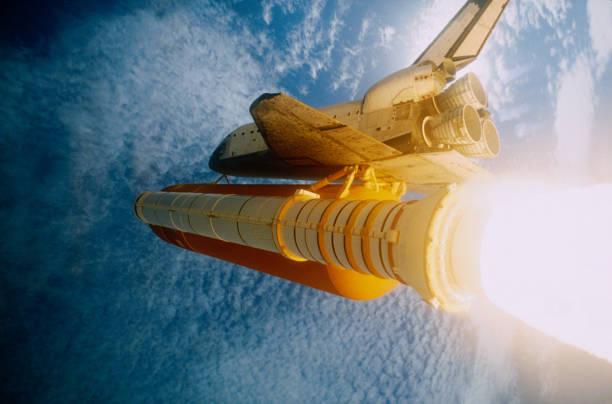
The abuse these tanks took is worth thinking about. At launch, the external tank was subjected to over 7 million pounds of thrust from the main engines and the solid rocket boosters. It had to carry nearly 500,000 gallons of cryogenic propellant—a temperature swing of over 500 degrees from fill to flight. And all of that stress was concentrated in a structure that was, at its core, a giant thin-walled can made of an advanced alloy that your average mechanic had never heard of. That’s the reality of spacecraft materials. They’re pushed to the edge of physics every single time.
Why should you care? Because the technology developed for the shuttle’s external tank didn’t die with the program. Aluminum-lithium alloys are now standard on the latest generation of rockets. The Falcon 9 uses Al-Li in its fuel tanks. The Space Launch System—NASA’s next big rocket—uses Al-Li for its core stage. The lessons learned from that orange tank about welding, stress analysis, and thermal management are directly informing the vehicles that will take us back to the Moon and beyond.
So the next time you see a photo of the Space Shuttle lifting off, look past the orbiter. Look at that big orange cylinder. That tank was a masterpiece of practical engineering. It wasn’t glamorous. It didn’t have wings or heat shields. But it was built from a material that represented a real technological bet—a bet that paid off in every single launch. Aluminum-lithium alloys are not a flashy topic, but they are the kind of quiet, brutal efficiency that actually gets things into orbit. And for anyone following the future of space travel, understanding that material is understanding how we push weight, cost, and limits to get off this rock.
Space News
Latest Articles
New rockets, upcoming launches, and the stories shaping humanity's push off this planet. No astronomy degree required.