Baryon acoustic oscillations and the sound wave imprint
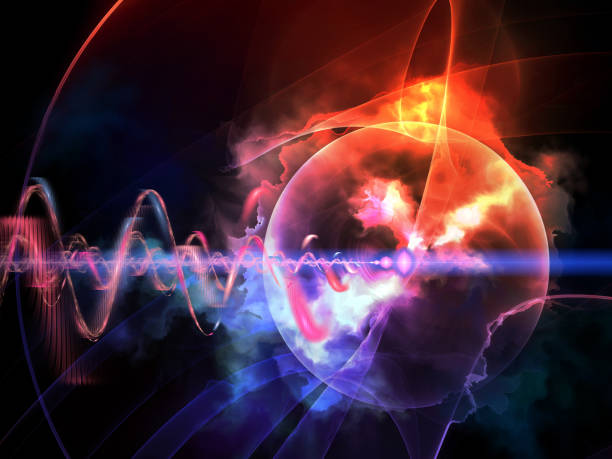
Let’s cut through the jargon. Baryons are just ordinary matter—the protons and neutrons that make up stars, planets, and you. In the early universe, this matter was mixed with light in a hot, opaque fog. Gravity tried to pull clumps of baryons together, but the intense pressure from radiation pushed them apart. This push-pull created oscillations, like sound waves traveling through air. Think of it as the universe ringing like a bell. These waves moved at about half the speed of light, compressing and rarefying matter as they went.
Then the universe cooled enough for electrons to bind with protons, forming neutral hydrogen. This event, called recombination, made the universe transparent. The photons that had been trapped suddenly streamed free—that’s the cosmic microwave background radiation we observe today. But the sound waves didn’t just vanish. They froze in place, leaving a subtle pattern: a preferred scale of separation between galaxies. The distance that those sound waves traveled before recombination became a cosmic ruler. That ruler is roughly 150 megaparsecs long, or about 490 million light-years.
So why should you care about a 490-million-light-year ruler? Because it lets us measure the expansion history of the universe with brutal precision. Here’s how it works. Astronomers map the positions of hundreds of thousands of galaxies. Because those early sound waves seeded matter, galaxies today are slightly more likely to be separated by that standard 490-million-light-year distance than by any other distance. It’s a statistical excess, not something you can see with the naked eye, but it’s real. By measuring how that scale changes with redshift—which is how much the universe has stretched since the light left those galaxies—we can track how fast the universe has expanded over time.
This is where deep space becomes a laboratory for the biggest questions in physics. BAO measurements are one of the cleanest ways to study dark energy, the mysterious force that is accelerating the expansion of the universe. If dark energy behaves like a cosmological constant, as Einstein’s theory predicts, the BAO ruler should expand in a specific way. If dark energy changes over time or has some exotic behavior, the ruler will show a different pattern. Surveys like the Dark Energy Spectroscopic Instrument and the upcoming Roman Space Telescope are using BAOs to test these ideas. They’re not just mapping galaxies; they’re probing the fundamental nature of reality.
The practical takeaway is that baryon acoustic oscillations turn the large-scale structure of the universe into a precision instrument. Instead of guessing how fast space is stretching, we can measure it. This matters for space travel and exploration too. Understanding the expansion rate of the universe affects how we interpret distances to faraway objects, how we calibrate telescopes, and even how we think about the long-term fate of everything. If you’re following the future of space travel, you need to know that every deep-field image or galaxy survey relies on this underlying framework. The pattern left by those ancient sound waves is the scaffolding upon which the modern universe was built.
In the end, BAOs are a humbling reminder. The same forces that shaped the first light and matter in the cosmos continue to shape our view of deep space today. When you look at a map of galaxies stretching across billions of light-years, you’re seeing the echo of sound waves from a time before any star existed. That imprint connects the earliest moments of the universe to the future of exploration. It’s not just ancient history—it’s the ruler we use to navigate the unknown.
Space News
Latest Articles
New rockets, upcoming launches, and the stories shaping humanity's push off this planet. No astronomy degree required.