Photon satellite bus and Venus mission
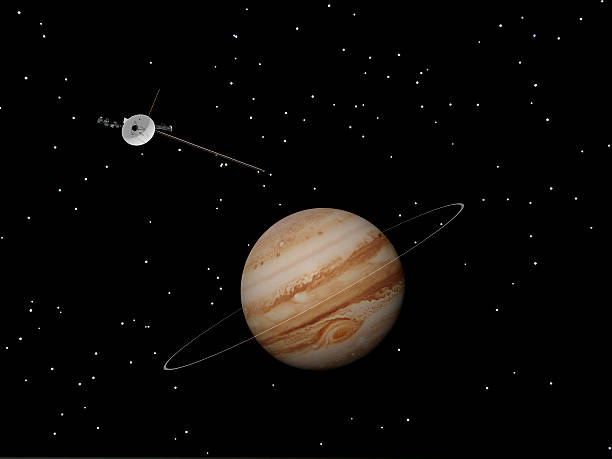
Let’s cut the romanticism. Space is hard, expensive, and unforgiving. For decades, only a handful of agencies—NASA, ESA, Roscosmos, JAXA—had the deep pockets and institutional patience to build probes that could survive the journey to another planet. The Photon satellite bus changes that equation. It’s not a one-off custom spacecraft. It’s a standardized, off-the-shelf platform that can be configured for everything from Earth orbit to deep space. Rocket Lab has essentially done for satellites what Henry Ford did for cars: made them reliable, repeatable, and relatively affordable. For a small space agency in, say, Norway or Singapore, this is a game-changer. Instead of spending a decade designing a bespoke probe from scratch, they can buy a Photon, bolt on their instruments, and hitch a ride on a Rocket Lab launch. That collapses timelines from decades to years and budgets from billions to tens of millions.
Nowhere is this more audacious than in the Venus mission. The Venus Life Finder mission, a partnership between Rocket Lab and a team of scientists from MIT and elsewhere, is not a NASA flagship. It’s a small, focused probe that will dive into the Venusian atmosphere using a Photon bus as the carrier and entry vehicle. The goal is simple: look for signs of life in the clouds where phosphine was tentatively detected. The mission is scheduled for launch as early as 2025. Let that sink in. A private company, using a satellite bus designed for Earth communications, is going to drop a probe into the atmosphere of a planet where surface temperatures melt lead. The Photon bus will do the heavy lifting—power, propulsion, communications—and then release a small entry probe. For a casual space enthusiast, this is the equivalent of watching a startup take on an oil supermajor in their own backyard.
What does this mean for space agencies? It forces them to rethink their relationship with industry. Agencies that once saw private companies as mere launch providers now have to treat them as partners, or worse, competitors. Rocket Lab is not just selling rides; they’re selling complete missions. The Photon bus is a turnkey interplanetary platform. An agency like the Italian Space Agency or the Indian Space Research Organisation could, in theory, buy a Photon, add their own scientific payload, and have a Venus orbiter or Mars flyby in a fraction of the usual cost. The barrier to entry for planetary science just dropped from a chasm to a ditch. That’s uncomfortable for the old guard, but it’s fantastic for the pace of discovery.
The Photon bus itself is the key. It’s a three-axis stabilized spacecraft with electric propulsion, high-bandwidth communication systems, and enough power for demanding instruments. It’s already flown successful missions in low Earth orbit. For deep space, Rocket Lab adapts it with a larger propulsion system and radiation-hardened electronics. The Venus mission version will carry a single instrument: an autofluorescing nephelometer that can detect organic compounds in the cloud droplets. It’s lean, mean, and purpose-built. No frills, no redundant science teams, no congressional oversight. Just results.
For American men in their twenties who grew up watching The Martian or playing Kerbal Space Program, this is the future you’ve been waiting for. The days when space exploration was a spectator sport reserved for taxpayer-funded aristocracies are ending. Rocket Lab’s Photon bus is a tool that democratizes access to other worlds. If a small company from California can low-key plan a Venus mission, imagine what a coalition of small agencies could do with a dozen Photons. We’re not talking about flags and footprints anymore. We’re talking about cheap, repeatable science that forces the big agencies to move faster or get left behind.
The Venus mission is a proof of concept. If it succeeds, every small space agency on Earth will be on the phone with Rocket Lab. If it fails, they’ll learn and try again because the cost is low enough to absorb. That’s the beauty of the Photon bus. It makes failure affordable. And in space, that’s the only way you eventually get to success.
Space News
Latest Articles
New rockets, upcoming launches, and the stories shaping humanity's push off this planet. No astronomy degree required.