The Martian dichotomy and why it matters
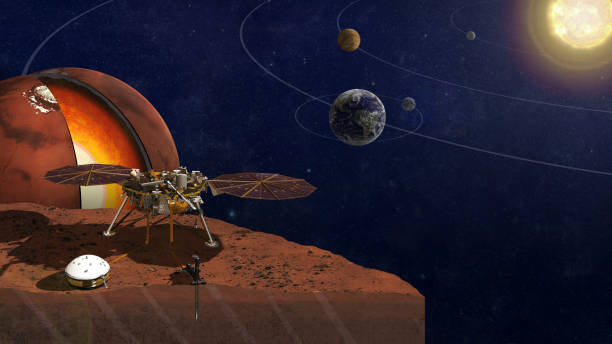
The dichotomy is a massive elevation and crustal difference that splits Mars nearly in half along the equator. The southern highlands sit roughly four to six kilometers higher than the northern lowlands. The crust in the north is thinner, younger, and smoother. The south is thicker, older, and beaten to hell by impacts. We do not know exactly why this happened. The leading theories involve a giant ancient impact that scraped off the northern crust, or some kind of internal mantle convection that flipped the planet’s topography early in its history. Either way, the result is a planet with two completely different environments sitting right next to each other. And that matters for every mission being planned right now.
Let’s start with the obvious mission: searching for life. If you want to find evidence that Mars once had living things, you look for water. Ancient water. Long-lasting, stable water. The southern highlands are old. They have river valleys, lake beds, and delta deposits that date back over three and a half billion years. That’s the sweet spot for primitive life. The Perseverance rover is sitting in Jezero Crater right now, drilling into sediment that was once a lake. Jezero sits on the boundary of the dichotomy. It’s not a coincidence. Mission planners chose that spot because it combines ancient highland runoff with the flat, lowland basin where water would have pooled. That boundary is the most promising real estate on Mars for finding fossils or chemical traces of biology. If you want to answer whether we were ever alone in this solar system, you don’t wander into the northern plains. You go to the line where the dichotomy meets the lowlands.
But the dichotomy matters even more for human missions. The northern lowlands are flat. That sounds boring, but for landing a spacecraft carrying humans, boring is beautiful. Flat terrain means fewer boulders, fewer cliffs, fewer surprises. The Viking landers, Pathfinder, Phoenix, and InSight all landed in the northern lowlands or near the boundary. They landed there because it’s safer. When NASA or SpaceX eventually puts people on the ground, they need a landing zone with low risk. The northern lowlands offer that. They also offer something else: ice. Radar data from orbiters like Mars Reconnaissance Orbiter shows that the northern plains are loaded with subsurface water ice. Not just seasonal frost, but massive sheets of frozen water just a meter or two under the dust. For a human base, that’s liquid oxygen, drinking water, and radiation shielding all in one convenient package. You don’t have to drill into hard rock. You dig a hole in the dirt and you have ice. The dichotomy put that ice there because the lowlands are younger and have had less time to lose their volatiles to space.
Then there’s the energy problem. Solar power works great on Mars as long as you don’t have dust storms blocking the sun every few weeks. The dichotomy influences weather patterns. The northern lowlands, particularly around the equator, get more consistent sunlight and fewer global dust storms than the southern highlands. If you are building a permanent settlement, you want predictable power. The dichotomy gives you that.
And let’s not ignore the long game. If humans ever want to terraform Mars, the dichotomy is the reason it might even be possible. The northern lowlands sit at a lower elevation. That means if you release greenhouse gases or melt the polar caps, the thicker atmosphere will settle in the north first. You could create a habitable zone in the northern hemisphere while the south remains cold and thin. The dichotomy essentially gives future engineers a natural boundary to work with. You don’t have to terraform the whole planet. You just have to fix half of it.
Every major decision about future Mars missions returns to this single geological split. Where do we land? Near the dichotomy boundary. Where do we look for life? Along the dichotomy. Where do we build our first base? In the northern lowlands, on the safe side of the dichotomy. The Martian dichotomy is not an academic curiosity. It is a practical, mission-defining reality. If you want to understand why we go where we go on Mars, stop looking at the red dust and start looking at the line that cuts the planet in half. That line is the reason you will see boots on the ground in your lifetime.
Space News
Latest Articles
New rockets, upcoming launches, and the stories shaping humanity's push off this planet. No astronomy degree required.