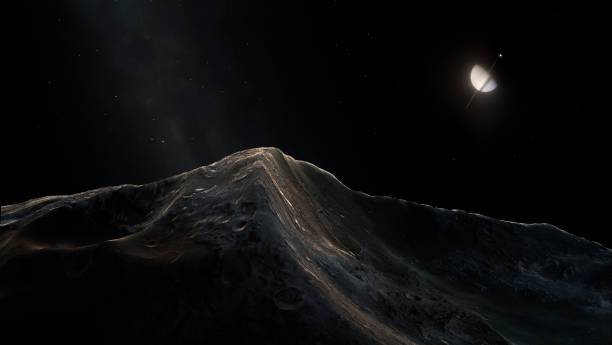
Ceres and the bright spots in Occator Crater
Occator Crater is about 57 miles wide and sits in Ceres’ northern hemisphere. When NASA’s Dawn mission arrived, it saw a bright, gleaming patch at the crater’s center. Multiple studies later confirmed these spots are not alien artifacts or exotic minerals. They are deposits of sodium carbonate and other salts, left behind when briny water erupted onto the surface and then sublimated away in the vacuum. Essentially, Occator is a cryovolcanic feature. Underneath its floor, there remains a reservoir of liquid brine—salty water mixed with dissolved minerals and possibly organic compounds. That’s not just a scientific curiosity. It is a direct indicator that Ceres holds the kind of resources that could support long-term human presence in the outer solar system.
For the casual space enthusiast, think of Occator Crater as a drillable water tank with added bonuses. Water is the single most valuable commodity beyond Earth. It provides drinking water, breathable oxygen, and hydrogen for rocket fuel. Ceres has an estimated 200 million cubic kilometers of water ice in its crust. Occator’s subsurface brine deposits prove that liquid water exists at depth, making extraction far more practical than mining frozen ice and melting it. The salts and carbonates in those bright spots are also useful. Sodium carbonate is used in glassmaking, detergents, and chemical processing. Ammonia-rich clays found elsewhere on Ceres could be processed into fertilizer for hydroponic farms. In the harsh economics of space, having a single destination that offers water, minerals, and organics is a game-changer.
The location of Ceres within the asteroid belt is another strategic advantage. It sits in a relatively stable orbit with a low delta-v for missions originating from Earth or Mars. That means getting there requires less fuel compared to reaching the outer planets or even the Moon in some scenarios. For a spacefaring future where cargo ships shuttle between planets, Ceres could serve as a refueling depot and a supply hub. The bright spots in Occator are essentially a signpost pointing to the most accessible liquid resource in the belt. If you’re planning a mining operation or a waystation, you set up camp next to the water. Occator is that spot.
There is also the question of habitability. While Ceres has no atmosphere to speak of and surface temperatures hover around minus 100 degrees Fahrenheit, the subsurface brine could harbor microbial life. That’s a wild card for any settlement plan. If we find indigenous life, even simple microbes, the legal and ethical frameworks for exploiting Ceres change dramatically. But from a purely resource perspective, the bright spots tell us that Ceres is not a dead, dry world. It is geologically active, chemically rich, and waiting for us to figure out how to tap it.
NASA’s Dawn mission ended in 2018, but the data it returned keeps yielding new insights. Recent studies using infrared spectroscopy have mapped the distribution of organics and carbonates across Occator’s floor. The more we look, the more we realize Ceres is a prototype for the kind of small, water-rich worlds that are abundant in the Kuiper Belt and beyond. Mastering resource extraction on Ceres would give us the tools to exploit similar bodies throughout the solar system.
So why should a guy in his twenties care about a crater with sparkly spots on a dwarf planet you’ve barely heard of? Because Ceres is the most realistic near-term destination for serious asteroid belt operations. The bright spots in Occator Crater are not a mystery anymore. They are a target. They represent water, minerals, and a stepping stone to the rest of the system. For anyone following the future of space travel, keep an eye on Ceres. That will be the first real hub in the belt, and Occator is where the action starts.
Space News
Latest Articles
New rockets, upcoming launches, and the stories shaping humanity's push off this planet. No astronomy degree required.