China’s Reusable Rockets Are the Real Space Race
Reusability matters because space is a transportation problem. Getting mass to orbit is still brutally expensive. A rocket that can land, refuel, and fly again cuts the cost per kilogram and slashes the time between launches. That is not a luxury. China plans megaconstellations like Guowang and Qianfan, with thousands of satellites for broadband, imaging, and military communications. Building them is one thing. Launching them on expendable rockets would be slow and wasteful. Reusable boosters turn a launch campaign into an assembly line.
China is not betting on one company. LandSpace is pushing its Zhuque-3, a methane-fueled rocket designed to land after delivering payloads. Galactic Energy has the Pallas-1. Space Pioneer is working on Tianlong-3. iSpace is developing Hyperbola-3. State-owned CASC is also testing reusable technology for future Long March variants. That list matters. It means China is not waiting for a single genius engineering team. It is building a competitive ecosystem where multiple teams fail, learn, and iterate at once.
The pace is the point. Chinese firms are testing vertical takeoff and landing hops, static-firing new engines, and breaking ground on launch pads at the same time. They are not waiting for a perfect design. They are building the factory, the supply chain, and the range operations in parallel. That compresses timelines. A rocket program that once took a decade can now move from PowerPoint to pad in a few years. The country treats launch as a strategic industry, not a science fair.
The method looks messy, but it is deliberate. Beijing sets priorities. Local governments offer land, cash, and launch sites. State labs share technology and talent. Private firms race to hit milestones. Military-civil fusion blurs the line between commercial and defense. Some rockets will blow up. Some companies will fold. That is acceptable if the surviving hardware works. China has shown it will tolerate public failures during testing as long as the program keeps moving. The country is not trying to win a beauty contest. It is trying to industrialize orbit.
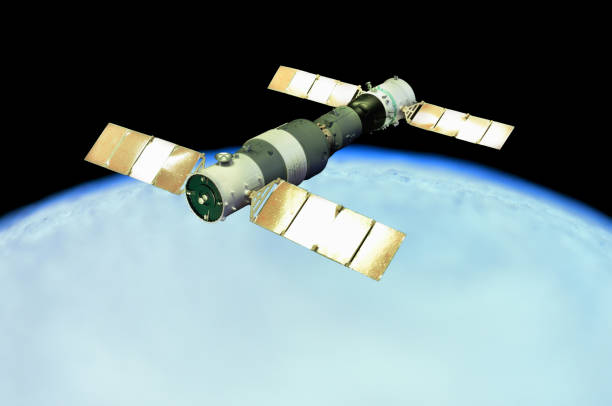
The strategic payoff is huge. Reusable rockets let China launch on demand. If a satellite breaks or an adversary takes one out, replacements can go up fast. That improves resilience for navigation, reconnaissance, early warning, and communications. It also supports military space planes, lunar missions, and a permanent presence around the Moon. Tiangong is already a working space station. A reusable launch system makes resupply and crew rotation easier. The same technology feeds plans for Mars sample return and deep-space probes. Space stops being a rare event and becomes routine infrastructure.
None of this is easy. Reusable rockets need engines that throttle deeply, restart reliably, and survive multiple flights. They need precision landing guidance, durable heat shields, lightweight tanks, and fast turnaround inspections. SpaceX made it look simple, but it took years of crashes and redesigns. China is behind on full reuse and launch cadence. It still relies on expendable Long March rockets for many critical missions. Export controls limit access to some advanced components. Turning a successful test hop into a weekly launch schedule is a brutal engineering and logistics problem.
Still, the direction is clear. Watch Zhuque-3, Tianlong-3, Pallas-1, and the reusable Long March work. Watch the new commercial spaceport on Hainan and the expansion at Wenchang. If China starts sticking landings and reusing boosters within the next few years, launch prices will fall. That will accelerate its satellite constellations, tighten its military space network, and make its lunar ambitions more practical. The United States still leads in reusable launch, but the lead is not permanent. China’s space machine is not a monolith. It is a state-guided, privately powered push toward cheap, repeatable access to orbit. That is the race that matters. Not flags and footprints. Cost, cadence, and capability.
Space News
Latest Articles
New rockets, upcoming launches, and the stories shaping humanity's push off this planet. No astronomy degree required.