Hubble servicing missions and the corrective optics
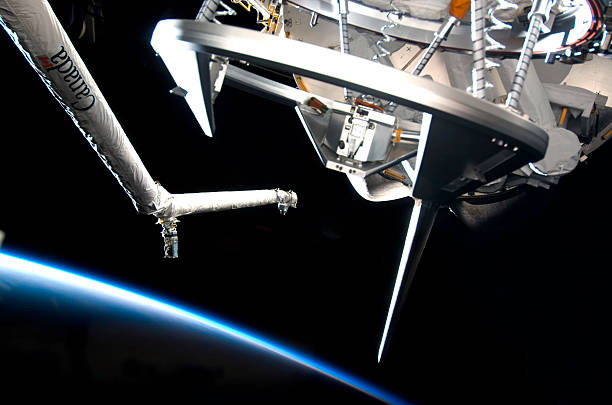
The first and most critical fix came on STS-61 in December 1993. Endeavour carried seven astronauts and a payload that looked like a giant contact lens case. Inside was the Corrective Optics Space Telescope Axial Replacement—COSTAR. Instead of replacing the 94.5-inch primary mirror, engineers designed a package of small mirrors that would intercept the light coming from the telescope’s instruments and correct the spherical aberration. It was like putting glasses on a blind giant. Astronauts Story Musgrave and Jeff Hoffman performed five spacewalks, the most ever for a single Shuttle mission. They swapped out the original High Speed Photometer for COSTAR and replaced Hubble’s solar arrays, which had been flapping from thermal stress. When the first sharp images came down—a star cluster in the constellation Monoceros—the room went silent. Then everyone cheered. Hubble was alive.
But maintaining Hubble wasn’t a one-and-done deal. The Shuttle flew four more servicing missions, each one pushing the limits of on-orbit repair. STS-82 in 1997 swapped out the Goddard High Resolution Spectrograph and the Faint Object Spectrograph for the Space Telescope Imaging Spectrograph and the Near Infrared Camera and Multi-Object Spectrometer. That gave Hubble infrared eyes. STS-103 in 1999 replaced all six gyroscopes, which had started failing one by one. Without those gyros, the telescope couldn’t point at anything. The crew also installed a new computer, a solid-state recorder, and fresh insulation. STS-109 in 2002 was the most ambitious yet. Astronauts installed the Advanced Camera for Surveys, which doubled Hubble’s field of view and made it ten times more sensitive. They also replaced the solar arrays again, this time with rigid panels that didn’t vibrate. Each mission was a high-stakes, spacewalk-heavy operation where a single mistake could kill the most famous telescope in history.
The final servicing mission, STS-125 in May 2009, was the emotional capstone. By then, Hubble was 19 years old and had been orbiting through radiation and micrometeoroids. The Shuttle Atlantis and its crew of seven spent five back-to-back spacewalks replacing the Science Instrument Command and Data Handling Unit, which had failed months earlier. They installed the Cosmic Origins Spectrograph and the Wide Field Camera 3. They also repaired two instruments that were never designed to be fixed on orbit—the Space Telescope Imaging Spectrograph and the Advanced Camera for Surveys. That meant opening up sealed electronics boxes, cutting into insulation, and replacing circuit boards while floating 350 miles above Earth. It was the equivalent of open-heart surgery on a satellite. When the mission ended, Hubble had a full suite of 21st-century instruments and a predicted lifespan well into the 2020s.
Why does any of this matter to you? Because the Shuttle’s ability to service Hubble proved that human spaceflight wasn’t just about prestige or flags. It was about maintenance. The Shuttle was the only vehicle ever built that could dock with a satellite, let astronauts out, and let them fix it with wrenches and screwdrivers. Without those five missions, Hubble would have been a $1.5 billion paperweight. Instead, it showed us galaxies 13.4 billion light-years away, confirmed dark energy exists, and provided the evidence for the accelerating expansion of the universe. Every time you see a Hubble image on a phone wallpaper or a documentary, remember that it got there because guys in bulky suits, riding a winged spacecraft that landed on a runway, caught up with a malfunctioning telescope and gave it glasses. No other nation, no other program, has ever pulled that off. It’s the greatest hits of the Space Shuttle, and Hubble is the headliner.
Space News
Latest Articles
New rockets, upcoming launches, and the stories shaping humanity's push off this planet. No astronomy degree required.