Cloud cities and the floating habitat concept
The concept of floating habitats has been floating around science fiction for decades, but real aerospace engineers have been quietly working on the math. And it checks out. About fifty kilometers above Venus’s surface, the atmospheric pressure is similar to Earth’s at sea level. The temperature hovers around a comfortable 77 degrees Fahrenheit. Gravity is about ninety percent of what you feel on Earth. And the air up there is thick enough to block cosmic radiation without requiring meters of regolith piled on your head. The catch? That breathable air is also what keeps you aloft. You don’t need rockets to hover on Venus—you need balloons filled with Earth-normal air, which is a lifting gas in the dense carbon dioxide atmosphere. That means a cloud city on Venus is not a fantasy. It’s an engineering problem with known solutions.
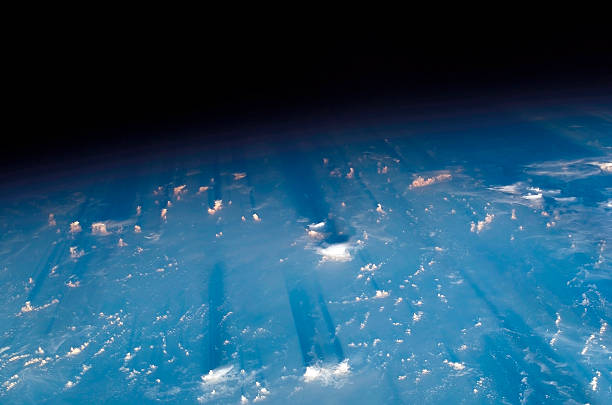
Let’s talk about what a destination like this would actually look like. Picture a massive envelope, something like a blimp but scaled up to city proportions. Below it hangs a habitable deck where people live, work, and grow food. The whole structure drifts with the wind currents at about the same altitude as Earth’s commercial jets. You’re not on the ground, you’re in the sky. The horizon curves beneath you, and the clouds are sulfurous and orange, but the view is unlike anything you’d see anywhere else in the solar system. There is no dust, no extreme seasons, no freezing nights. The sun rises and sets every fifty-six hours, but the temperature never wavers. It’s stable. Boring even. And that’s exactly what you want when your life depends on the integrity of a balloon envelope the size of a small town.
Why hasn’t this happened yet? Because it’s expensive, and nobody has a clear reason to go. But that’s changing. NASA’s HAVOC project—High Altitude Venus Operational Concept—has already sketched out a realistic mission architecture. The European Space Agency has floated similar ideas. Private companies are sniffing around because Venus’s upper atmosphere has resources. Carbon, nitrogen, sulfur. You can make plastics, fertilizers, even breathing gases from what’s floating around you. You don’t have to dig or drill. You just scoop. And because the gravity is close to Earth-normal, your body doesn’t waste away like it would on Mars or in orbit. You could live there for years without the bone loss and muscle atrophy that plague astronauts on the International Space Station.
As a destination, a Venus cloud city offers something no other planetary body can: proximity with protection. It takes about four months to get there with current technology, roughly the same as Mars. But once you arrive, you don’t need a spacesuit to walk around. You need a breathing mask and a jacket. The pressure is right. The temperature is right. You can step outside onto a balcony and feel the wind on your face without a helmet. That is a game-changer for tourism, for research stations, for anyone who wants to live off Earth without living in a tin can underground.
The objections usually come from people who haven’t thought it through. They say Venus is a hellhole with acid rain and crushing pressure. True—at the surface. But we don’t have to live there. We live in the sky. The acid rain doesn’t reach fifty kilometers up. The pressure is manageable. The only real engineering challenge is keeping the habitat aloft and protecting it from the small amount of sulfuric acid that does drift at that altitude. That’s a materials problem, and materials science has already given us solutions. Teflon-like coatings, advanced polymers, self-heating envelopes that prevent acid condensation. This is not speculative. This is existing tech waiting for a mission budget.
For American men in their twenties who grew up on space shuttles and Mars rovers, Venus is the forgotten twin that deserves a second look. It’s not glamorous. It’s not the frontier of a dusty desert. But it is the most habitable real estate in the solar system that doesn’t require living underground or inside a constant radiation field. Cloud cities are not a pipe dream. They are a logical next step. And if the space industry ever gets its priorities straight, the first humans to permanently live off Earth won’t be on Mars. They’ll be floating above Venus, sipping recycled water and looking down at a planet that tried to kill them but failed.
Space News
Latest Articles
New rockets, upcoming launches, and the stories shaping humanity's push off this planet. No astronomy degree required.