Commercial Space Stations Are the Next Logical Step for Orbital Habitats
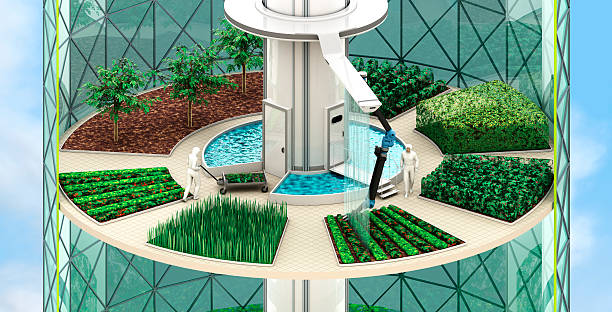
Companies like Axiom Space, Voyager Space, Blue Origin, Vast, and Sierra Space are already working on modules and free-flying stations. Axiom wants to attach its first modules to the ISS, then split off into its own station. Starlab and Orbital Reef are designed as independent commercial outposts. Haven-1 is aiming for a small, early station. These are not sci-fi drawings. They are engineering programs with contracts, deadlines, and investors. NASA’s Commercial LEO Destinations program is meant to keep American astronauts in orbit without owning the building.
The business case starts with microgravity. On Earth, gravity is always interfering. In orbit, you can grow protein crystals that are purer, make fiber optic cable that loses less signal, and test drugs in ways that are impossible on the ground. ZBLAN fiber optics, artificial organs, semiconductors, and advanced alloys all could benefit. Tourism gets headlines, but manufacturing and research pay the bills. NASA will be an anchor tenant. Other space agencies, pharmaceutical companies, and private labs will rent time. A station with multiple customers is more stable than one with a single government budget.
Costs are finally moving in the right direction. Reusable rockets like Falcon 9 cut launch prices. Starship and New Glenn could cut them further. Inflatable habitats from Sierra Space and others can launch compact and expand in orbit. Instead of one giant station assembled over decades, companies can build smaller modules and add them over time. The ISS cost roughly $150 billion. Commercial stations are aiming for a fraction of that. Private capital is doing what government budgets cannot always do: move fast, fail cheap, and iterate.
The technical problems are real. Radiation is the biggest long-term threat. Life support has to recycle air and water with almost perfect efficiency. Debris can punch holes. Docking systems need to be standardized so vehicles from different companies can connect. Power, thermal control, fire safety, and crew health all matter. Astronauts lose bone density and muscle. Their vision can change. Psychology in a confined metal tube for months is not easy. Commercial stations will rely on robotics, autonomous software, and ground control more than the ISS does. If something breaks, the crew needs redundant systems or a fast ride home.
The timeline is tight. Axiom’s modules are supposed to reach the ISS in the mid-2020s. Starlab and Orbital Reef are targeting the late 2020s or early 2030s. Vast and others want to launch small stations sooner. NASA wants no gap in low Earth orbit after the ISS retires. If there is a gap, China’s Tiangong could become the only operational station. That is a geopolitical problem. American allies and commercial partners need somewhere to go. A commercial station can host international astronauts, private researchers, and even filmmakers. More countries and companies get access, which makes orbit less of a club and more of an economy.
Jobs will not all be astronaut jobs. Orbital habitats need welders, electricians, software engineers, robotics operators, flight controllers, logistics experts, and medical staff. They need lawyers for contracts, insurers for risk, and marketers for tourism. If you are in your twenties, this is a field you can enter on the ground and move up. You do not need a PhD to help build a space station. You need a skill that works in a high-stakes environment. Coding, robotics, welding, and medicine all transfer. The first commercial stations will create a supply chain that looks like the aviation industry, not just a science program.
The business models will be mixed. A station might have a research park, a hotel module, a media studio, and a satellite servicing bay. It could refuel tugs, store cargo, and assemble larger structures. Orbital transfer vehicles could move payloads between orbits. Debris removal could become a paid service. Advertising and sports might seem silly, but they bring cash. The smart operators will stack revenue streams so no single customer can sink them.
There are risks. Companies can go bankrupt. Demand might be slower than hoped. Launch accidents happen. A debris cascade could make orbit unusable. But the direction is clear. NASA cannot afford another ISS. Private companies can build cheaper, faster, and with more flexibility. If Starship delivers on its promises, the math changes again. Orbital habitats become factories, labs, hotels, and depots. The commercial future of space is not on the Moon or Mars first. It is a few hundred miles up, where the first permanent businesses in orbit are being planned right now.
Space News
Latest Articles
New rockets, upcoming launches, and the stories shaping humanity's push off this planet. No astronomy degree required.