Hydroponics in Microgravity Is the Real Bottleneck for Space Food
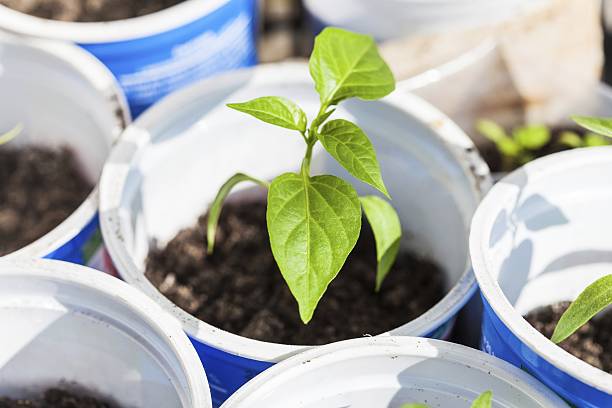
On Earth, hydroponics works because gravity pulls water down through the root zone. In microgravity, water doesn’t fall. It clings to surfaces, forms blobs, and can drown roots or starve them depending on where it goes. You can’t just water a tray and walk away. You need a system that pushes water and nutrients to every root at the right rate, then pulls the excess back before it smothers the plant. That means pumps, sensors, timers, and a lot of plumbing. It also means redundancy. If a pump dies on the ISS, you fix it or you lose the crop. On a Mars transfer, there is no hardware store.
NASA and private groups have tested several approaches. The most promising is nutrient film technique, where a thin film of water flows through a channel and roots sit in it. In microgravity, the film can climb walls and wrap around equipment. Capillary mats and porous tubes can help, but they clog. Aeroponics mists roots with nutrient solution, which solves some water problems but creates new ones. Mist droplets float. They can miss roots, coat sensors, and feed mold. Every method has a trade-off.
Light is another bottleneck. Plants need light for photosynthesis, and sunlight on Mars is weaker than on Earth. You can use LEDs, but they draw power. A small garden can run on a few hundred watts. A full diet for four people needs much more. That power has to come from solar panels or a nuclear reactor, and it competes with life support, communications, and heating. The numbers are not impossible, but they are tight. You don’t get to waste energy on a tomato that produces three fruits.
Then there is the food problem itself. Lettuce is great for morale and vitamins, but it is mostly water and fiber. It won’t keep a crew alive. To replace shipped food, you need calories and protein. That means potatoes, sweet potatoes, dwarf wheat, rice, soybeans, peanuts, and beans. You also need fats. Soy and peanuts help. You need variety so people don’t stop eating. A crew that refuses meals loses weight and performance. The menu has to be boring enough to grow efficiently but interesting enough to eat for years.
Microbes are the silent risk. In a closed loop, every surface is a habitat. Beneficial bacteria break down waste and feed plants, but pathogens can wipe out a crop. Fungi love humidity. Root rot can spread through a shared water system in days. Astronauts can’t spray everything with chemicals because the air and water are recycled. They need biological control, clean seeds, and constant monitoring. The same loop that saves mass can amplify a mistake.
Pollination is another issue. Some crops self-pollinate. Others need insects or wind. Bees are a bad idea in a sealed habitat. Small flies or robotic brushes might work. Hand pollination is possible, but it takes time. Time is the one resource astronauts can’t recycle.
The food problem isn’t just about growing plants. It’s about closing loops. Human waste becomes fertilizer. Plant waste becomes compost or animal feed. Water gets condensed and reused. Every kilogram that cycles is a kilogram not launched. The goal is a system that produces more calories than it consumes in power, water, and labor. That is a high bar. Current space gardens are experiments, not farms.
None of this means space farming is a dead end. It means the hype is ahead of the hardware. The first Mars crews will likely rely on a mix of shipped food and small harvests. They will grow fresh greens for vitamins and morale. They will test potatoes and soy in real conditions. Over time, the farm gets bigger and the resupply gets smaller. The bottleneck is not biology. Plants know how to grow. The bottleneck is engineering a root zone, a light budget, and a nutrient loop that works when gravity is gone. Solve that, and the food problem starts to look like a solved problem. It takes pumps, power, microbes, and patience. That is the real work. It is not glamorous, but it is how crews eat.
Space News
Latest Articles
New rockets, upcoming launches, and the stories shaping humanity's push off this planet. No astronomy degree required.