Counterspace capabilities nobody discusses

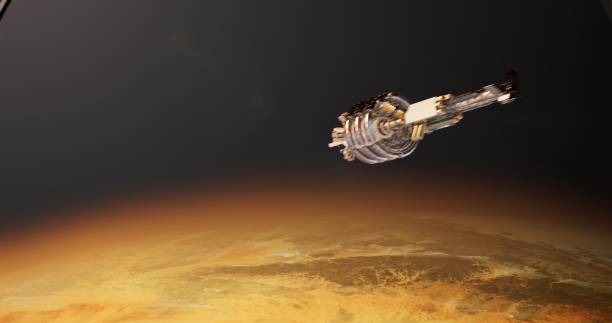
The first overlooked capability is what intelligence agencies call “parasitic satellites.” These are small, cheap spacecraft launched under the guise of scientific research or commercial communications. Once in orbit, they drift close to high-value American or allied satellites. No explosion. No debris. Just a quiet approach that lets them listen to signals, jam frequencies, or even physically dock and disable the target. Russia has been testing this for years with its “Inspector” satellites. China does it too. The problem? You cannot shoot at a satellite just because it gets close. That action itself is an act of war. So these parasitic satellites sit in orbit, watching, waiting, and gathering data. The Space Force tracks them, but there is no clean way to stop them without escalation.
Another capability that flies under the radar is electronic warfare in space. Not the Hollywood version of hacking a satellite from a laptop, but the real-world use of ground-based and space-based jammers to blind or deceive satellite sensors. The U.S. relies heavily on GPS, satellite communications, and reconnaissance satellites. Adversary agencies like the Russian Aerospace Forces and China’s Strategic Support Force have dedicated units that train to disrupt these signals. They can spoof a GPS signal to make a missile land in the wrong grid square. They can jam the radio link between a drone pilot and their aircraft. They can blind infrared sensors on early-warning satellites with directed energy from the ground. This is happening right now, in real time, and it is almost never in the news.
Perhaps the most dangerous counterspace capability nobody discusses is the weaponization of space debris. There is a reason the U.S. military publicly freaks out about anti-satellite tests that create debris. It is not just about environmentalism in orbit. If an adversary agency deliberately creates a cloud of high-velocity junk in a critical orbit—like low Earth orbit where most spy and communications satellites live—it can effectively deny that orbit to everyone for years. No laser. No missile. Just a calculated explosion that does not kill anything directly but makes a whole region of space unusable. The debris moves at 17,500 miles per hour. One fleck of paint can punch through a satellite. A bolt can destroy it. And once the cloud is there, you cannot clean it up. That is a counterspace weapon that leaves no fingerprints.
There is also the quiet work of government-backed “dual-use” technology. Many nations are building large constellations of satellites for internet or Earth observation. Example: China’s Starlink-like system or Europe’s Galileo navigation network. These look civilian. But they are also perfect for counterspace. You can hide a nuclear-hardened command-and-control relay inside a swarm of commercial satellites. You can put a jammer in a satellite that also provides weather data. You can even use a “broken” satellite that suddenly maneuvers to intercept another nation’s satellite during a crisis. Because the satellite is registered as civilian, attacking it would be seen as aggressive. So these dual-use assets give adversary agencies a legal shield for their counterspace operations.
Finally, the most overlooked counterspace capability is simply organizational: the slow, steady growth of foreign space command structures. The Russian Aerospace Forces established a Space Forces branch years ago. China merged its space operations into the People’s Liberation Army Strategic Support Force. India created the Defence Space Agency. These agencies are not just building rockets. They are writing doctrine for how to degrade, deny, and destroy U.S. space assets. They are training operators in electronic warfare. They are stockpiling ground-based lasers. They are building the supply chain for anti-satellite missiles. The U.S. Space Force had to stand up fast because these agencies have been working in the shadows for years.
So next time you look up at the stars, remember: there is a quiet war going on up there. It is not fought with dogfights or explosions. It is fought with sneaky little satellites, invisible jamming, and secret agency plans. The Space Force is the only thing standing between that quiet war and a sudden, catastrophic loss of everything we rely on from orbit. It may not be as flashy as a moon base, but it is the most important space mission there is.
Space News
Latest Articles
New rockets, upcoming launches, and the stories shaping humanity's push off this planet. No astronomy degree required.