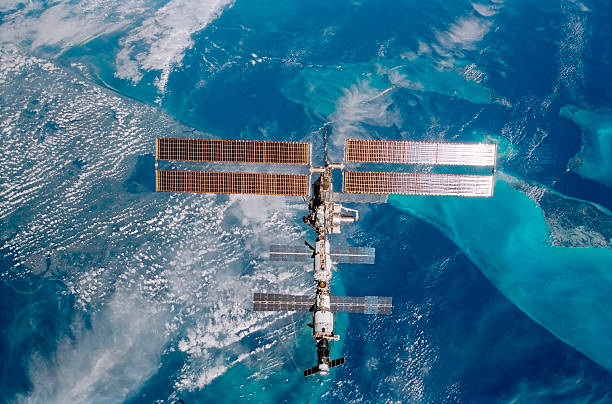
Orion service module and the European power contribution

The ESM is not a minor add-on. It is a 13-ton cylindrical structure that sits directly behind the Orion crew capsule, and it is the only part of the spacecraft that can generate, store, and distribute electrical power. Without it, Orion is a very expensive, very cold, dead piece of aluminum. The module is built by Airbus Defence and Space under contract to the European Space Agency, and it represents the single largest European contribution to any American human spaceflight program in history. This is not a sponsorship deal or a scientific instrument—it is the actual power plant of the lunar ship.
At the heart of the ESM’s power system are four massive solar array wings, each roughly 23 feet long and 11 feet wide. Once Orion separates from the SLS rocket’s upper stage, these arrays unfurl in a sequence that looks simple but requires millisecond precision. The arrays are built from triple-junction gallium-arsenide solar cells, the same type of high-efficiency cells used on the most advanced commercial communications satellites. In Earth’s orbital environment, these arrays can generate about 11 kilowatts of power. That is roughly enough to run a typical American home. But here is the critical detail: as Orion moves away from the Sun toward the Moon and then into cislunar space, the power output drops. The arrays must be able to operate at temperatures ranging from minus 150 degrees Celsius in shadow to over 120 degrees Celsius in direct sunlight. They cannot fail, because there is no backup power source.
The ESM also houses the power storage system, which consists of six lithium-ion battery packs. These batteries are not like the one in your smartphone or even your electric car. They are space-rated cells designed to survive vibration loads of over six Gs at launch and to hold a charge for months without significant degradation. When the Orion crew capsule is in the shadow of the Moon or performing critical maneuvers, the solar arrays cannot provide power. The batteries take over, and they must do so without any warning or delay. The power distribution system inside the ESM is a ring bus topology that can reroute electricity around any single point of failure. If one battery or one array string goes down, the module can isolate the fault and keep power flowing to the crew module’s life support, navigation, and communications systems. This is not a luxury—it is a requirement for survival.
But the ESM does more than just generate and store power. It also burns it. The module carries a main engine that is a refurbished Space Shuttle Orbital Maneuvering System engine, along with 24 smaller thrusters for attitude control and trajectory tweaks. When you push that much power through a propulsion system, you create thermal challenges that would fry any consumer electronics. The ESM’s thermal control system uses a combination of ammonia-filled radiators and electric heaters to pull thousands of watts of waste heat away from the engine and batteries and dump it into space. If the radiators fail or become covered in debris, the power system shuts down within minutes to prevent catastrophic overheating.
The reason this European-built module is so critical for American lunar ambitions comes down to engineering tradeoffs. NASA could have built its own power system, but that would have delayed the program by years and added billions to the budget. The European Space Agency agreed to deliver the ESM as part of a barter arrangement for future cooperation on the Lunar Gateway station. This means that every Artemis mission—including the first crewed landing—depends on a power system designed and built by a consortium of companies in ten European nations. The management of this transatlantic pipeline is precise. Each ESM takes about three years to assemble and test at the Airbus facility in Bremen, where technicians work in cleanrooms that are ten times cleaner than a hospital operating room. A single contaminant particle can short out a power bus or block a radiator channel.
For casual space fans, the takeaway is simple. When you watch an Artemis launch, you are watching American firepower at the bottom and European electrical engineering at the top. The Service Module is the reason the crew can turn on the lights, talk to Houston, and burn the engine to get home. Without Europe’s willingness to invest in deep space power systems, NASA would be stuck with a capsule that cannot fly beyond low Earth orbit. The Orion Service Module is a quiet, reliable, and utterly essential piece of hardware. It proves that the future of spaceflight is not a national competition—it is a technical collaboration where every component, especially the one that keeps the lights on, has to be perfect.
Space News
Latest Articles
New rockets, upcoming launches, and the stories shaping humanity's push off this planet. No astronomy degree required.