Emergency beacon and the search helicopter coordination
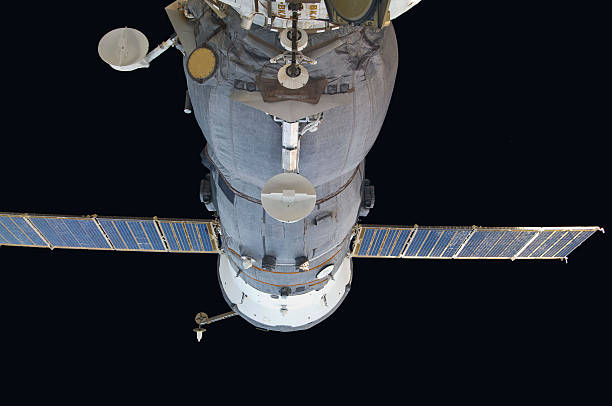
The core of the system is the COSPAS-SARSAT satellite network itself, which has been in operation since 1982. Instead of relying on commercial cell towers or civilian radio nets, the Soyuz crew carries a dedicated emergency beacon that transmits a 406 MHz signal directly to low-earth orbit satellites. Those satellites are linked to ground stations that process the signal in under five minutes. The beacon is hardened against the brutal g-forces of reentry, the temperature shock of hitting the atmosphere, and the dirt, mud, and snow of any landing zone. It has its own battery, good for at least 48 hours of continuous broadcast. It automatically activates on impact or can be triggered manually by the crew if radio contact fails. There is no power switch on this thing that you fumble with in the dark. It works or it doesn’t.
Once that beacon goes live, coordination with the search helicopter is not a guesswork game. Russia maintains a fleet of Mi-8 helicopters specially equipped with direction-finding antennas tuned to the 406 MHz frequency. These helos are on standby at multiple bases along the landing corridor. The moment the satellite ground station processes the beacon location, a coordinate packet is transmitted directly to the helicopter’s navigation system. The pilot does not need to scan the ground with binoculars. The avionics draw a red circle on the map, and the helo goes inbound at maximum cruise speed. In a typical landing zone scenario, the helicopter can be overhead in less than 30 minutes. Compare that to a civilian search where you might wait hours or days. That is the difference between life and death when a Soyuz capsule flips upside down in a blizzard and the crew is trapped in their seats with a fire risk from the external fuel vents.
But coordination does not stop with the beacon. The Soyuz landing kit also includes a satellite phone and a VHF radio. The beacon gets the helicopter in the neighborhood. The VHF radio lets the rescue crew talk directly to the pilots on the ground frequency. If the weather is zero-zero and the helo cannot land, the radio instructs the crew to stay put and seal the capsule. The helicopter can drop a survival kit that includes chemical hand warmers, a folding shovel, high-calorie bars, and a second backup beacon. The point is redundancy layered on redundancy. American space enthusiasts should take notes. We fly Dragon capsules now, which have their own comms and beacon systems, but the Soyuz design philosophy is simple: make the gear so stupid-proof that even a cosmonaut concussed from a hard landing can operate it.
What does this mean for you? If you are prepping your own survival gear for camping or overlanding, the lesson is brutal pragmatism. Your personal locator beacon is only as good as the search helicopter response behind it. In the United States, that response might be a volunteer SAR team that has to assemble at the fire station before wheels up. That takes time. The Soyuz system collapses that time by having a helicopter ready to launch within minutes, not hours. You cannot duplicate that in the backcountry, but you can upgrade your own comms. Carry a two-meter ham radio or a satphone along with your PLB. If the beacon gets you in the game, the radio gets you the win.
Finally, do not overlook the physical gear stowage in the Soyuz landing kit. The beacons, radios, and survival items are packed inside a soft-sided container that is strapped to the crew’s chair during descent. It is designed to be grabbed and pulled clear even if the capsule is on its side. The handles are large enough to grip with cold, gloved hands. The zippers are heavy-duty YKK models that do not jam. Every component is tested to operate in temperatures down to minus forty. That is the kind of attention to detail that separates a toy from a tool.
So next time you watch a Soyuz landing live stream and see the Mi-8 touch down in a cloud of dust, remember that the elegant coordination between a 406 MHz beacon and a helicopter with a radio compass is what makes that moment possible. The gear works because it is simple, robust, and backed by a system that wastes no seconds. That is the standard. Apply it to your own kit.
Space News
Latest Articles
New rockets, upcoming launches, and the stories shaping humanity's push off this planet. No astronomy degree required.