ISS assembly flights and the arm ballet
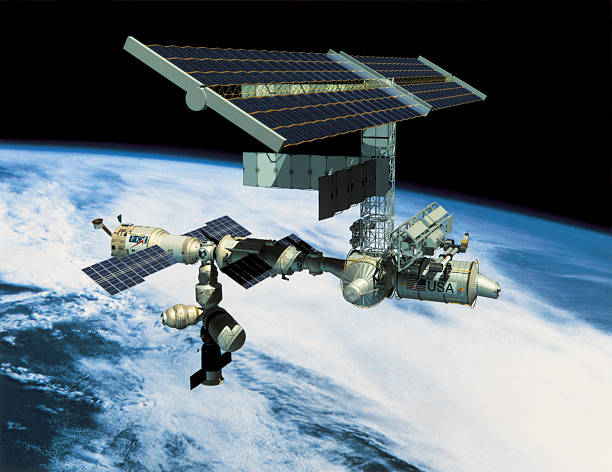
The station’s construction began in 1998, but the real show started with STS-88 in December of that year. The shuttle Endeavour carried the American Unity node, a connecting hub that would eventually link modules from the U.S., Russia, Europe, and Japan. But Unity wasn’t just bolted on. The crew used the shuttle’s robotic arm, the Canadarm, to grab the node from the payload bay, then carefully maneuvered it to mate with Russia’s Zarya module. That first dance was clumsy—friction and alignment issues caused delays—but it proved the concept. From then on, every assembly flight became a choreographed mix of robot arm moves and spacewalks.
Over the next decade, shuttle crews delivered and installed trusses, solar arrays, and labs like Destiny and Kibo. The arm ballet wasn’t just for show; it was mandatory. The shuttle’s 50-foot Canadarm could lift payloads up to 30 tons, but it required a pilot with steady hands and a spotter on the ground. The arm operator, often a mission specialist, would inch the module toward the station’s grapple fixture while the shuttle commander held position thrusters to counter station drift. One miscalculation—too much yaw, a delayed thruster burn—meant a collision that could ruin decades of work. On STS-98, when the Destiny lab was installed, the arm operator had to swing the 16-ton cylinder through a 90-degree arc without scraping the station’s skin. They nailed it.
But the arm ballet wasn’t just about the robot arm. Every assembly flight required spacewalks. Crews in bulky suits rode the end of the Canadarm like carnival rides, bolting cables, installing handrails, and connecting fluid lines. STS-100 in 2001 was a standout: the crew delivered the Canadarm2, the station’s own robotic arm, which was even more capable than the shuttle’s version. To install it, astronauts Susan Helms and Jim Voss performed a spacewalk that lasted nearly nine hours—still a record. Imagine working in a pressurized balloon for a full workday, with nothing between you and the vacuum but Kevlar and nerve. That’s what it took.
Then there were the solar arrays. The shuttle delivered the first set of giant wings on STS-97 in 2000, and later flights added more. Unfurling those arrays was like trying to fold a bedsheet in zero-g without creases—except the sheet was 110 feet long and could electrocute you if you touched the wrong wire. Arm operators had to extend the arrays slowly, often pausing to let the temperature stabilize, while spacewalkers watched for snags. When the arrays finally spread, they glowed like massive blue sails. That light powered the station for all the science that followed.
The arm ballet reached its peak during the final shuttle flights. STS-134, the penultimate mission, delivered the Alpha Magnetic Spectrometer, a particle detector the size of a small car. The crew had to carefully extract it from the payload bay using the Canadarm, then hand it off to the station’s arm in a delicate, two-robot transfer. Think of it as a quarterback tossing a pass to a receiver, but both players are floating and the ball weighs seven tons. They did it without a fumble.
Why does this matter to you? Because the ISS didn’t get built by magic or robots. It took human guts, precise timing, and the ability to think three moves ahead while weightless. The shuttle crews who executed these flights weren’t just astronauts; they were truck drivers, crane operators, and tightrope walkers rolled into one. They turned the shuttle’s payload bay into a construction site and the Canadian Arm into a scalpel. That’s not a NASA press release. That’s a mission.
The arm ballet ended when the shuttle retired in 2011. But every time you see the ISS crossing the night sky, remember those assembly flights—the moments when men in suits rode the arm, bolted the truss, and spun the arrays. That’s not just history. That’s a greatest hit.
Space News
Latest Articles
New rockets, upcoming launches, and the stories shaping humanity's push off this planet. No astronomy degree required.