JUICE mission and the European contribution
Let’s cut to the chase. JUICE is a European-led mission through and through. The ESA is the main driver, with heavy contributions from NASA, the Japanese space agency JAXA, and about 15 other nations. But make no mistake—Europe put up the bulk of the cash and engineering. The spacecraft itself was built by Airbus Defence and Space in Germany, and it carries a suite of ten state-of-the-art instruments. This is not some side project. It’s the most ambitious planetary science mission Europe has ever attempted, and it’s aimed squarely at the most promising real estate beyond Earth for finding alien life.
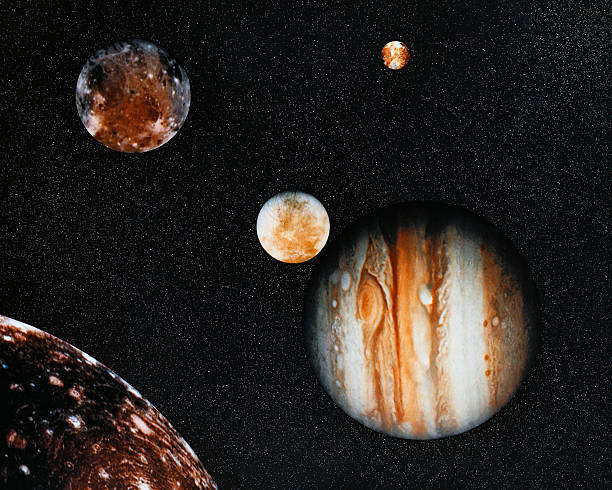
So why these three moons? Because they’re not dead rock. Ganymede, Callisto, and Europa all have subsurface liquid water oceans buried under miles of ice. Of the three, Europa is the flashy one—NASA’s Europa Clipper, launching next year, is dedicated to studying it. But JUICE is going for the trifecta. It will fly past Europa twice during its mission, giving us a close look at that moon’s cracked, chaotic surface. It will also do multiple flybys of Callisto, the most cratered and ancient-looking of the bunch. And then it will do something historic: it will enter orbit around Ganymede in 2034, becoming the first spacecraft ever to orbit a moon that isn’t Earth’s. Ganymede is the largest moon in the solar system, bigger than Mercury, and it’s the only moon we know of that generates its own magnetic field. JUICE will map that field, study its icy crust, and look for evidence of that hidden ocean.
That brings us to the real destination here: water. Liquid water. Wherever we find it in the solar system, we get curious. On Earth, water means life. On these Jovian moons, that water is trapped under ice, kept liquid by tidal heating—the gravitational tug-of-war between Jupiter and its moons creates friction, which generates heat. It’s the same process that drives volcanic activity on Io, Jupiter’s inferno moon. But on Europa, Ganymede, and Callisto, that heat keeps oceans liquid. JUICE will use radar to peer through the ice, measure the thickness of the crust, and try to figure out exactly how deep those oceans are. It will also sniff out organic compounds and analyze the chemistry of the surface. If JUICE finds anything that looks like the building blocks of life—amino acids, fatty acids, or simple carbon chains—that’s going to be the biggest headline of the decade.
Now, you might ask: why is Europe doing this instead of NASA? The answer is that Europe has been punching above its weight in planetary science for years. They nailed the Rosetta mission to a comet in 2014. They put a lander on Titan with Huygens in 2005. And now they’re taking point on the most complex Jupiter mission ever. NASA is helping with some hardware and a few instruments, but JUICE is Europe’s baby. They’re paying the bills, managing the flight, and taking the glory. For American readers, think of it like this: if NASA is the NFL, ESA is a top-tier college program that beats the pros once in a while. JUICE is their biggest game yet.
The journey itself is a masterpiece of orbital mechanics. JUICE won’t fly straight to Jupiter. It’s taking a scenic route that includes flybys of Earth and Venus to steal some momentum—gravity assists, they call them. It’ll pass Earth in August 2024, then again in 2026 and 2029, with a Venus flyby in 2025. That’s a lot of swinging by home before finally heading out. By the time it reaches Jupiter in 2031, it will have traveled over 4 billion miles. Patience is the name of the game.
For space enthusiasts, JUICE is a reminder that the future isn’t just Mars. The outer solar system is where the weird, wet, and possibly alive stuff is. Europe is betting big that these icy moons hold secrets we’ve only started to imagine. If you’re a guy in his twenties with a casual interest in space travel, pay attention. By 2035, when JUICE has finished its observations, we might have the best evidence yet that life exists somewhere else in this solar system. And that destination—a moon with an alien ocean—is worth the wait.
Space News
Latest Articles
New rockets, upcoming launches, and the stories shaping humanity's push off this planet. No astronomy degree required.