Manual docking by astronauts and the pucker factor
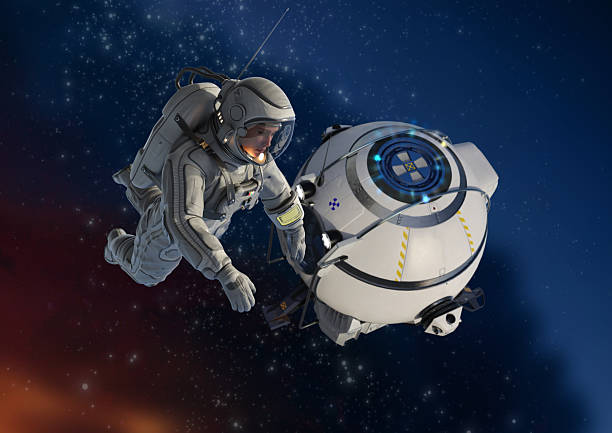
Manual docking is exactly what it sounds like: an astronaut takes over the joystick, looks out the window (or at a camera feed), and literally flies a spacecraft into a docking port. The spacecraft is moving at roughly 17,500 miles per hour relative to Earth. The docking port is about the size of a dinner plate. There is no room for error. A hard impact could damage both vehicles. A missed approach could waste precious fuel or, worse, force an abort that might strand the crew. This is not a video game. There are no extra lives.
The pucker factor, for those not familiar with the term, is the visceral, involuntary clenching of certain muscles when a situation goes from controlled to critical. In the cockpit of a spacecraft, it happens the moment an alarm sounds or the automatic alignment drifts off target. The stakes are not just the mission. They are survival. Astronauts train for manual docking hundreds of times in simulators, but simulators cannot replicate the real weightlessness, the subtle vibrations from thrusters, the lag in communication with the ground, or the knowledge that this is not a training run. Every move has consequences.
Why does manual docking still exist if computers are so good? Because computers are not intelligent. They follow code. If a sensor gets confused by sunlight reflecting off the destination spacecraft, or if a thruster deselects due to a software bug, the computer might lock up or drift without correcting. A human pilot can adapt. Humans can look out the window, judge distances by eye, and make split-second corrections. This is not nostalgia for the days of Mercury and Gemini. This is pragmatism. Every crewed spacecraft, from Crew Dragon to Starliner to Orion, incorporates a manual backup mode. The astronauts know how to use it.
The most famous manual docking in recent memory happened during the 2019 test flight of Boeing’s Starliner. The spacecraft’s onboard timer was off by eleven hours, causing the thrusters to fire at the wrong time. The automatic docking sequence had to be abandoned. The astronauts onboard, though part of an uncrewed test, would have had to take over manually if they had been there. During the same period, a Russian Progress cargo ship had its own docking issues, requiring a manual override by the cosmonauts. These events remind us that spaceflight is not an app to be downloaded. It is a physical, dynamic, and occasionally terrifying activity.
The actual procedure is a study in concentration. The astronaut uses a hand controller to command the spacecraft’s attitude and translation. Translational control moves the ship left, right, up, down, forward, and back. Attitude control rotates it. The two must be coordinated simultaneously, like patting your head and rubbing your belly while balancing on a moving platform. The target port is equipped with crosshairs or a docking target. The pilot aligns the spacecraft’s centerline to that target, then reduces closure rate to a snail’s pace—usually about 0.1 to 0.2 meters per second. Any faster, and the impact could break the docking mechanism. Any slower, and the spacecraft might drift off axis.
Inside the capsule, the crew members not flying are watching the telemetry, listening to the radio, and trying not to breathe too loudly. The pilot’s heart rate spikes. The pucker factor is not just a joke. It is a physiological reality. Cortisol floods the system. Fine motor control becomes harder. The best pilots learn to breathe slowly, ignore the testicles-in-a-vise sensation, and focus on the markers. One small, gentle puff from a thruster. A glance at the rate of closure. A final, calm correction. Then, the soft contact. The latches engage. The docking is complete.
This is why manual docking matters. It is the difference between a tool and a partnership. Machines handle the routine. Humans handle the edge cases. For the casual space enthusiast watching a launch or a docking livestream, it is easy to forget that behind the glowing screens and automated announcements, there is a person whose hands are sweaty and whose pulse is pounding. Next time you see a docking on a webcast, watch for that brief moment before capture. There might be a pause, a manual correction, a quiet command over the loop. That is the pucker factor in action. It is old school. It is risky. And it is exactly what makes human spaceflight still worth watching.
Space News
Latest Articles
New rockets, upcoming launches, and the stories shaping humanity's push off this planet. No astronomy degree required.