Decision-making with a seven-second delay
The concept of a seven-second delay isn’t new to anyone who has watched a live feed from Mars. Radio signals between Earth and the Red Planet take between four and twenty-four minutes to travel one way. When NASA’s Perseverance rover sends back a panorama, the person viewing it on a screen in Pasadena is seeing something that happened minutes ago. But what happens when the delay is not just a fact of distance, but a tool deliberately inserted into the loop between a human commander and their spacecraft? That is the reality astronauts will face when they venture beyond the Moon, and it forces a fundamental rethink of what command actually means.
Right now, you might think that faster is always better. In a cockpit, on a racetrack, in a firefight, reaction time is everything. But in space, speed can kill. The problem is that the human brain evolved to make split-second decisions in a world of immediate feedback. You punch, you feel the impact. You step, the ground meets your foot. When that feedback loop is broken by even a short delay, your instincts become your enemy. A seven-second lag means you can overcorrect, overcommit, and overshoot before the first correction even takes effect. That is why every deep-space mission that involves human control must train the commander to think in terms of predictive command, not reactive command.
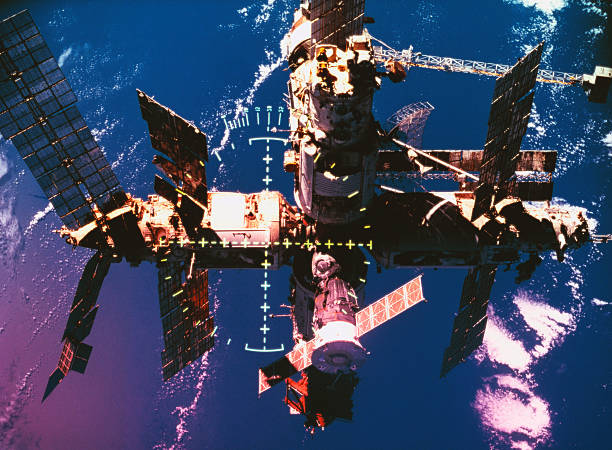
Consider the docking maneuver. On the International Space Station, a trained cosmonaut can dock a Soyuz capsule in minutes with fine manual adjustments. The feedback is nearly real-time. Now imagine trying that same maneuver from a spacecraft orbiting Mars, while the station is in orbit around Phobos. You see the port. You nudge left. Seven seconds later, your nudge happens. By then, the station has moved. You nudge again. Seven more seconds. You are now chasing a ghost. The only way to succeed is to stop reacting entirely. You must become a planner. You look at the trajectory, calculate the drift, input a sequence of commands, and then sit on your hands for seven seconds while the ship executes them in order. If you touch the controls again before that window closes, you reset the sequence and guarantee failure.
This is the commander’s seat mentality—not the hot hand of a fighter pilot jinking through a dogfight, but the cold patience of a chess player who sees seven moves ahead. It forces you to separate your emotional need to do something from the mechanical necessity of doing the right thing at the right time. That separation is brutal. In simulations with a seven-second delay, even experienced pilots report a spike in anxiety, a desperate urge to override the system, and a tendency to micromanage the autopilot. The ones who succeed are the ones who learn to trust the delay as a feature, not a bug. They use the seven seconds to verify their next move, check their margins, and breathe.
The same logic applies to communication between a ship and ground control. If you are commanding a mission from Earth to a ship near Jupiter, the delay is not seven seconds but nearly an hour. You cannot talk your way through a crisis. You cannot ask for clarification. Every message is a time capsule. That means the commander on the ship must be empowered to make decisions without a phone-a-friend option. The seven-second delay is a training tool for exactly that mindset. It forces you to commit. You learn to decide with incomplete information, then live with the outcome.
For the casual space enthusiast sitting at home, this might sound like a technical footnote. It isn’t. The seven-second gap is a mirror. It reflects your own hesitation, your own reflexes, your own discomfort with uncertainty. The next time you watch a livestream of a rocket launch and see that seven-second hold at T-minus zero, remember that the same pause is about to become a permanent part of how humans operate beyond low Earth orbit. You can either fight the delay or embrace it. The commander who learns to think in slow motion will be the one who brings the crew home.
In the end, the seven-second rule is not about technology. It is about you. It is about your ability to suppress the lizard brain that screams for instant results and instead trust a plan you laid out moments ago. That is the seat you are in. That is the mentality. Now sit still and watch the numbers tick down.
Space News
Latest Articles
New rockets, upcoming launches, and the stories shaping humanity's push off this planet. No astronomy degree required.