G-Shock and the shuttle-era digital workhorse
Casio released the first G-Shock, the DW-5000C, in 1983. The marketing story is legendary: a engineer named Kikuo Ibe dropped his father’s mechanical watch and swore to build something unbreakable. He came up with the “Ten” concept—ten meters of water resistance, ten years of battery life, and a drop from ten meters without failure. The result was a watch encased in a shock-absorbing urethane shell with a floating module. It wasn’t pretty. It looked like a toy. But it worked.
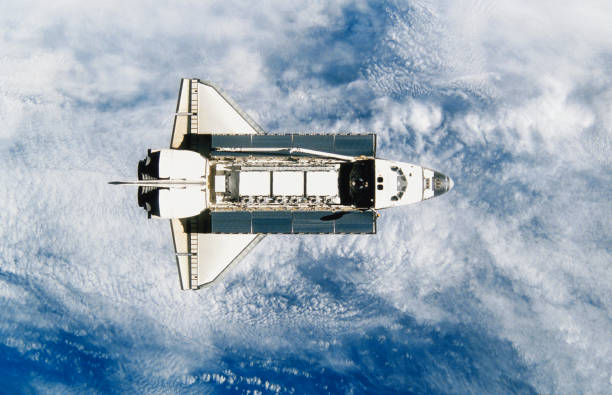
By the time the Space Shuttle program was in full swing, NASA had already tried a few watches. The Omega Speedmaster was the certified choice for EVAs, but the Shuttle era was different. You had astronauts flying multiple missions, doing maintenance, running experiments, and living in a low-Earth orbit environment that was less about lunar drama and more about getting work done. Not every astronaut needed a mechanical chronograph. Some just needed a reliable digital tool.
The G-Shock DW-5600, which came out in the late 1980s, became the default. It had a backlight, a countdown timer, a stopwatch, and an alarm. It was quartz accurate, so you didn’t have to worry about winding it in zero gravity. It was water resistant to 200 meters, which was overkill for the Shuttle but useful for training in the Neutral Buoyancy Lab. And it could take a hit. Astronauts strapped them to the outside of their suits for some missions, using the stopwatch function to time critical procedures. The watch did what it was told.
Here’s the thing that doesn’t get talked about enough: the digital workhorse fit the Shuttle’s ethos. The Shuttle was a working vehicle. It had heat tiles that fell off, avionics that failed, and a cargo bay that looked like a construction site. It was not a sleek Apollo spacecraft. It was a space truck. And you don’t put a luxury dress watch on a truck driver. You put a G-Shock on him. The watch was cheap enough to replace if it got scratched, tough enough to survive the job, and functional enough to be useful every day. That’s why it flew.
The G-Shock also benefitted from what you might call the “cool factor” of the 80s and 90s. It was on the wrists of skaters, soldiers, and astronauts alike. When you saw a Shuttle crew photo and spotted a black square on someone’s wrist, you knew they weren’t trying to impress anyone. They were just trying to get the job done. That kind of authenticity matters in gear. You don’t want a watch that tells a story. You want a watch that doesn’t need one.
Today, the G-Shock is still around, and Casio has made dozens of variants. The modern DW-5600 looks almost identical to the one from 1987. That’s not laziness. That’s respect for a design that was right the first time. The newer models add solar charging, atomic timekeeping, and Bluetooth connectivity, but the core remains the same: a tough digital module in a tough shell. You can buy one for under a hundred dollars, wear it for twenty years, and never worry about it breaking.
For the space enthusiast, the G-Shock represents a specific moment in history. It is not the watch of the Moon landing. It is the watch of the era when space became routine. When astronauts stopped being test pilots and started being engineers. When the public stopped gasping at launches and started checking the weather for landing sites. The Shuttle program normalized low-Earth orbit, and the G-Shock normalized the idea that you didn’t need a special watch for space. You just needed a watch that would not die.
If you are looking for a piece of gear that connects you to that era, skip the overpriced limited editions. Find a used DW-5600 from the 1990s. It will have the original module, the one with the blue backlight and the small screen. It might have some scratches on the crystal. It might have a faded bezel. That is fine. That is a watch that has been somewhere. Strap it on, set the timer, and think about what it took to build a vehicle that could fly to space and land on a runway. The Shuttle is retired now. The G-Shock is still beeping.
Space News
Latest Articles
New rockets, upcoming launches, and the stories shaping humanity's push off this planet. No astronomy degree required.