Privately-funded modules and the commercial future
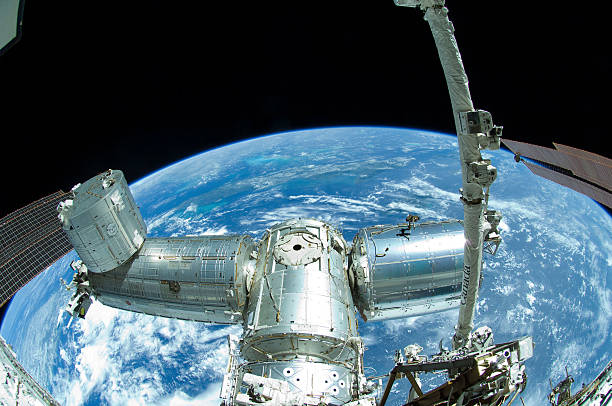
NASA’s plan is aggressive. By 2030, the agency wants to retire the ISS and transition to commercial space stations operated by companies like Axiom Space, Blue Origin, and Nanoracks. But before any of those standalone stations can work, private companies need to prove that they can sustain profitable operations at the ISS today. That proof is happening now, inside commercial modules bolted onto the station’s existing hardware.
Axiom Space is the clearest example. The company plans to launch multiple modules that attach to the ISS, eventually detaching to form their own independent station called Axiom Station. In 2022, Axiom successfully launched its first private crew mission to the ISS—Ax-1—using a SpaceX Crew Dragon. That mission wasn’t a science experiment or a photo op. It was a commercial proof-of-concept. Four private astronauts paid roughly $55 million each for a ten-day stay. They conducted microgravity research, tested hardware, and demonstrated that paying customers aren’t tourists. They’re investors.
The first Axiom module, named Habitat One, is scheduled for launch in 2026. It will be privately funded, built by Thales Alenia Space, and docked to the ISS’s forward port. Once attached, it will more than double the habitable volume of the American segment. More importantly, it will operate as a for-profit facility. Axiom plans to lease laboratory space, host manufacturing experiments, and accommodate private astronaut missions beyond what NASA can offer. The revenue from those activities will fund the module’s construction and operations. That is not government subsidy. That is a business model.
Other companies are also building commercial modules. Voyager Space’s Starlab station is designed to be a free-flying commercial outpost, but the company has also secured NASA funding for early development. Sierra Space is building the LIFE module, an inflatable habitat that could host crew or cargo. And Nanoracks, already running commercial payload services on the ISS, is working on the Bishop airlock and future expandable modules. Each of these projects relies on private capital, not just NASA contracts.
Why does this matter for you? Because the commercial future of the ISS isn’t about replacing the station itself. It’s about creating a market. Right now, the ISS costs about $3 billion per year to operate, and the U.S. pays most of that. If private modules can generate revenue from pharmaceutical research, semiconductor production, protein crystallization, and satellite servicing, then the ISS becomes an asset instead of a liability. Companies can justify building their own stations because they already know the economics work. The ISS commercial module program is the proof of that market.
There are real risks. The cost of launching materials to orbit remains high. Private astronaut training is still expensive and limited. And the ISS itself is aging. But every successful mission—every Ax-1, every commercial payload delivered by Northrop Grumman’s Cygnus, every private astronaut who returns with usable data—makes the business case stronger.
For the casual space enthusiast, here is the bottom line. The ISS legacy will not be a museum piece or a rusting hulk. It will be the foundation of the first commercial space economy. Privately-funded modules are the bricks of that foundation. When you hear about Axiom launching a new module, or Voyager’s Starlab winning a NASA award, understand that you are watching the transition from government monopoly to commercial frontier. The guys who pay their own way to orbit are not space tourists. They are shareholders in the future.
Space News
Latest Articles
New rockets, upcoming launches, and the stories shaping humanity's push off this planet. No astronomy degree required.