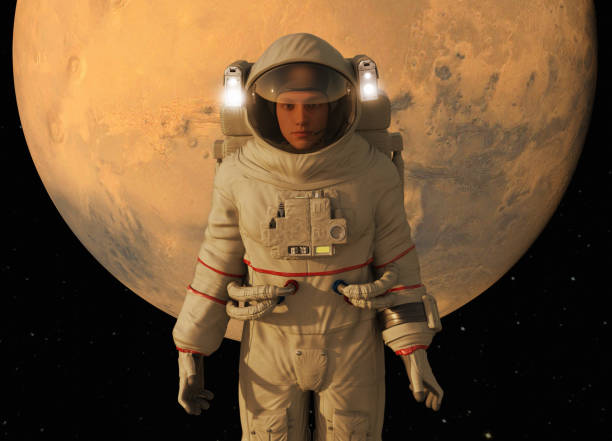
Mars rover Zhurong and the silence
More than two years later, Chinese space officials have not issued a definitive public statement on Zhurong’s status. The rover sits silent. And that silence tells us more about the agencies behind Mars exploration than any successful transmission ever could.
Why Zhurong Stopped Talking
The engineering reason is straightforward. Zhurong relies on solar panels for power. During Martian winter, the sun dips lower, and dust accumulation on the panels reduces energy generation. The rover’s heaters run out of juice, and the electronics get too cold to operate. It’s the same problem NASA’s Opportunity rover faced, though Opportunity lasted 14 years before a global dust storm in 2018 finally choked it out.
Zhurong was designed for a 90-day primary mission. It exceeded that by a wide margin. But the hibernation was supposed to be temporary. When the dust settled and sunlight returned, the rover should have recharged and reestablished contact. That didn’t happen. Most likely, dust buildup on the solar arrays was worse than expected, or the internal electronics suffered cold damage beyond recovery.
The Real Story: How Agencies Communicate Failure
Here’s where it gets interesting for anyone tracking the future of space travel. NASA, when a rover goes silent, is brutally transparent. When Opportunity stopped calling, JPL held press conferences, released timelines, and sent repeated commands for months before officially declaring the mission over. Engineers explained exactly what went wrong. The public got closure.
CNSA, China’s space agency, handles things differently. After Zhurong missed its wake-up date, Chinese state media and officials offered a series of vague updates. The rover’s power system “may not have enough energy to resume operations.” The team was “continuing to monitor.” As of 2024, there has been no formal end-of-mission press release, no detailed post-mortem, no definitive statement that Zhurong is dead. The rover is simply not mentioned much anymore.
This is not incompetence. It is deliberate. Chinese space agencies operate under a different relationship with the public and the press. Failure is not something to analyze openly. It is something to absorb internally and acknowledge only when absolutely necessary. For a casual space fan in America, this looks like stonewalling. For CNSA, it is standard operating procedure.
What This Means for Future Mars Missions
This asymmetry matters because the private space sector and international agencies are increasingly collaborating. NASA works with ESA, JAXA, and commercial companies like SpaceX. CNSA is building its own parallel infrastructure. When a Mars mission goes dark, how an agency handles that signal loss tells you how it will handle future failures, including crewed missions.
If a Chinese astronaut on a future Mars landing encounters an emergency, will CNSA’s communications approach inspire confidence or confusion? The Zhurong silence suggests that external stakeholders, including commercial partners or international scientific teams, will get limited real-time failure data. That makes joint planning harder. It puts the burden on other agencies to build redundancies and independent verification systems.
For American companies and NASA planners, Zhurong’s silence is a practical data point. It confirms that CNSA’s risk tolerance and transparency protocols differ from Western norms. When you’re designing a shared Mars communications network or planning a joint sample return, you need to know exactly how your partner agency reports bad news. Zhurong says: they don’t.
The Bottom Line
Zhurong is probably dead. Its solar panels are caked with dust, its batteries are frozen, and its electronics are likely unrecoverable. That’s a shame, because it was a capable rover that outperformed its design life. But the real story isn’t about a machine on Mars. It’s about the people and the agencies that decided, in the face of a quiet failure, that no explanation was the best explanation.
For casual space enthusiasts, Zhurong’s silence is a reminder that space exploration is still run by national agencies with different cultures, priorities, and PR strategies. NASA shows you the wreckage. ESA asks for help figuring out what went wrong. CNSA simply changes the subject. As humanity pushes deeper into the solar system, understanding those differences is every bit as important as understanding orbital mechanics.
If Zhurong ever wakes up, that would be a miracle. If it doesn’t, the silence has already taught us something about how China intends to operate on Mars and beyond.
Space News
Latest Articles
New rockets, upcoming launches, and the stories shaping humanity's push off this planet. No astronomy degree required.