Navy training and suborbital tests

Wallops isn’t trying to compete with Cape Canaveral’s size or Boca Chica’s media hype. It serves a different purpose, one that’s completely tied into the Navy’s need for realistic, cost-effective, and frequent suborbital tests. If you’re following the future of space travel on a site like SpacePilgrim.com, you need to understand that the path to routine spaceflight isn’t just about big orbital payloads. It’s about testing components, training crews, and proving hypersonic reentry vehicles—jobs that Wallops and the Atlantic Fleet handle like a well-oiled machine.
The Atlantic Fleet, largely based at Naval Air Station Patuxent River in Maryland, uses Wallops as its primary east coast range for suborbital launch operations. This isn’t a side gig. The Navy needs to validate missile defense systems, test reentry bodies for strategic weapons, and conduct training exercises that simulate real threats. Wallops offers a secure, relatively uninhabited downrange area over the Atlantic Ocean. That’s critical because suborbital tests often involve vehicles that splash down or burn up over the water. You don’t want a hypersonic test vehicle coming down near a populated beach. Wallops solves that problem by providing a clear, controlled corridor stretching thousands of miles into the Atlantic.
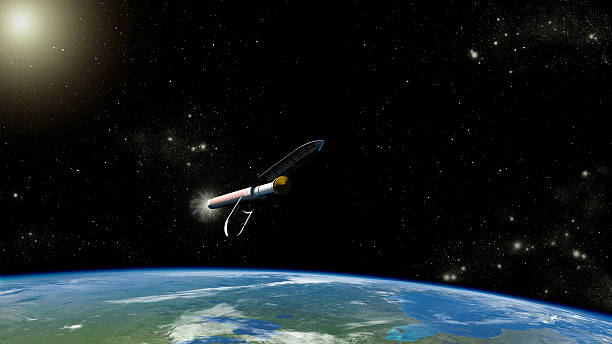
What makes this partnership effective is the sheer variety of launch vehicles that can operate from Wallops. From the small, rail-launched Terrier-Oriole rockets used for target practice to the much larger Minotaur series that can boost payloads to the edge of space, the facility is built for versatility. The Navy often uses suborbital flights to test sensors and avionics under extreme acceleration and heating. These flights might only last fifteen minutes, but they simulate conditions that intercontinental ballistic missile reentry vehicles experience. Without Wallops, the Navy would have to rely on computer models alone, and every engineer knows that a real flight test beats a simulation every time.
Another major piece of the puzzle is the ability to launch from mobile platforms. While Wallops has its fixed launch pads, the Atlantic Fleet also conducts suborbital launches from ships and submarines in the waters off Virginia. This adds a layer of realism that fixed land ranges can’t match. When a Navy crew launches a suborbital test vehicle from a destroyer or a submerged submarine, they’re not just testing the payload. They’re testing the entire launch sequence under tactical conditions. This training is invaluable. It ensures that sailors and officers know exactly how to respond when the order comes to put a real asset on a high-speed trajectory.
The connection between Wallops and the Atlantic Fleet also has a direct impact on commercial and NASA suborbital science. Because the Navy and the Department of Defense maintain the infrastructure, civilian researchers can sometimes piggyback on launch windows or use leftover payload capacity. That’s good news for anyone who wants to see more frequent suborbital flights. The more launches happen, the cheaper the costs get, and the more data flows back to the engineers designing the next generation of reusable spacecraft.
But let’s be honest—this isn’t glamorous work. Wallops doesn’t have a giant Saturn V on display or a tourist center selling astronaut ice cream. It’s a no-nonsense, functional base where the concrete is cracked and the control room smells like coffee and soldering flux. That’s exactly the environment the Navy needs for its suborbital test program. They don’t need media coverage. They need reliable launches that happen on schedule, with telemetry data that tells them whether their systems survive Mach 5 and 2,000 degrees Fahrenheit.
For the casual space enthusiast, Wallops represents the unsung backbone of American space capability. While the headlines go to Starship and Falcon Heavy, the Navy and the Atlantic Fleet are quietly advancing the technologies that will make hypersonic travel possible. They’re training the crews who will one day operate from orbital platforms. They’re proving the materials and guidance systems that will let civilian spacecraft survive the brutal physics of leaving the atmosphere. And they’re doing it from a flat, windswept island in Virginia, launch after launch, without fanfare.
If you want to understand where space travel is really heading, stop watching the livestreams of orbit insertions and start paying attention to the suborbital test flights out of Wallops. That’s where the future is being hammered into shape, one fifteen-minute flight at a time.
Space News
Latest Articles
New rockets, upcoming launches, and the stories shaping humanity's push off this planet. No astronomy degree required.