Omega Speedmaster and the moonwatch certification
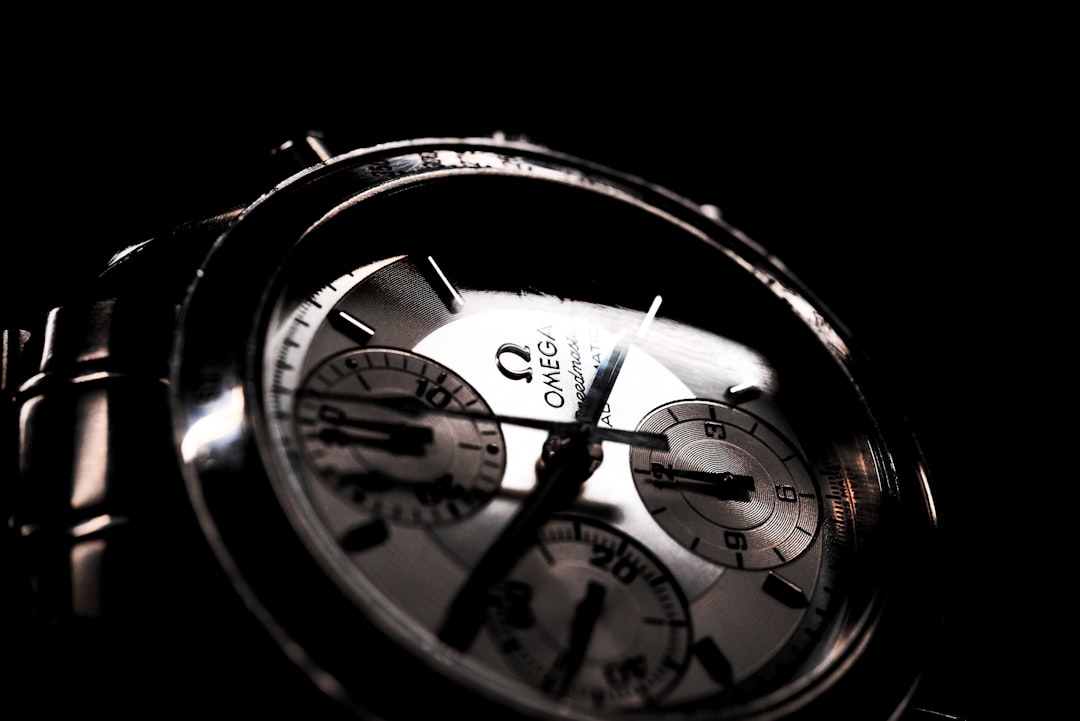
NASA didn’t start the space race with a watch budget. In the early 1960s, astronauts needed a reliable backup timekeeper for their missions. Primitive onboard electronics could fail, and when they did, a mechanical watch was the only thing between a pilot and a missed burn window. So NASA bought several commercially available chronographs off the shelf and put them through a gauntlet that makes today’s military specs look tame. The Speedmaster survived. The others didn’t.
The certification process wasn’t pretty. NASA strapped each watch to a machine that simulated 40 Gs of acceleration, then cranked the temperature from near-zero to above boiling in rapid cycles. They blasted the watches with 130-decibel noise, shook them at 30 Hz for 90 minutes, and exposed them to a vacuum at 10⁻⁶ atmospheres. Then they tested accuracy in 95% humidity, followed by a saltwater fog. The Speedmaster lost less than five seconds per day through all of it. The crystal didn’t pop off. The movement didn’t seize. It just kept running.
That’s the Moonwatch certification in a nutshell. It’s not a marketing badge. It’s a set of physical performance criteria that any watch claiming to be space-ready must meet: temperature extremes from 0°F to 200°F, shock resistance up to 40 Gs, vibration from 5 to 2000 Hz, a vacuum of 10⁻⁶ torr, and minimal rate deviation under all conditions. Modern commercial certification programs like the one run by METAS have similar standards, but they lack the historical brutality of the original NASA tests.
Now, why should a guy in his twenties, who will probably never leave the atmosphere, care about this? Because the Moonwatch certification is a filter. It separates real functional gear from lifestyle accessories. A watch that passed those tests isn’t fragile. It’s not a delicate heirloom you save for Sunday brunch. It’s a tool you can slam into a metal bulkhead, leave in a hot car, or wear while wrenching on a motorcycle without worrying about it failing. The same engineering logic applies to any hard-use gear: if it survived an Apollo mission, it can survive your Tuesday.
The Speedmaster’s movement—the manual-wind caliber 1861 or its modern heir the 3861—is no-nonsense. No date complication. No self-winding rotor to break. Just a column-wheel chronograph with a horizontal clutch, designed for simplicity and serviceability. Omega engineers knew that in space, you can’t send a watch back to Geneva for a repair. It has to be reliable or it’s dead weight. That same philosophy makes it a solid choice for everyday carry on Earth.
There’s also a newer conversation happening. Private space companies like SpaceX and Blue Origin are bringing more people to the edge of space than ever before. As civilian space tourism grows, so does the need for equipment that can handle rapid acceleration, cabin depressurization events, and extreme thermal swings. The Moonwatch certification isn’t a relic. It’s a benchmark that remains relevant because physics hasn’t changed. You still need a watch that can survive a hard g-force loadout, a rapid temperature change, and a vacuum seal failure without dying.
Omega has kept the Speedmaster in continuous production since 1957, and it’s the only watch NASA has ever flight-qualified for extravehicular activity. That means EVA—spacewalk—certification. The buckle of a spacesuit tether, the edge of a tool panel, the sheer cold of orbital night. The watch was tested against all of it. No other commercially available timepiece has that specific credential.
So if you’re building a collection of gear that actually works—not just looks like it works—the Moonwatch certification is the standard to look for. It’s not about brand loyalty. It’s about the fact that this specific piece of equipment was tested until it failed or didn’t. And it didn’t fail. That’s rare in any industry, and it’s worth paying attention to.
The Omega Speedmaster is a survivor. It flew to the moon, came back, and still runs. If you’re the kind of guy who respects equipment that earns its reputation under pressure, there’s no better watch to strap on. Everything else is just jewelry.
Space News
Latest Articles
New rockets, upcoming launches, and the stories shaping humanity's push off this planet. No astronomy degree required.