Walking the same steps as Gagarin
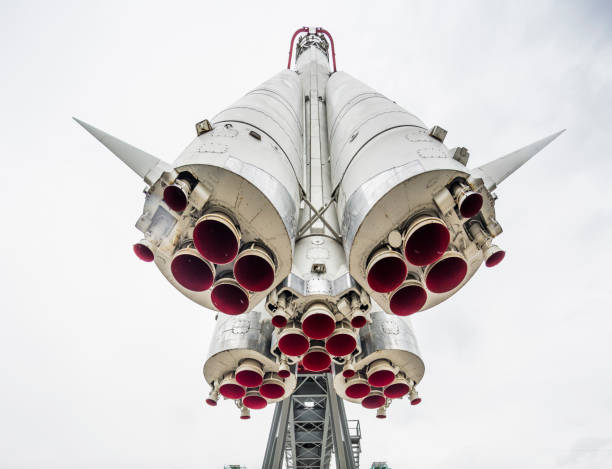
Baikonur isn’t a city you’ll find on most maps. It’s a leased Russian installation in Kazakhstan, built during the Cold War when the Soviet Union needed a remote location far from prying eyes. The steppe is flat, windswept, and brutally dry. Winter hits minus forty. Summer bakes past a hundred. It’s a place that doesn’t care about your comfort. That’s exactly why they chose it. The launch pad itself, Site 1/5, is forever known as Gagarin’s Start. On April 12, 1961, a modified R-7 rocket, the same basic design that still launches Soyuz today, lifted a Vostok capsule with Gagarin strapped inside. He didn’t have a control stick. He had a bag of crackers. That’s how raw spaceflight was then.
Today, walking that same pad feels like stepping into a time capsule. The concrete is cracked. The service tower is a metal skeleton. You can stand where Gagarin stood, looking up at the same sky he saw, and realize that the technology hasn’t changed all that much. The Soyuz rocket that launches crew today is a direct descendant of that R-7. The pad at Site 31, also at Baikonur, handles most modern manned launches. It’s a few miles from Gagarin’s Start, but the experience is the same. You hear the countdown over loudspeakers in Russian. You feel the rumble in your boots when those five liquid-fuel engines ignite. It’s not sleek. It’s not clean. It’s pure, brute-force engineering.
The reason Baikonur still matters, even with SpaceX and Blue Origin building their own pads, is that it’s the only way to get humans to the International Space Station from anywhere besides Cape Canaveral. Russia controls it. Kazakhstan tolerates it. For the last two decades, every American astronaut who went to the ISS went through Baikonur, strapped into a Soyuz capsule, and launched from the same steppe where Gagarin stood. That’s not nostalgia. That’s operational reality. The U.S. now has Crew Dragon, but Baikonur remains the backup, the veteran, the old man who still gets the job done when the new kids have problems.
If you ever visit, you’ll see the museum on site. It’s small, underfunded, and full of artifacts that would make a Smithsonian curator weep. Gagarin’s pressure suit. Korolev’s desk. A chunk of the burned Vostok capsule. It’s dusty, unglamorous, and exactly how space history should feel. But the real experience isn’t the museum. It’s standing at Site 1/5, watching a sunrise over the steppe, and knowing that every launch since that first one has followed the same trajectory, the same physics, the same gamble. The Soyuz rocket is a legend because it works. The launch sites at Baikonur are legendary because they’ve never stopped working.
Don’t confuse Baikonur with the new commercial spaceports. Boca Chica, Texas, is all about rapid iteration and stainless steel. Cape Canaveral is about history mixed with Silicon Valley efficiency. Baikonur is about endurance. It’s a launch site that survived the collapse of the Soviet Union, the transition to a market economy, and years of underfunding. It’s still launching. It will still launch after the next generation of rockets flies. That’s the thing about walking the same steps as Gagarin. You realize that space travel isn’t just technology. It’s stubbornness. It’s a refusal to stop, even when the wind is howling and the dirt is in your teeth and you’re staring at a rocket that first flew before your parents were born.
For the casual enthusiast, Baikonur is the starting point. Not just for history, but for perspective. SpaceX will get you to Mars. Blue Origin will get you to orbit. But Baikonur got us to Gagarin, and that opened the door for everything else. If you ever get a chance to stand on that pad, take it. You’ll never look at a launch the same way again.
Space News
Latest Articles
New rockets, upcoming launches, and the stories shaping humanity's push off this planet. No astronomy degree required.