Pathfinder Sojourner and the internet explosion
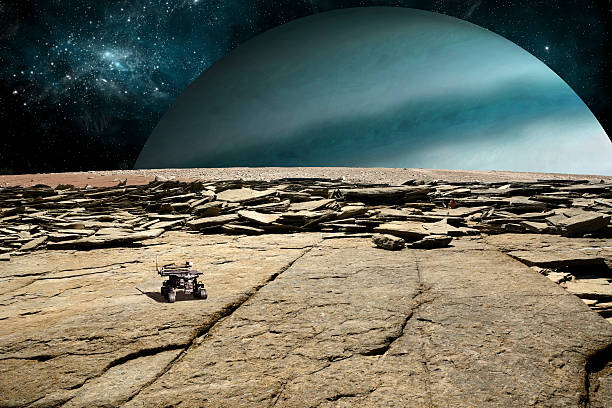
The mission itself was a masterpiece of risk versus reward. NASA had not successfully landed anything on Mars since the Viking landers in 1976. Those had been massive, expensive, and scientific heavyweights. Pathfinder, by contrast, was a low-cost, high-value testbed. It used airbags to bounce to a stop on Mars, a technique that seemed insane on paper but worked beautifully. Sojourner was just 23 pounds, about the size of a microwave, with a top speed of 0.6 inches per second. It carried a simple alpha proton X-ray spectrometer to analyze rocks. The science was solid, but the real breakthrough was how the mission was broadcast.
Before Pathfinder, NASA missions were covered by news agencies and documentaries, often days or weeks after data arrived. Pathfinder changed that. For the first time, the mission team posted images and data to the web as they came down. The public could log on to a dedicated NASA website and see a raw, grainy image of a Martian rock within hours of its capture. The site crashed repeatedly from traffic. In 1997, the internet was still a Wild West of Geocities pages and AOL chat rooms, and Pathfinder became its first space blockbuster. The number of hits to the Pathfinder website exceeded 500 million over the mission’s three-month lifespan. For context, that was a staggering figure for the time, and it demonstrated that a hungry audience existed for planetary exploration.
This shift mattered deeply for the search for life on Mars. Pathfinder did not find life, nor did it claim to. But it did find evidence of a wetter, more dynamic past. The mission revealed a landscape that had been shaped by catastrophic floods. Sojourner crawled over rounded cobbles and outcrops that suggested ancient water flow. Those findings directly bolstered the case that Mars, at some point, had the conditions necessary for microbial life. And because the public saw these images in near-real time on their home computers, the idea of Mars as a dead, static desert began to fade. The internet allowed millions to become armchair planetary scientists. They saw the rocks, read the mission logs, and tracked Sojourner’s daily journey. That engagement built a constituency for future Mars missions.
The mission also set the template for how NASA communicates with the public today. Every rover since—Spirit, Opportunity, Curiosity, and Perseverance—has had its own dedicated web presence, social media accounts, and raw data releases. The public now expects to see images of Mars within hours, not days. Pathfinder and Sojourner made that expectation the norm. They proved that a mission’s value isn’t just in the data returned to scientists, but in the inspiration it sends back to Earth. For a generation of American men in their twenties and thirties who grew up with the internet, Pathfinder was the moment when space exploration became interactive.
The mission ended in September 1997, when the lander’s battery failed and the rover stopped communicating. But its legacy is still alive. Every time you open a browser and scroll through raw images from the Jezero Crater, you are benefiting from the mission that taught NASA how to share. Pathfinder and Sojourner were not just a proof of concept for airbag landings and small rovers. They were a proof of concept for the internet age of planetary science. In the search for life on Mars, the tools matter, but so does the audience. Without the connection forged by that little rover in 1997, the public investment and excitement behind today’s Perseverance and future sample return missions would be far weaker.
So when you look up at Mars tonight, remember this: the mission that made Mars feel real and close wasn’t the first to land there. It was the one that let you watch it happen, one pixelated image at a time. Pathfinder and Sojourner didn’t just explore Mars. They brought it home.
Space News
Latest Articles
New rockets, upcoming launches, and the stories shaping humanity's push off this planet. No astronomy degree required.