Pulsars and the initial LGM-1 misidentification
That moment—the misidentification of the first pulsar as an extraterrestrial signal—remains one of the most fascinating footnotes in deep-space science. It tells us something about how easily our brains latch onto patterns, how cautiously we should interpret unknown signals from the cosmos, and why pulsars are still some of the most useful objects in the universe for studying extreme physics, gravitational waves, and even navigating spacecraft.
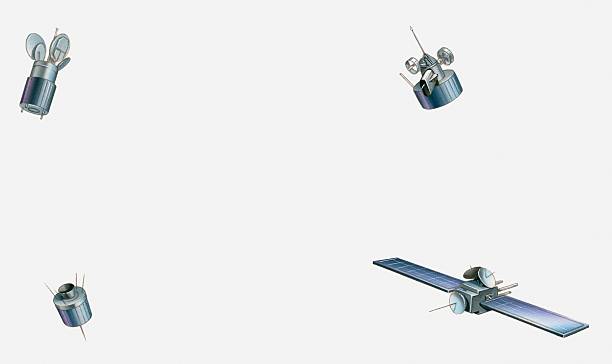
Let’s start with what actually happened. Bell Burnell was analyzing data from a massive radio array built to study quasars. The signal she found was unexpected because it pulsed so rapidly and consistently. No known natural object in the solar system behaves like that. The team ruled out Earth-based interference, satellites, and even secret military transmissions. That left only one option they were willing to consider: an intelligent source beyond Earth. They joked about it, but they also took it seriously enough to keep the discovery quiet for weeks while they verified the data. When they found another pulsing signal from a different part of the sky, the “little green men” hypothesis collapsed. You don’t get two alien civilizations sending identical, metronomic pulses from opposite sides of the galaxy. The only sensible explanation was a new class of astrophysical object.
That object was a pulsar—a rapidly spinning neutron star left over after a massive star goes supernova. Neutron stars are dense beyond comprehension. A single teaspoon of neutron star material would weigh about a billion tons. Their magnetic fields are trillions of times stronger than Earth’s. And because they spin so fast, they beam radiation out from their magnetic poles like lighthouse beams. If one of those beams sweeps past Earth, we see a pulse. The regularity is built into the physics: a spinning neutron star in a vacuum isn’t slowing down much over human timescales. Some pulsars rival atomic clocks for precision.
The LGM-1 episode wasn’t a failure—it was a lesson. It taught astronomers that nature can produce signals that mimic intelligence. This is directly relevant to the modern search for extraterrestrial intelligence and to the field this site covers: Fast Radio Bursts and the Unknown Signals. Every time a new mysterious signal appears—like the repeating FRB from a dwarf galaxy, or the strange slow radio pulses from unexpected sources—there’s a temptation to leap to the alien explanation. But the history of pulsars shows us that the more exotic the claim, the more mundane the eventual explanation often is.
Pulsars also proved to be more than a curiosity. They became precision tools. In 1974, astronomers used the timing of a binary pulsar to confirm the existence of gravitational waves—decades before LIGO directly detected them. Today, pulsars are being used to build a galactic-scale gravitational wave detector. By monitoring an array of millisecond pulsars across the sky, scientists look for tiny timing anomalies caused by passing gravitational waves. It’s like turning the entire Milky Way into a giant ear tuned to the ripples of merging supermassive black holes.
They also have practical applications. NASA has considered using pulsars as natural navigation beacons for deep-space probes. If you can measure the arrival time of pulses from multiple known pulsars, you can triangulate your position anywhere in the solar system—no need for Earth-based commands. It’s GPS, but powered by dead stars.
The LGM-1 misidentification also changed how science handles new signals. The team’s caution—holding back publication, verifying with multiple detectors—set a standard for future work. That same rigor applies today to FRBs, which are still unexplained but increasingly believed to come from magnetars, not civilizations. The moment you stop considering the alien hypothesis entirely, you close the door to real discovery. The trick is keeping the door open without running through it screaming “aliens” every time your radio telescope sneezes.
So next time you hear about a mysterious signal from deep space, remember LGM-1. Remember the lighthouse in the sky that was almost mistaken for a message. The universe is strange enough without needing little green men. But it took a false alarm to teach us just how strange it can be.
Space News
Latest Articles
New rockets, upcoming launches, and the stories shaping humanity's push off this planet. No astronomy degree required.