Rare Earth hypothesis and the geological coincidences
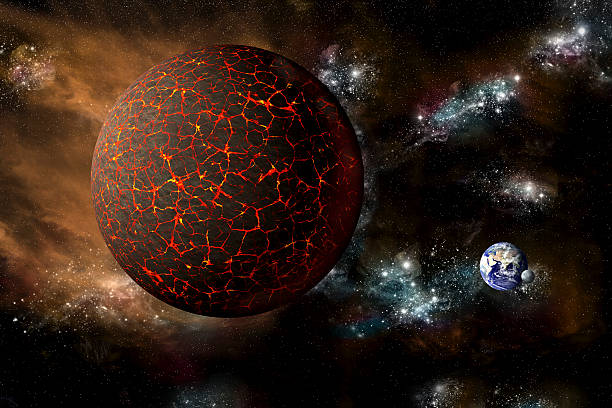
The Rare Earth hypothesis, popularized by paleontologist Peter Ward and astronomer Donald Brownlee in their 2000 book, argues that complex animal life—anything beyond microbes—requires an almost absurd series of geological and astronomical coincidences. It’s not that life itself is rare. Microbes might be everywhere, hitching rides on comets or brewing in subsurface oceans on icy moons. The real bottleneck is what it takes to build a civilization. And that bottleneck starts with plate tectonics.
Plate tectonics is the engine of planetary habitability. On Earth, moving crustal plates recycle carbon, regulate long-term climate, and generate the magnetic field that shields us from solar radiation. Without plate tectonics, carbon dioxide builds up in the atmosphere from volcanoes, trapping heat until the planet turns into a Venus-style pressure cooker. Or it gets locked up in rocks, starving the atmosphere and freezing the surface like Mars. Earth’s perfect balance depends on just the right amount of internal heat, a crust that’s brittle enough to break but ductile enough to slide, and a steady supply of water to lubricate subduction zones. Scientists have yet to find another rocky planet in the habitable zone that clearly possesses plate tectonics. Mars had hints of it billions of years ago, then it stopped. Venus may have it in a stagnant form, but its surface is a hellscape. Earth might be the only rock in the galaxy with working tectonic plates.
Then there’s the Moon. Earth has a disproportionately large moon compared to its size. According to the Giant Impact Hypothesis, a Mars-sized object slammed into the proto-Earth, blasting debris that coalesced into our lunar companion. That impact did more than ruin the dinosaurs’ ancestors. It tilted Earth’s axis to a stable 23.5 degrees, giving us seasons that vary enough to drive evolution but not so wildly that climate flips from ice age to inferno. Without the Moon’s gravitational anchor, Earth’s axial tilt would wobble chaotically over tens of thousands of years, causing catastrophic climate shifts. Complex life needs stability to evolve intelligence. Most planets don’t get a stabilizing moon. Most planets don’t get a moon at all, or they capture tiny asteroids that wobble away.
The Jupiter factor adds another layer of coincidence. Jupiter acts like a cosmic pinball machine, gravitationally flinging comets and asteroids out of the inner solar system before they can hit Earth. But the gas giant’s position is a Goldilocks problem. If Jupiter were significantly closer to the Sun, its gravity would disrupt the inner planets’ orbits, either ejecting Earth from the habitable zone or sending it smashing into Venus. If Jupiter were much farther out, Earth would get bombarded by comets every few million years, sterilizing the surface. Our solar system’s architecture—with Jupiter sitting at just the right distance—limits impacts to a survivable cadence while still occasionally delivering organic materials. Move that gas giant a few million miles in either direction, and you get a dead planet.
Even the Sun itself is a rare bird. Most stars in the Milky Way are red dwarfs—small, dim, and violently flaring. A red dwarf’s habitable zone is so close that planets get tidally locked, one side baked, the other frozen. Flares from young red dwarfs can strip away atmospheres entirely. Our Sun, a G-type star, is stable, relatively quiet, and lives for about ten billion years, giving evolution plenty of time to cook up brains and opposable thumbs. G-type stars make up only about 7% of the galaxy’s stellar population. Most of them are in binary or multiple-star systems, which often scramble planetary orbits. A single, stable, long-lived G-type star like the Sun is actually an outlier.
Put it all together: a rocky planet with plate tectonics, a stabilizing big moon, a Jupiter-sized guardian at the right distance, and a stable G-type star. That’s a geological and astronomical alignment that looks less like a typical planet and more like a fluke. The Rare Earth hypothesis doesn’t say life is impossible elsewhere. It says complex, tool-using, civilization-building life is so rare that the Milky Way might have only one or two such planets at any given time. And if we’re the only one right now? The Great Silence starts to make perfect sense.
Space News
Latest Articles
New rockets, upcoming launches, and the stories shaping humanity's push off this planet. No astronomy degree required.