Rolex GMT-Master and the Apollo 13 story
This isn’t a myth. It’s not marketing fluff from a watch brand. It’s a real piece of engineering history that should matter to anyone who cares about tools that actually do the job when the job goes sideways.
Here’s what happened.
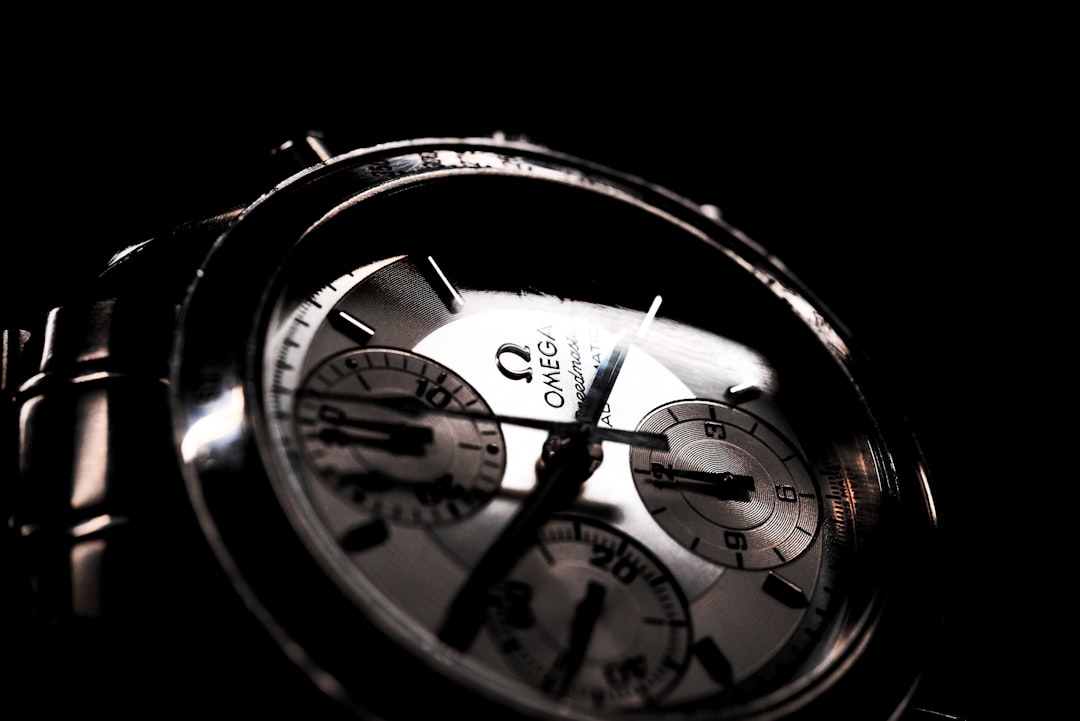
The Apollo 13 astronauts wore Omega Speedmasters for EVA and mission-essential timing. That part is well known. But Commander Jim Lovell, a Navy pilot and veteran of Gemini 7 and Apollo 8, also strapped on his personal Rolex GMT-Master 1675 for the flight. He wore it on his right wrist, below his spacesuit cuff. It was not NASA-issued. It was his own gear.
When the explosion crippled the command module, the astronauts had to power down almost everything to preserve battery life for re-entry. That included the digital timers and clocks they relied on for critical burn durations. They were flying blind on time—literally. Mission Control in Houston needed them to execute specific engine burns to adjust their trajectory, and those burns had to be precise to within fractions of a second.
The Lunar Module’s guidance computer could handle the calculations, but without a reliable, independent time source that didn’t draw power, there was no way to manually count down those burns without error. The spacecraft’s clocks were either dead or unreliable. The astronauts’ Omega Speedmasters were mechanical and self-winding, yes, but they had been primarily designed for use during extravehicular activity—not as a primary timing reference for navigation burns.
That’s where Lovell’s GMT-Master came in. It was a tool designed for pilots. Dual time zone capability, a 24-hour bezel, and a robust movement that didn’t need a battery. When the crew needed to measure the precise duration of a burn—like the critical 14-second firing that put them on a free-return trajectory around the moon—Lovell could glance at his wrist and get the answer without draining the spacecraft’s shrinking power reserves. He wore it through the entire crisis.
The watch itself didn’t save the mission. The teams on the ground, the adaptations of the LM, the sheer grit of the crew did that. But the GMT-Master was the one piece of gear that never failed, never needed power, and never stopped working when everything else went dark. It was as close to “mission-ready” as a watch can get.
For the purposes of this article—Gear—let’s be clear about why this matters. A dive watch, a pilot watch, a field watch are all forms of gear. But the difference between a watch that’s a fashion accessory and one that’s actual equipment is whether you’d trust your life to it. Lovell trusted his GMT-Master. He didn’t take it off because it was expensive. He took it because it was reliable.
The Rolex GMT-Master itself debuted in 1954, designed in collaboration with Pan Am pilots for transatlantic flights that crossed multiple time zones. The 24-hour bezel was a simple, mechanical solution to a real problem: tracking home time and local time simultaneously, without needing batteries or digital circuits. By 1970, the watch had already proven itself in aviation and military contexts. Apollo 13 just elevated that reputation to the stratosphere.
Today, the GMT-Master is still in production, still uses a mechanical movement, and still has that distinctive 24-hour bezel. Yes, it’s a luxury item. Yes, it costs more than a decent used car. But the fundamental design—tool, not trinket—hasn’t changed. The same gear principles that got Lovell home apply to anyone who operates a vehicle, flies a drone, or simply wants a watch that will outlast them.
Apollo 13 is not a story about a watch. It’s a story about resourcefulness, teamwork, and the will to survive. But the GMT-Master is a reminder that good gear doesn’t have to be complicated. It just has to work.
If you’re building your own kit—whether for a hiking trip, a track day, or just keeping your life organized on a daily basis—ask yourself one question: Would you trust it to count down the last seconds of your re-entry burn? If the answer is no, find something better. Lovell did.
Space News
Latest Articles
New rockets, upcoming launches, and the stories shaping humanity's push off this planet. No astronomy degree required.