Spaghettification and the tidal force death
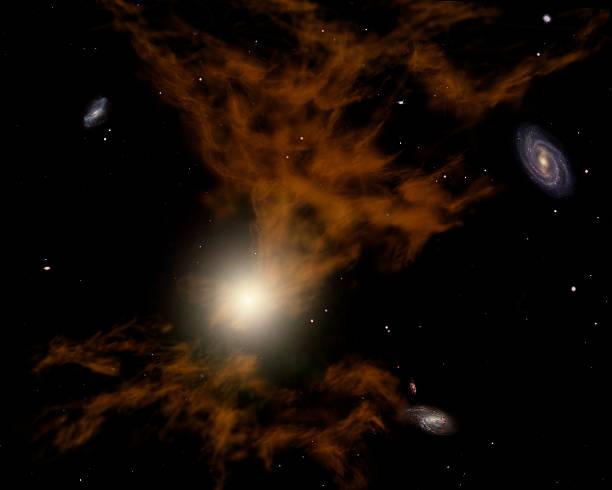
Let’s kill the sci-fi fluff. Black holes aren’t cosmic vacuum cleaners that “suck” things in. They’re regions where gravity becomes so extreme that the usual rules of physics bend—literally. When you fall toward a black hole, gravity doesn’t pull evenly on your entire body. That’s the key. The force acting on your feet is much stronger than the force on your head, because your feet are closer to the black hole’s center. This difference, called a tidal force, stretches you vertically and compresses you horizontally. The result? You get pulled into a long, thin stream of matter. Spaghettification.
For a supermassive black hole—like the one at the center of our Milky Way, Sagittarius A—this process might happen after you cross the event horizon. That’s because the gravitational gradient across your body is gentler over large distances. But for a stellar-mass black hole, say one with about ten times the Sun’s mass, spaghettification begins well before you reach the event horizon. Your death starts in deep space, long before you vanish from the observable universe.
Here’s the straightforward breakdown. Your body is mostly water and soft tissue. The tidal forces don’t care about your bones or your muscles. They treat you like a fluid. As the difference in gravitational pull across your body increases, your cells begin to tear apart. The process is fast. Estimates suggest that for a ten-solar-mass black hole, spaghettification takes less than a second. You don’t feel pain for long, if at all, because your nervous system disintegrates almost instantly. But in that split second, the force is so extreme that your atoms themselves get stretched. Your legs elongate. Your torso thins. Your head elongates. You become a glowing line of plasma, heated by friction and compression, before that line itself gets pulled into the singularity.
What does this have to do with deep space and the future of space travel? Everything. If humanity ever builds ships that can cross interstellar distances, black holes aren’t just hazards—they might be destinations. Some astrophysicists theorize that black holes could be used as gravitational slingshots or energy sources. But any crew approaching one needs to know the hard reality. No shield can protect you from tidal forces. No advanced material can resist a gradient that can crush neutron stars. The event horizon is a point of no return, but spaghettification is the actual kill. And it happens in deep space, far from any star system, in the absolute silence of the void.
There’s also a deeper lesson here about the nature of space-time. When you’re spaghettified, you aren’t just dying. You’re being converted into information. The black hole “records” your mass, charge, and angular momentum—that’s it. Everything that made you, from your memories to your scars, gets erased. This is the black hole information paradox in action. For a casual space enthusiast, it’s a brutal reality check. The universe doesn’t care about your story. Deep space doesn’t offer mercy.
But let’s not pretend this is purely grim. Understanding spaghettification helps us test the limits of general relativity. It’s a natural laboratory for extreme physics. Scientists use computer simulations to model tidal disruption events, where a star gets ripped apart by a black hole and emits massive X-ray flares. These events happen in deep space all the time. We can observe them from Earth. And every time we do, we learn more about how gravity behaves when it’s turned up to eleven.
For the American man in his twenties reading this, the takeaway is simple. Space is not your friend. The future of space travel will involve risks that no Hollywood movie prepares you for. Black holes aren’t portals to other universes. They’re traps. And spaghettification is the most efficient, most violent way the cosmos has ever invented to say “you don’t belong here.” So when you look up at the stars, remember that deep space isn’t just empty. It’s actively dangerous. And if you ever find yourself falling toward a black hole, don’t worry about the event horizon. Worry about the stretch.
Space News
Latest Articles
New rockets, upcoming launches, and the stories shaping humanity's push off this planet. No astronomy degree required.