Phoebe and the captured Kuiper Belt object
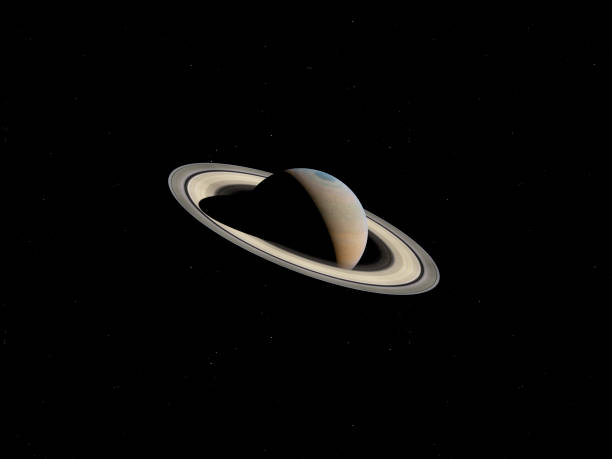
Phoebe’s story starts way out past Neptune, in the Kuiper Belt—a vast ring of icy bodies, dwarf planets, and comet-like objects. Most of those objects stay put, but some get kicked inward by gravitational interactions. Phoebe was one of those unlucky wanderers. It drifted into Saturn’s neighborhood and got captured, settling into a distant, inclined, retrograde orbit. That means it moves opposite to the direction of most other moons and the rings themselves. That alone makes it a destination worth understanding. It’s a pristine sample of early solar system chemistry, mostly untouched by the heat and geological activity that have altered Saturn’s other moons. If you want to study what the outer solar system looked like 4.5 billion years ago, you go to Phoebe.
The Cassini mission gave us our best look at this moon. In 2004, the probe flew by at a distance of about 1,300 miles and sent back images of a lumpy, dark, heavily cratered body. Phoebe is about 130 miles across, shaped like a slightly squashed sphere. Its surface is black as charcoal, covered in a layer of carbon-rich dust and organic compounds. Scientists found evidence of water ice, carbon dioxide, and even traces of complex hydrocarbons. The surface temperature hovers around -200 degrees Fahrenheit, so nothing is melting or moving. It’s a frozen time capsule. The impact craters are everywhere, and many of them show distinct layers of bright and dark material, suggesting Phoebe has a complex internal structure—maybe a layered crust over a denser core.
The Cassini data also revealed that Phoebe is the source of Saturn’s outermost ring, the Phoebe ring. This is a huge, diffuse ring of dust that extends from about 3 million to 10 million miles from Saturn. The dust comes from micrometeoroid impacts on Phoebe’s surface, which knock particles loose. Over time, those particles spiral inward and get absorbed by Saturn’s other moons. That means Phoebe’s material literally feeds the Saturn system. For a future mission, that dust is accessible and contains pristine organic material that could be sampled without even landing.
Why should a casual space enthusiast care about a black, frozen rock in the outer Saturn system? For one, Phoebe is a natural laboratory for understanding planet formation. Every captured Kuiper Belt object tells us about the conditions in the early solar system. Studying Phoebe up close could reveal how volatiles like water and organic compounds were delivered to the inner planets, including Earth. That has implications for the origin of life. For two, Phoebe is a potential source of resources. The ice, carbon compounds, and minerals on its surface could be extracted and used for fuel or life support in future deep-space missions. If humans ever establish a permanent presence in the outer solar system, objects like Phoebe will be the gas stations.
The catch is that Phoebe is hard to reach. Its orbit is steep and distant, so any mission would require a lot of delta-v—rocket fuel. But that’s the kind of challenge that gets engineers excited. A dedicated Phoebe orbiter or lander could map the entire surface, drill into the ice, and return samples to Earth. NASA’s New Frontiers program has considered similar missions, and a Phoebe-focused proposal would fit right in. Private companies looking at asteroid mining should also pay attention. Phoebe is basically a Kuiper Belt object sitting right there in Saturn’s gravitational well, easier to access than anything in the actual Kuiper Belt.
For now, Phoebe remains a destination on paper. No missions are scheduled to visit it again. But every time we look at Cassini’s images, we’re staring at a piece of the outer solar system that somehow ended up in Saturn’s backyard. It’s a dark, cold, ancient world that doesn’t play by the rules. And that’s exactly why it’s worth the trip.
Space News
Latest Articles
New rockets, upcoming launches, and the stories shaping humanity's push off this planet. No astronomy degree required.