The constant hum of fans and pumps
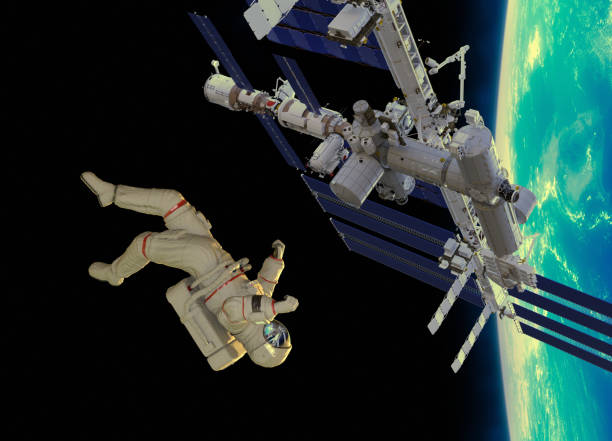
We romanticize rockets, thrusters, and plasma engines. But the real engineering marvel of space travel isn’t how we get off Earth—it’s how we stay alive once we’re up there. And for American men in their 20s who grew up on The Martian and Interstellar, the reality is far more brutal and far more fascinating than Hollywood shows. Life support isn’t a silver box with a blinking light. It’s a constant, unglamorous war against entropy, fought by rotating machinery that never stops.
Let’s talk about the fans first. In microgravity, air doesn’t move. Without natural convection, the carbon dioxide you exhale would pool around your head like a gas cloud—silent, invisible, and lethal within minutes. So every spacecraft has a network of circulation fans. They’re not sexy. They’re not quiet. They run 24/7, pushing air through HEPA filters, through carbon dioxide scrubbers (called “thermal molecular sieves” on the ISS), and back into your face. The hum you hear is 150 cubic feet per minute of air being forced through a maze of ducts, ensuring your CO₂ concentration stays below 0.5%. Go above 1%, and you get headaches, nausea, and impaired judgment. Above 3%, you pass out. The fans keep you sharp. They keep you alive.
Then there are the pumps. Water pumps, coolant pumps, urine processing pumps. On the International Space Station, the Water Recovery System is a masterpiece of janky, reliable plumbing. Your sweat, your breath condensation, and your urine are collected, filtered, and distilled. The urine distillation assembly uses a centrifuge and a vapor compressor—literally a spinning drum and a pump—to separate water from waste solids. The system recovers about 93% of the water from urine. That means every time you take a sip, you’re drinking water that was, a few hours ago, steaming in a toilet. The pumps handle that. They run at thousands of RPM, vibrating through the station’s trusses. That hum? That’s the sound of recycling. Without those pumps, each crew member would need 30 kilograms of water per day. On a two-year Mars mission, that’s 21,900 kilograms per person—impossible to launch. The pumps buy you mass. They buy you time.
Don’t forget the oxygen generation system. On the ISS, the Elektron and the newer Oxygen Generation Assembly use electrolysis to split water into breathable oxygen and hydrogen. But that process is power-hungry—requires about 1 kilowatt of electricity and produces enough O₂ for a crew of six. The hydrogen gets dumped overboard, or fed into a Sabatier reactor to make more water. But none of that works without the fluid pumps moving water through the electrolysis cells at precise pressures. A single pump failure can starve the system, flooding the cabin with hydrogen or starving the crew of oxygen. Redundancy means two pumps. Redundancy means spare parts that never get delivered for months. The hum is the sound of you not suffocating.
And then there’s thermal control. Space is a brutal place for heat. One side of the ISS can be 250°F in sunlight; the other side negative 250°F in shadow. Without cooling pumps circulating ammonia through radiators, the electronics would fry and the crew would cook. The External Thermal Control System moves 4,700 pounds of ammonia through 17,000 feet of tubing. The pumps run constantly, pushing that toxic coolant at 3,000 pounds per hour. Any leak is a catastrophe. No leak? Just a low, constant hum. That hum is the sound of your delicate 98.6°F body staying exactly that temperature.
The next generation of life support, for Starship or Mars missions, won’t change the fundamentals. The fans and pumps will be quieter, maybe more efficient, but they’ll still never stop. On a Mars mission, there’s no resupply. If a fan fails, you fix it or you die. If a pump seals blow, you cannibalize parts from another system or you die. The engineers designing these systems know that the most critical component isn’t the computer—it’s the motor that spins the impeller. It’s the bearing that doesn’t seize after 10,000 hours of continuous operation.
So next time you watch a launch, listen past the roar of the engines. Imagine the hum that starts the moment the astronauts board and doesn’t stop until they’re back on solid ground. That hum is technology at its most primal. It’s fans moving air. It’s pumps moving water, coolant, and waste. It’s the beat of a machine heart that refuses to miss a single beat. And for the men and women strapped into that tin can, it’s the only sound that really matters.
Space News
Latest Articles
New rockets, upcoming launches, and the stories shaping humanity's push off this planet. No astronomy degree required.