The Mars Decade Plan: Why Survival Comes Down to Water, Radiation, and Sanity

Water is the first make-or-break resource. Mars has ice, especially under the poles and in mid-latitude deposits. But finding it from orbit isn’t mining it on the ground. A colony needs water for drinking, growing food, making oxygen, and producing hydrogen fuel. It also needs water as radiation shielding. Send robotic ice prospectors and drilling rigs first to map deposits, test extraction, and stockpile water. If the first crew lands next to a dry hole, the mission is in trouble. The Decade Plan has to treat water like oil: find it, prove you can pull it out, and build the infrastructure before the humans show up.
Radiation is the second killer. Mars has no global magnetic field and a thin atmosphere. The surface gets hit with galactic cosmic rays and occasional solar particle events. That raises cancer, brain, and heart risks. You cannot solve this with a thin metal can. You need mass. The best shielding is regolith, the dirt under your boots. Bury the habitat, cover it with sandbags, or build inside lava tubes. Water walls work too, but water is heavy. Every kilogram launched from Earth costs a fortune. The Decade Plan needs habitats that use Martian materials, not just imported panels.
Then there is the closed-loop problem. On the International Space Station, you can get resupply. On Mars, you cannot. If a CO2 scrubber breaks, you suffocate. If the water recycler fails, you run dry. A Mars colony needs redundant life support, spare parts, and the ability to manufacture replacements on-site. 3D printing helps. So does a robust power grid. Solar is useful, but dust storms and night cycles make it unreliable. Nuclear fission reactors like Kilopower are the baseline. Without steady power, ice mining, fuel production, and life support all stop.
Food is another bottleneck. You cannot ship enough freeze-dried meals for a permanent colony. You need to grow calories. Hydroponics can work, but it takes energy, water, and nutrients. Martian soil contains perchlorates, which are toxic to humans. You can wash it, but that uses water. A better path is sealed greenhouses with engineered soil or hydroponic trays. Potatoes alone will not cut it. You need grains, legumes, greens, and maybe insects or cultured protein for fats and amino acids. The Decade Plan should assume food production is a full-time job, not a side experiment.
The human mind is the final piece. A Mars crew will live in a small space for years. Communication with Earth has a delay of up to 22 minutes. There is no early return. If someone has a medical emergency, the best doctor is on the crew. If someone has a mental breakdown, the whole mission is at risk. Privacy matters. So do routines, exercise, virtual reality, and clear authority. Analog habitats help, but no simulation copies the real thing. The Decade Plan has to design for boredom, conflict, and isolation as seriously as it designs for oxygen.
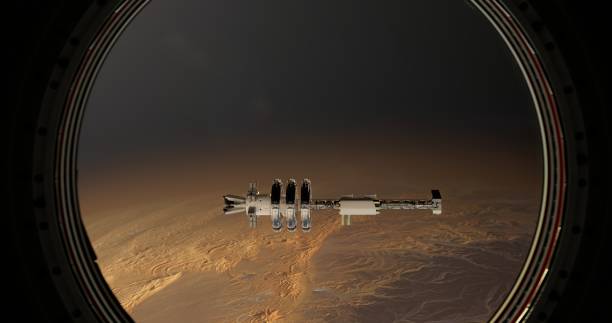
None of this means Mars is impossible. It means the Decade Plan is not a sprint to plant a flag. It is a construction project. First crews will live in landers and inflatable modules, spending most of their time fixing machines, mining ice, and expanding the base. Each launch window comes every 26 months. Miss a cargo shipment, and you wait two more years. The colony grows one module, one power unit, and one water tank at a time.
The next decade will decide whether Mars becomes a settlement or a stunt. If we solve water, radiation, power, closed-loop life support, and the human factor, a colony is possible. If we treat those as afterthoughts, the Decade Plan ends with footprints and a flag. The difference is not inspiration. It is logistics. That is the unglamorous work that gets humans to stay.
Space News
Latest Articles
New rockets, upcoming launches, and the stories shaping humanity's push off this planet. No astronomy degree required.