Space Farming Is the Real Bottleneck for Living Off Earth
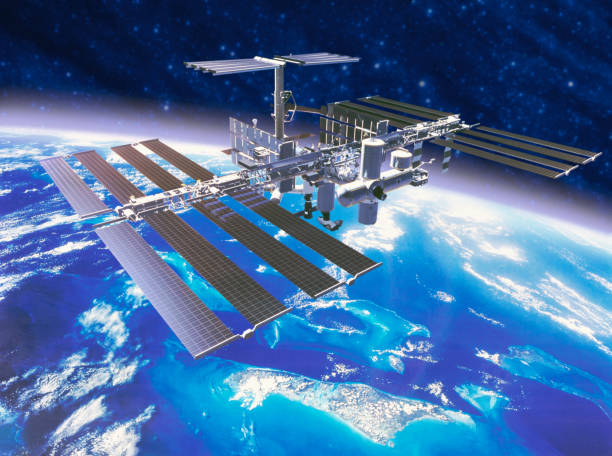
Space farming means growing food in a controlled environment. Think hydroponics, aeroponics, and LED grow lights. Instead of soil, roots sit in nutrient solution or mist. NASA has already grown lettuce, radishes, and peppers on the ISS. Those experiments prove plants can grow in microgravity. But leafy greens are easy. They are mostly water and vitamins. They do not solve the calorie problem. To feed a settlement, you need staple crops like wheat, rice, potatoes, sweet potatoes, and soy. You need protein, fats, and complex carbs. That is a different level of difficulty.
Microgravity is the first big problem. Water does not pool the way it does on Earth. It clumps, floats, and creeps along surfaces. Roots need both water and oxygen. If the root zone gets too wet, plants drown. If it gets too dry, they die. Nutrient delivery has to be precise. Pumps, sensors, and capillary systems have to work without gravity to separate gas from liquid. Astronauts have to manage fluid loops, humidity, and condensation. A leak or a clog can kill a crop fast.
Pollination is another issue. There are no bees in space. Some crops self-pollinate, but tomatoes, peppers, and squash need help. Astronauts can pollinate by hand with a small brush or vibrator. That works for a few plants. It does not scale to a farm that feeds dozens of people. You also need seed production. Plants must complete full life cycles and produce viable seeds across generations. Radiation and stress can cause mutations. You need stable genetics and backups.
Lighting and power are huge. Plants need a lot of light. LEDs are efficient, but a large farm still pulls serious electricity. On Mars, solar power is weaker because the planet is farther from the sun. Dust storms can block sunlight for weeks. Nuclear power or a mix of sources might be needed. All that light creates heat. Heat rejection in a sealed habitat is hard. Every system has to be closed-loop because you cannot keep shipping supplies.
Radiation is a silent killer. On the Martian surface, cosmic rays and solar particles hit everything. A thin greenhouse does not provide much shielding. You could bury the farm under regolith or build thick water walls. That adds mass and complexity. Mars soil, called regolith, is not friendly either. It contains toxic perchlorates. You cannot just plant potatoes in it like in The Martian. You have to wash it, treat it, and add organic matter. Even then, it may not support healthy crops without careful management.
Then there is the human factor. Food is not just fuel. It is morale. Astronauts get tired of the same packaged meals. Fresh greens and herbs make a difference. Variety keeps people eating enough. Nutrition matters too. Vitamins degrade over time. A farm can provide fresh produce, but it has to be reliable. A failed crop could mean a bad month. A failed farm could mean mission failure. You can supplement with algae, insects, or cultured meat, but plants remain the backbone. Redundancy is everything. That is the food problem.
The bottom line is that space farming is not about growing a few leaves for a photo op. It is about building a food factory that runs for years with minimal input. We have pieces of the technology. Hydroponics works. LEDs work. ISS experiments work. The hard part is scaling, automating, and making it tough enough for deep space. If we solve that, we unlock Moon bases, Mars settlements, and long-duration transit. If we do not, space travel stays a camping trip with granola bars.
Space News
Latest Articles
New rockets, upcoming launches, and the stories shaping humanity's push off this planet. No astronomy degree required.