The Oort Cloud and the comet boundary
First, let’s get the scale right. The Oort Cloud isn’t close. It’s not even in the same neighborhood as Pluto. The Kuiper Belt, where short-period comets like Halley’s come from, ends around 50 astronomical units from the Sun. One AU is the distance from Earth to the Sun, about 93 million miles. The Oort Cloud starts at roughly 2,000 AU and stretches out to an estimated 100,000 AU. To put that in perspective, the Voyager 1 spacecraft—the farthest human-made object—is currently about 165 AU from Earth. It will take roughly 300 years to reach the inner edge of the Oort Cloud. And another 30,000 years to exit it. That’s not a road trip; that’s a generational commitment.
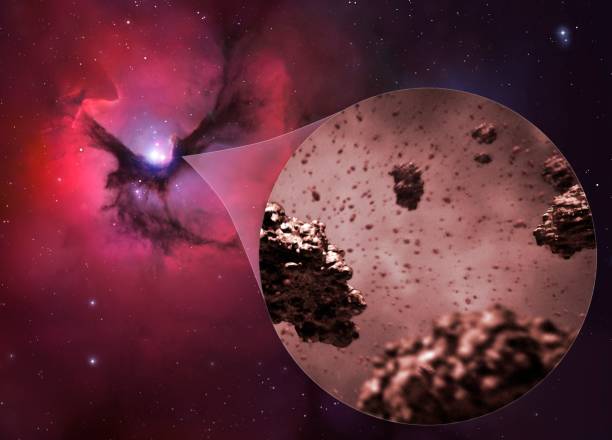
So what exactly is the Oort Cloud? It’s a relic. When the solar system formed about 4.6 billion years ago, the giant planets—Jupiter, Saturn, Uranus, and Neptune—went on a gravitational rampage. They flung smaller icy bodies outward like a cosmic pinball machine. Those leftovers settled into a distant, loosely bound shell. That’s the Oort Cloud. It’s made of water ice, methane, ammonia, and dust—basically the raw ingredients of a comet. Most of these objects are small, only a few miles across, but there are billions of them. Some estimates suggest the total mass of the Oort Cloud could be up to five times that of Earth. That’s a lot of ice and rock just sitting in the deep freeze.
The Oort Cloud is also the reason we see long-period comets. These are the ones that take thousands or even millions of years to loop around the Sun. A passing star or a gravitational nudge from the galactic tide can knock an Oort Cloud object out of its orbit, sending it hurtling toward the inner solar system. When it gets close enough to the Sun, the ice vaporizes and creates that iconic glowing tail. In other words, every time you see a comet streak across the night sky, you’re watching a piece of deep space that has traveled tens of thousands of AU to say hello. It’s a direct message from the boundary of our solar system.
Now, here’s the part that matters for anyone interested in interstellar travel. The Oort Cloud is not just a scientific curiosity. It’s a barrier and a resource. If we ever send a mission beyond the Sun’s influence, we have to cross it. That means decades or centuries of exposure to radiation, micrometeoroids, and zero support from Earth. The Voyager probes are still sending data, but their power will die within a decade. A crewed mission? Forget it with current technology. But the Oort Cloud also contains water ice. Water can be split into hydrogen and oxygen for fuel or life support. So if we can learn to harvest these comets, the cloud becomes a pit stop, not a wall.
The real question is what lies beyond. Once you exit the Oort Cloud, you’re in true interstellar space. The nearest star, Proxima Centauri, is 4.24 light-years away. That’s 268,000 AU. The Oort Cloud is basically the front porch of our cosmic house. It’s the last recognizable part of home before you step into the black.
Right now, we don’t have a spacecraft designed to study the Oort Cloud up close. The New Horizons probe, which gave us Pluto, is headed toward the Kuiper Belt but won’t reach the Oort Cloud for decades. NASA has tossed around concepts like the Interstellar Probe, a mission that could launch in the 2030s and reach the inner edge within 50 years. But funding and political will are always the wild cards. The Oort Cloud remains largely theoretical because we’ve never directly observed it. We only know it exists because of comets and gravitational models. It’s a ghost boundary, but it’s real.
For now, the Oort Cloud is a reminder of how tiny our world really is. It’s the last outpost of the Sun’s gravity, a frozen graveyard of ancient material, and the gateway to the rest of the galaxy. If you’re following the future of space travel, keep your eyes on this invisible frontier. The next great leap won’t be to a new planet. It will be through the Oort Cloud, into a darkness we’ve only just begun to map.
Space News
Latest Articles
New rockets, upcoming launches, and the stories shaping humanity's push off this planet. No astronomy degree required.