The third-quarter phenomenon and the mission halfway slump

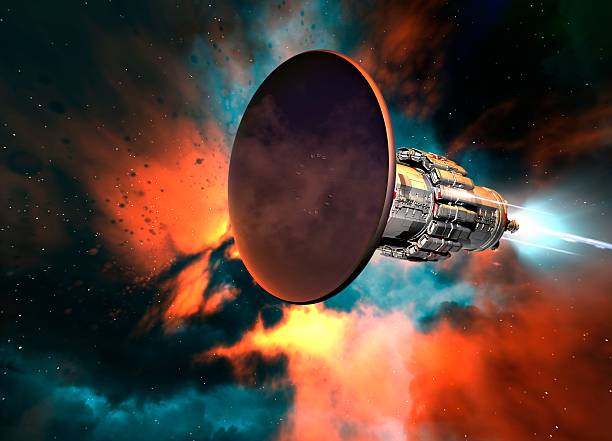
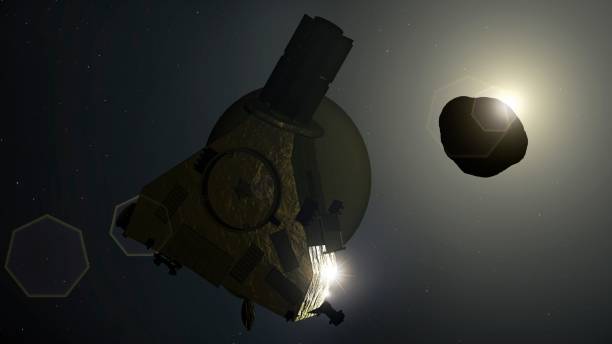
For American men in their twenties following the commercial space boom, this isn’t just academic. You’re the generation that will likely see routine missions to the Moon, Mars, and beyond. Understanding why the middle of a mission breaks people is just as important as knowing the delta-v to get there. The third-quarter phenomenon, also called the mission halfway slump, is the most dangerous period in long-duration spaceflight. And it’s not about physics. It’s about psychology.
The term comes from Antarctic research stations and early submarine patrols, but it applies perfectly to space. By the third quarter of any isolated, confined, and extreme environment mission, the initial adrenaline has evaporated. The first quarter is all excitement and adaptation. You’re learning the toilet, figuring out how to sleep in zero gravity, and staring out the window. The second quarter is competence—you know the ropes, you’re productive, morale is stable. Then comes the third quarter. That’s when the math flips against you.
You’ve been away from home long enough to miss real things—grass, wind on your face, the smell of coffee brewing in a kitchen. But you’re not close enough to the end to feel the countdown, the relief of reentry. You’re stuck in the middle. Research from NASA and the Russian space program shows that third-quarter crews report the highest levels of fatigue, irritability, depression, and interpersonal conflict. It’s not a coincidence. It’s a pattern.
Why does this happen? Part of it is the slow erosion of novelty. The human brain craves new stimuli to stay engaged. In space, every day is the same exact loop. Wake, work, eat, exercise, sleep. The same faces, the same recycled air, the same corridor that leads nowhere new. Your brain interprets this lack of fresh input as a threat or a failure. You start to feel trapped, even though you chose to be there.
Another factor is the loss of perspective. On Earth, you measure time by weekends, seasons, paychecks, relationships. In space, time becomes abstract. The mission clock ticks, but the halfway point feels like a milestone that keeps slipping backward. You realize you still have as much time ahead as you’ve already done behind you. That can crush motivation. Astronauts report feeling like they’re running a marathon with no finish line in sight.
Social dynamics are a huge part of the slump too. Living in a small crew for months means you know everyone’s habits, their annoying quirks, their moods. You can’t escape. Conflicts that would blow over in an afternoon on Earth fester for weeks. The third quarter is when minor grievances become major grudges. Russian cosmonauts have historically handled this by strictly enforcing alone time and personal space, even in a capsule the size of a van. American astronauts rely on scheduled private calls home and exercise as a pressure release.
The real question for the future of space travel is this: how do you build a mission that mitigates the third-quarter phenomenon? NASA’s Human Research Program has experimented with scheduling high-stakes work during the third quarter to keep crews engaged, but that risks burnout. Others recommend reinforcing the “why” of the mission through regular check-ins with mission control and personal video messages from family. The Japanese space agency has tried digital windows showing scenery from home. None of it’s perfect.
For a crew heading to Mars, the third-quarter phenomenon would be brutal. A round trip to Mars takes roughly 18 to 24 months. The halfway slump would hit, then linger for months. There’s no abort button, no rescue capsule, no quick trip home because you’re feeling down. That means psychological screening for Mars crews will be more important than any physical exam. You need people who can endure not just the isolation, but the specific misery of being exactly nowhere.
If you’re reading this and dreaming of applying to the Artemis program or SpaceX’s Starship missions, take the third-quarter phenomenon seriously. It’s not a weakness to admit that the middle of a mission is hell. It’s survival. The best crews don’t pretend everything is fine. They acknowledge the slump, build in countermeasures, and support each other through the long gray stretch. The third quarter is where missions are lost or won. It’s where you find out if you really have what it takes.
The window back to Earth is still far. The journey ahead is longer than you want. But you signed up for this. The slump will pass. It always does. Right before the fourth quarter hits, and suddenly, you’re almost home.
Space News
Latest Articles
New rockets, upcoming launches, and the stories shaping humanity's push off this planet. No astronomy degree required.