Voyager 1 and the heliopause crossing data
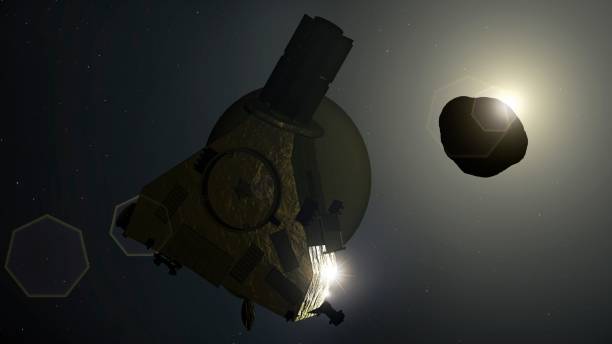
The heliopause isn’t a wall. It’s a turbulent, plasma-filled transition zone where the solar wind—a constant stream of charged particles blasted out by the Sun—finally loses momentum against the interstellar medium, the thin gas and dust between stars. For years, astronomers assumed this boundary would be smooth, like a bubble holding its shape. Voyager 1’s particle and magnetic field instruments told a different story. The crossing happened gradually, with multiple false alarms as the spacecraft dipped in and out of the heliosphere’s outer layers before fully breaking through. The data showed that the edge of our solar system is rippled, dynamic, and shaped by forces we’re still trying to understand.
One of the biggest surprises came from the plasma wave instrument. Before Voyager 1 crossed, scientists predicted that the density of interstellar plasma—the charged gas beyond the heliopause—would be relatively low. Instead, Voyager 1 measured densities roughly forty times higher than expected. That means the interstellar medium is thicker and more active than anyone anticipated. For deep space enthusiasts, that’s a critical detail. The environment between stars isn’t empty; it’s a soup of particles, magnetic fields, and cosmic rays that future interstellar probes will have to navigate.
The magnetic field data was equally eye-opening. Past the heliopause, Voyager 1 recorded magnetic fields pointing in a consistent direction, confirming that the spacecraft had left the Sun’s magnetic influence. But the field strength didn’t drop off cleanly. Instead, it fluctuated, revealing that the heliosphere’s magnetic “tail” stretches much farther than models predicted. This matters for anyone thinking about long-range communication or shielding for deep space missions. The interstellar magnetic field isn’t a uniform blanket—it’s a messy, tangled web that can deflect or trap energetic particles.
Voyager 1 also detected a sharp increase in galactic cosmic rays—high-energy particles from supernovae and other violent events outside the solar system. That spike confirmed that the heliosphere acts as a radiation shield for the inner planets, blocking a significant fraction of cosmic radiation. But the crossing data showed that this shielding isn’t perfect. The cosmic ray levels behind the heliopause are still substantial, and they vary with solar activity. For any crewed mission aiming for deep space, understanding that variability could mean the difference between safe travel and dangerous radiation exposure.
The heliopause crossing also resolved a long-standing mystery about the shape of the heliosphere itself. Some theorists argued that it was comet-shaped, with a long tail trailing behind the Sun as it moves through the galaxy. Others believed it was more spherical. Voyager 1’s data, combined with later readings from Voyager 2 (which crossed in 2018), points to a compressed, asymmetric boundary—a kind of dented bubble that gets squished on one side from the interstellar wind. That asymmetry means that future spacecraft leaving the solar system in different directions will encounter the heliopause at different distances and under different conditions.
What does this all mean for the future of deep space exploration? First, it proves that our models of the interstellar environment need serious updates. Engineers designing the next generation of interstellar probes can’t rely on old assumptions about low-density, quiet space. The Voyager data gives them real numbers for plasma density, magnetic field strength, and radiation levels. That isn’t just academic. NASA’s Interstellar Mapping and Acceleration Probe (IMAP), set to launch in the mid-2020s, will build directly on Voyager’s findings to map the heliopause in detail. Private deep space initiatives, from Breakthrough Starshot to early concepts for interstellar cargo missions, will eventually depend on this data to plan their trajectories.
Second, the heliopause crossing confirmed that Voyager 1’s nuclear power source, while fading, still has enough juice to operate some instruments through the late 2020s. That means more data is coming. Every year the spacecraft sends back readings from true interstellar space adds another piece to the puzzle. For casual space enthusiasts, that’s a rare chance to watch a planetary science mission transition into an interstellar one in real time.
Voyager 1 wasn’t designed for deep space. It was built to fly by Jupiter and Saturn, take some pictures, and send them home. Instead, it crossed a boundary no one was sure existed, and it keeps talking. The heliopause data rewrote the textbook on our solar system’s edge. The next chapter will be written by whatever follows it.
Space News
Latest Articles
New rockets, upcoming launches, and the stories shaping humanity's push off this planet. No astronomy degree required.