Starship to Starship propellant transfer challenge
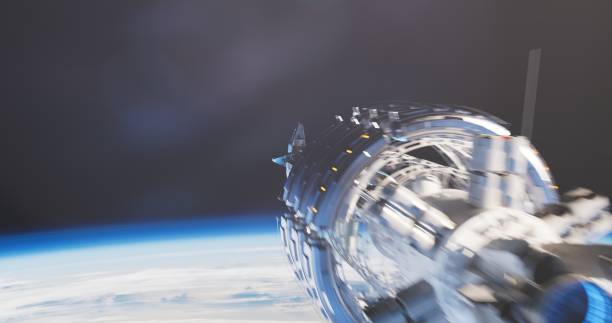
The basic physics is simple. Starship has two versions: a tanker and a cargo or crew ship. The tanker launches first, carrying extra propellant instead of payload. It rendezvouses and docks with the waiting Starship in low Earth orbit. Then it transfers liquid methane and liquid oxygen through the docking ports. The receiving Starship fills its tanks, fires its engines for trans-lunar injection or a Mars transit burn, and leaves Earth behind. The tanker either returns to Earth or burns up on reentry. Sounds clean on paper. In practice, it is a nightmare of fluid dynamics, thermal management, and precision navigation.
The first problem is boil-off. Methane and oxygen are cryogenic liquids. They boil at minus 260 and minus 297 degrees Fahrenheit, respectively. In the vacuum of space, there is no atmosphere to conduct heat away, so the tanks heat up from sunlight and from the ship’s own electronics. On a short flight to the Moon, boil-off is manageable. But a tanker might spend hours or days in orbit waiting for the other Starship to arrive. Every minute the propellant warms, you lose fuel. SpaceX will have to either insulate the tanks heavily, actively cool them, or move fast enough that boil-off doesn’t matter. They have already shown passive insulation on the early Starship prototypes, but orbital transfers will demand far more.
Then there is the docking problem. Starship is big. Two of them coming together in orbit requires millimeter-level precision. SpaceX already does this with Dragon capsules and the International Space Station, but those are small, lightweight vehicles. Starship is a 160-foot-tall monster. The docking ports have to be large enough to transfer tons of propellant quickly, and they have to seal perfectly. A leak in the vacuum of space would vent precious fuel and potentially create ice that jams the mechanism. SpaceX has not yet flight-tested a Starship-to-Starship docking in orbit. That will likely happen in the next year or two, and it will be one of the most watched events in spaceflight history.
The transfer itself is counterintuitive. In zero gravity, liquid does not settle at the bottom of a tank. It floats in blobs. You cannot just open a valve and let gravity feed the fuel like you do on Earth. SpaceX will have to use ullage thrusters to accelerate the tanker gently, pushing the liquid toward the outlet. This is called “settling.” Then the propellant is pumped or pressure-fed through the docking interface. The receiving Starship has to vent or manage the gas that builds up in its own tanks as the liquid arrives. The whole process must happen without sloshing causing instability or damaging the docking seal.
Another challenge is thermal shock. Piping that is cryogenically cold will contract. When liquid methane or oxygen flows through a valve that is slightly warmer, it can flash into gas and cause cavitation—tiny vapor bubbles that erode hardware over time. SpaceX has to design the transfer system to handle these temperature gradients across long ducts between two massive tanks. They have done similar work with ground testing at Starbase in Texas, but space is a harsher environment.
Why go through all this trouble? Because refueling in orbit multiplies Starship’s capabilities by a factor of ten or more. Without it, Starship can only reach low Earth orbit with a small payload. With a full tank of propellant transferred from a tanker, the same ship can send 100 tons to the Moon or 50 tons to Mars. NASA’s Artemis plan to land astronauts on the lunar south pole depends on this. The Human Landing System version of Starship will need to be refueled in Earth orbit before it heads to the Moon, then refueled again in lunar orbit before it can land. That means at least two tanker flights, likely more.
SpaceX has already made progress. They have done a successful propellant transfer test on the ground between two Starship prototypes. They have also demonstrated in-space relighting of Raptor engines, which is necessary for the final orbital insertion burns after refueling. The next big step is an orbital rendezvous between a tanker and a Starship, probably without transfer first, just to prove the guidance and navigation work. After that, they will attempt a real transfer.
The timeline is aggressive. SpaceX wants to be ready for a lunar landing demo by the end of 2025 or early 2026. That means they need to solve the propellant transfer challenge within the next two years. If they fail, the Artemis schedule slips, and Mars plans become a decade-long wait. If they succeed, the entire paradigm of space exploration changes. You no longer launch everything from Earth. You stage fuel in orbit, and Earth’s gravity well becomes just a speed bump.
For anyone tracking the future of spaceflight, docking and rendezvous tech is the quiet hero here. Everyone talks about the Raptor engine and the heat shield, but the real breakthrough that unlocks deep space is getting two Starships to mate in the dark and drink each other’s fuel without spilling a drop. That is the engineering problem of the decade, and SpaceX is running out of time to solve it.
Space News
Latest Articles
New rockets, upcoming launches, and the stories shaping humanity's push off this planet. No astronomy degree required.