The thrust-to-weight ratio arms race
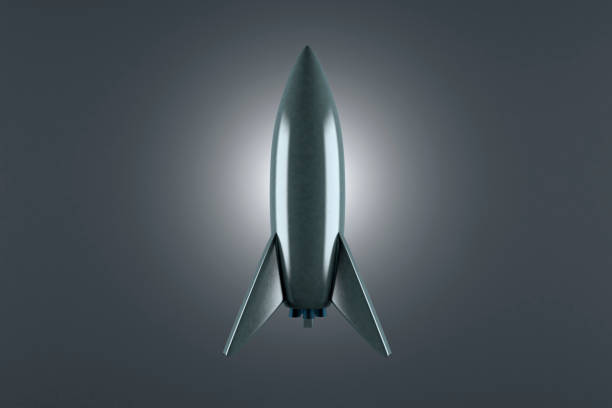
Thrust-to-weight ratio is exactly what it sounds like. You take the total thrust of the rocket at liftoff, measured in pounds or kilonewtons, and divide it by the vehicle’s fully fueled weight. If that number is barely above one, your rocket will struggle to leave the pad. If it’s around 1.5, you’ve got a decent lifter. But the new generation of rockets is targeting ratios that would have made engineers in the Apollo era laugh out loud. Think 1.8. Think 2.0. Even higher in some cases. Why? Because raw thrust isn’t just about looking cool. It’s about overcoming the tyranny of gravity more efficiently, carrying heavier payloads, and reducing the structural mass that wastes propellant on every flight.
The classic example of this trend is the Falcon 9. When SpaceX first flew it, the thrust-to-weight ratio at liftoff was around 1.3. It worked. It got payloads to orbit. But the Block 5 version pushed that number closer to 1.5, and the improvements came from engine upgrades, lighter structures, and better propellant loading. Now look at Starship. The Super Heavy booster, with its 33 Raptor engines, generates over 16 million pounds of thrust at sea level. The fully stacked vehicle weighs something like 11 million pounds fully fueled. That gives you a thrust-to-weight ratio of roughly 1.45. Not record-breaking, but consider that Starship is designed to be fully reusable. The real trick is that the ratio climbs dramatically as the fuel burns off, which is what matters for staging and landing.
Meanwhile, Blue Origin’s New Glenn uses seven BE-4 engines to produce 3.9 million pounds of thrust. The dry mass of that rocket is higher than Falcon Heavy’s, but the ratio is still competitive at around 1.2. That’s not bad for a first-stage that lands on a barge. And then you have Rocket Lab’s Neutron, which is smaller but uses an unusual carbon composite structure to keep weight down while packing nine Archimedes engines. They’re targeting a thrust-to-weight ratio that beats the Falcon 9’s early numbers, which matters if you want to catch the booster with a helicopter or land it on a moving platform.
But the real weirdness comes from the experimental side. The full-flow staged combustion cycle engines like the Raptor are pushing combustion chamber pressures above 300 bar. That directly improves thrust-to-weight because you get more thrust per pound of engine. The trade-off is insane thermal and material stress, but that’s the kind of problem engineers love. Lower thrust-to-weight ratios mean you have to burn longer, which means more gravity losses. Every second your rocket is fighting gravity instead of accelerating sideways is wasted performance. That’s why military missiles, which are all about instant acceleration, have thrust-to-weight ratios of 5 to 10. They don’t care about payload efficiency. They care about getting to Mach 5 in fifteen seconds.
The arms race is driven by two things. First, reusability requires margins. If your rocket lands on its tail after delivering a payload, you need extra propellant for the return burn and for the landing. That extra weight requires higher initial thrust to compensate. Second, the market for heavy satellite constellations and deep space missions demands bigger payloads. A higher thrust-to-weight ratio lets you stuff more satellites into a single launch, or send bigger payloads to Mars without splitting the mission into multiple launches. That’s the bottom line.
The downside? High thrust-to-weight ratios put enormous stress on the airframe. You need stronger, often heavier, structures to handle the acceleration. You also need engines that can throttle down smoothly without flameouts. The Raptor’s throttle range of 40 to 100 percent is a direct response to this problem. And you need guidance systems that can handle the dynamic pressure spike at Mach 1. Every solution creates a new problem, which is why this race isn’t just about adding more engines. It’s about materials, manufacturing tolerances, and control software.
What’s coming next is probably even crazier. The next generation of engines might use methane and oxygen aerospike nozzles that maintain efficiency at all altitudes. Or electric pumps that eliminate the turbopump complexity. Or even nuclear thermal rockets that leave chemical engines in the dust. For now, the sensible bet is on incremental improvements and full flow cycles. The era of the Saturn V’s 1.2 thrust-to-weight ratio is over. The new standard is 1.5 and climbing. And if you’re a fan of watching heavy metal tear itself off the ground, that’s a beautiful thing.
Space News
Latest Articles
New rockets, upcoming launches, and the stories shaping humanity's push off this planet. No astronomy degree required.