The uniforms and branding controversy
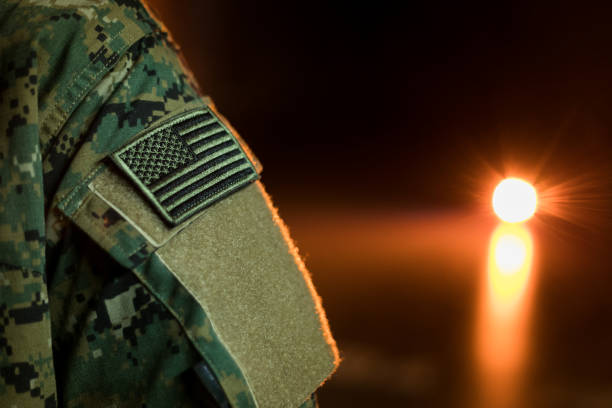
You might think uniforms are the last thing a two-year-old military service should worry about. And for a while, you’d be right. The early Space Force members simply wore standard Air Force fatigues with a new patch. But as the service matured and tried to establish its own identity, the slow rollout of distinct uniforms and branding turned into a bureaucratic turf war between agencies that have very different definitions of “mission readiness.”
The core tension is between the Space Force’s own leadership and the Defense Logistics Agency (DLA), along with the Air Force’s uniform board. The DLA is the massive supply chain operation that buys every boot, shirt, and badge for the entire Department of Defense. They operate on scale. They want one uniform for everyone, because one uniform is cheap, predictable, and easy to warehouse. The Space Force, by contrast, wants a uniform that says “I’m not Air Force, I’m Space Force.” That’s not vanity—it’s culture. When you’re asking young Americans to sign up for a new branch with no combat tradition, no shared history, and no barracks stories, a distinct look matters. It’s the difference between being “the nerdy offshoot of the Air Force” and “the guardians of the high frontier.”
The first major flashpoint was the camouflage pattern. In 2021, the Space Force unveiled a new woodland-style uniform called the “OCP-A,” tweaked with darker shades and a more urban aesthetic. The DLA immediately pushed back. They argued that developing a new camouflage pattern is a multi-million-dollar process requiring years of testing across different terrains. They pointed out that Space Force personnel operate almost exclusively indoors, in bunkers, or at fixed ground stations. Why spend millions on camo that will never be used in a forest? The Space Force’s answer was blunt: because every other service has their own pattern, and a service without a unique pattern looks like a temporary office reorganization.
Then came the ranks and patches. The Space Force decided to use the same rank structure as the Air Force, but with silver-and-blue insignia instead of silver-and-blue. Sounds simple, right? Wrong. The DLA’s supply system has been optimized for the same Air Force chevrons since 1947. Every variation requires a new national stock number, new production contracts, and new inventory slots. The Government Accountability Office even flagged the Space Force’s uniform spending as a potential duplication of effort, warning that the service was “reinventing the wheel” at taxpayer expense.
The uniform controversy also bleeds into a deeper warfighting domain question. The Space Force’s mission is to protect U.S. assets in orbit—satellites, GPS, communications, missile warning. That’s a cybersecurity and satellite control job, not a ground combat job. Critics inside the Pentagon’s acquisition agencies argue that money spent on custom uniforms and shiny badges is money not spent on ground terminals, hardened command centers, or anti-jamming tech. They see the branding push as a distraction from the real threat: China and Russia’s rapidly advancing counterspace weapons.
But that criticism misses the point. The Space Force isn’t just a job—it’s a culture. Culture is built on symbols. When you walk into a building and see a guard wearing a uniform that looks exactly like an Air Force uniform, you assume you’re dealing with the Air Force. That’s bad for morale, bad for recruitment, and bad for the clear-eyed professionalism this domain requires. The Space Force needs its own visual language to signal that operating in the orbital environment is fundamentally different from operating in the atmosphere. A satellite operator who controls a multi-hundred-million-dollar spacecraft deserves a uniform that says “I’m an operator in a unique warfighting domain,” not “I’m a logistics clerk who got reassigned.”
The agencies are not wrong to guard the budget. The DLA is paid to be cheap, and the GAO is paid to catch waste. But the Space Force has a point too. In the long run, the cost of a custom uniform is a rounding error next to the cost of losing the talent war to SpaceX, Palantir, or any private company that offers hoodies, jeans, and stock options instead of a generic camo uniform.
The controversy isn’t going away. The Space Force just approved a new service dress uniform for 2024 with a high-collar “mandarin” style that looks more like a Starfleet officer than a traditional U.S. soldier. The DLA is already bracing for the procurement headache. But for American men in their 20s looking at a future in space—whether as a guardian, a civilian engineer, or a commercial astronaut—this fight matters. It signals that the Space Force is serious about being its own service, not a rebranded cubicle farm. The uniforms are the meter. And for now, the agencies are losing the argument.
Space News
Latest Articles
New rockets, upcoming launches, and the stories shaping humanity's push off this planet. No astronomy degree required.