TRAPPIST-1 and the seven Earth-size planets
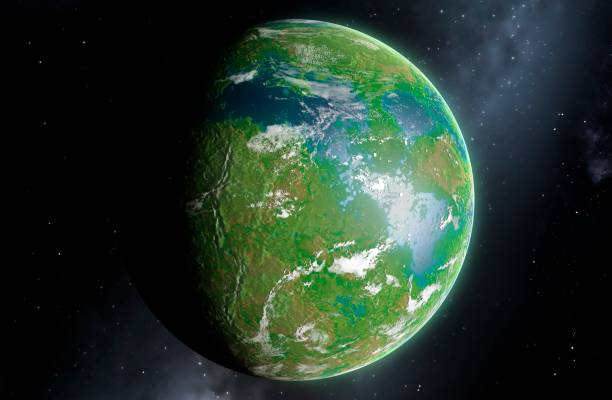
Let’s cut to the chase: TRAPPIST-1 is a small, cool star with 12 percent of our sun’s mass and barely 8 percent of its brightness. But what it lacks in size, it makes up for in planetary density. The seven planets—designated TRAPPIST-1b through h—are all roughly the same size as Earth, with masses between 0.3 and 1.5 times our own. That’s not a coincidence. This system formed in a compact disk of debris, and the planets ended up packed closer together than the moons of Jupiter. If you stood on the surface of one, you could see the others in the sky like glowing marbles. That’s not science fiction—that’s the raw geometry of a system designed by gravity.
Now, for the practical question: which ones are actually worth visiting? The habitable zone around TRAPPIST-1 is tight, but three planets sit squarely in it: e, f, and g. Planet e is the most promising. It’s about 92 percent of Earth’s mass, orbits the star every 6.1 days, and receives roughly the same amount of stellar energy as Earth gets from the sun. That’s the sweet spot. No runaway greenhouse effect. No permanent ice age. Just a rocky world with a likely nitrogen-oxygen atmosphere if geological activity has kept it punching. Planet f is slightly cooler and further out, but still within the zone. Planet g is the outermost of the three—close enough to stay warm, but far enough that it might have a thicker atmosphere to trap heat. All three are tidally locked, meaning one side always faces the star. But that doesn’t kill the deal. A stable atmosphere can circulate heat around the planet, creating a habitable band along the terminator line—the ring of perpetual twilight between scorching day and frozen night.
The other four planets are either too close or too far. TRAPPIST-1b and c are baked. They orbit in 1.5 and 2.4 days respectively. The surface temperatures likely exceed 400°F, and any water would have been boiled off long ago. Planet d is a wild card—it’s right at the inner edge of the habitable zone, but recent observations suggest it might be a Venus-like world with a thick, crushing atmosphere. Skip it. And TRAPPIST-1h is a cold rock—too far out to hold liquid water without a massive greenhouse effect that we don’t see evidence for.
So why should a 20-something American care about this system when we can’t even get to Mars with current tech? Because the future of space travel isn’t just about the next decade—it’s about the next century. TRAPPIST-1 is the best candidate for interstellar colonization we’ve ever found. It’s forty light-years away, which is a 400-year trip at current propulsion speeds. But that’s not the point. The point is that this system gives engineers and physicists a target. It tells us what kind of technology we need to develop: light sails, nuclear fusion drives, or even generation ships. It’s not a pipe dream—it’s a destination with real, measurable properties. NASA has already studied the atmospheres of these planets using the James Webb Space Telescope. Early results show that TRAPPIST-1b and c probably have no atmosphere at all—baked off by stellar flares. But planets e and f show signs of carbon dioxide and potential water vapor. That’s not proof of life, but it’s proof of a dynamic planet that’s worth a closer look.
For the space enthusiast who wants to keep up with the future of space travel, TRAPPIST-1 is the system to watch. It’s not just another exoplanet discovery. It’s a roadmap. Every time JWST trains its mirrors on those seven dots, we learn something new about where humans could live, what they’d need to survive, and how close we are to actually getting there. The next generation of space telescopes will resolve surface maps of these worlds. The next generation of propulsion engineers will use them as a benchmark. And maybe, one day, a human will stand in that band of twilight on TRAPPIST-1e, looking up at six other Earth-size worlds in the sky. That’s not just a destination. That’s the reason we keep looking up.
Space News
Latest Articles
New rockets, upcoming launches, and the stories shaping humanity's push off this planet. No astronomy degree required.