Venus Cloud Cities: The Forgotten Twin’s Best Shot at Human Settlement
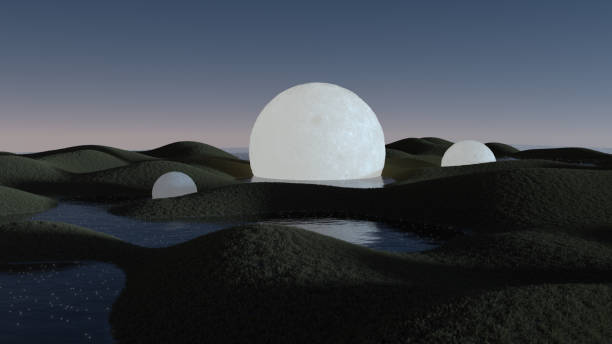
The big idea is a cloud city. Not a dome on the ground. A floating habitat, probably a balloon or a fleet of balloons, drifting in Venus’s upper atmosphere. The air you breathe on Earth is a lifting gas on Venus because Venus’s atmosphere is mostly carbon dioxide, which is denser than nitrogen and oxygen. So a habitat filled with regular air would float naturally. If it leaks, you do not die instantly. You lose lift, but you have time to fix it. That is a huge safety advantage over a Mars base, where a leak means vacuum and death in minutes. On Venus, a leak means you sink slowly into thicker air.
Solar power is another win. Venus is closer to the sun than Earth, so solar panels get more energy. The clouds are thick below, but above them you have direct sunlight. A cloud city could run on solar arrays without the nuclear reactors or giant batteries that Mars bases need. The atmosphere also blocks a lot of radiation. On Mars, you are exposed to cosmic rays and solar storms because the planet has almost no magnetic field and a thin atmosphere. On Venus, the thick atmosphere above and below you provides shielding. You still have to worry about galactic cosmic rays, but it is not the same open-air risk. That matters for a long-term settlement. You want a place where people can live, not just survive.
Then there is the commute. Venus is closer to Earth than Mars. A Hohmann transfer to Venus takes about five months, and launch windows open every 19 months. Mars takes about seven months, with windows every 26 months. That means more frequent resupply and fewer missed opportunities. Communication delay is also shorter. At closest approach, a signal to Venus takes about two and a half minutes one way. To Mars, it can be over 20 minutes. If something goes wrong, you want a shorter conversation with mission control. Venus is not a weekend trip, but it is less isolated.
The problems are real. Sulfuric acid eats metal, plastic, and skin. Any habitat needs a tough outer layer, probably Teflon or a similar acid-resistant coating. You need to test materials for years, not months. Water is scarce. Venus has almost no hydrogen, so you cannot easily make water from the atmosphere. You would need to import hydrogen from Earth or capture it from asteroids. The winds at cloud level are fast, about 220 miles per hour, but they blow in the same direction as the planet’s rotation. A floating city would just ride the wind. It would circle Venus every four or five days. That is not a dealbreaker.
NASA’s DAVINCI mission will drop a probe through the atmosphere in the early 2030s. VERITAS will map the surface and study the geology. The European Space Agency’s EnVision will follow. They are about understanding the atmosphere, the clouds, and the surface. That data will tell us if a cloud city is possible. If it is, Venus stops being the forgotten twin and becomes the first real off-world home. Mars is a project for the next century. Venus could be a project for this one. It is closer, safer at altitude, and easier to power. The surface is hell, but the sky is the most habitable real estate we have found outside Earth.
Space News
Latest Articles
New rockets, upcoming launches, and the stories shaping humanity's push off this planet. No astronomy degree required.