Whipple shields and the orbital debris protection

The Whipple shield was invented by American astronomer Fred Whipple in 1946, long before the first satellite went up. He understood that a single, thick wall of metal—the kind you might expect in a tank—is actually a terrible idea for orbital debris. When a hypervelocity particle hits a solid plate, it transfers all its kinetic energy instantly, creating a shockwave that punches a clean hole and sends spall (fragments of armor) flying inward. Your spacecraft gets shredded from the inside. Whipple’s insight was deceptively simple: put a thin outer bumper a short distance away from the main pressure hull. When the debris hits that thin sheet, it doesn’t just punch through. It vaporizes. The particle and the bumper material both turn into plasma. That plasma cloud then spreads out across the gap—like water from a garden hose hitting a flat pan—and slams into the real wall with far less concentrated force. Instead of a single penetrating bullet, the back wall sees a wide, diffuse blast that it can easily absorb. This is not a force field. This is applied geometry and materials science.
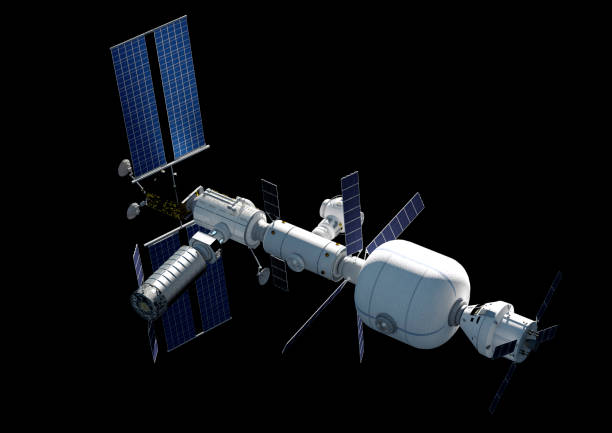
Modern Whipple shields are not just two sheets of aluminum. Engineers have refined the concept into a family of designs that depend on the mission. For the International Space Station, which has to survive for decades, the exposed modules use “Stuffed Whipple” shields. That means there is a third layer in the gap, usually made of Kevlar or Nextel ceramic fabric. These materials catch and break up the plasma and any remaining solid fragments that the first layer missed. The ISS modules have shielding rated for debris up to one centimeter. Anything larger than that, and the station has to maneuver out of the way using its thrusters. But not every spacecraft gets that luxury. Small satellites in low Earth orbit—the kind that provide your internet and GPS—often have no shielding at all. They are too small and too cost-constrained. They accept the risk. For them, a Whipple shield would add mass they cannot afford, and mass is money. A heavy satellite costs more to launch, and in the private sector, margins matter more than invulnerability.
The real challenge for the next decade is not improving the shields themselves, but dealing with the fact that they are no longer optional. The debris population is growing faster than it is decaying. Collisions create more debris, which creates more collisions—a cascade called the Kessler Syndrome. If that tipping point is reached, low Earth orbit becomes unusable. Whipple shields cannot stop that. They can only buy time. That is why NASA and the European Space Agency are now testing advanced materials like high-entropy alloys and woven carbon nanotube sheets. These can dissipate energy more efficiently than aluminum and weigh less. There is also research into “self-healing” multi-layer coatings that seal small punctures before cabin atmosphere bleeds out. But none of these are magic. At the end of the day, a shield is just a sacrifice. It trades mass for survival.
For the casual enthusiast, the takeaway is this: every time you check the weather on your phone, that data came from a satellite that is flying through a shooting gallery. It is protected, in many cases, by a concept that is almost eighty years old. The Whipple shield is not glamorous. It does not hum with blue light or deflect lasers. It is a thin sheet of metal standing in front of another sheet of metal, and it works because the alternative is having a hole punched through your spacecraft by a fleck of paint. That is the future of space travel. Not heroes, not warp drives, but engineers calculating how much Kevlar you need to stop a screw that has been orbiting at Mach 22 since the Cold War.
Space News
Latest Articles
New rockets, upcoming launches, and the stories shaping humanity's push off this planet. No astronomy degree required.