Why Wallops stays under the radar
Wallops is not trying to compete with Cape Canaveral. The facility sits on a narrow spit of land less than a hundred miles north of Norfolk, home to the world’s largest naval base. When you look at launch sites, you have to think about range safety and overflight risk. Cape Canaveral launches due east over the Atlantic, which means rocket debris can fall into open ocean. Vandenberg on the West Coast fires south over the Pacific. Wallops, by contrast, launches southeast over the Atlantic, but its trajectory passes closer to Bermuda and other island chains than Cape’s does. That limits the size of rockets Wallops can handle and the orbital inclinations it can reach. You are not going to see a fully stacked Saturn V or a Falcon Heavy lifting off from Wallops. The pad infrastructure and the available range clearance simply do not support it. That is not a weakness. It is a design choice.
The facility’s bread and butter is smaller rockets. The Northrop Grumman Antares, which carries Cygnus cargo spacecraft to the International Space Station, launches from Wallops. These are medium-lift vehicles, not the super-heavy monsters that grab global attention. Antares flights happen a few times a year, usually without much hype. They are workhorse missions. They resupply the station, and then the rocket stage falls into the ocean. No booster landings, no dramatic reentry burns. Just clean, reliable logistics. Wallops also launches sounding rockets for scientific research. These are suborbital missions that carry experiments into the upper atmosphere for a few minutes before falling back to Earth. They are cheap, quick, and essential for atmospheric science and microgravity research. But they do not make the evening news.
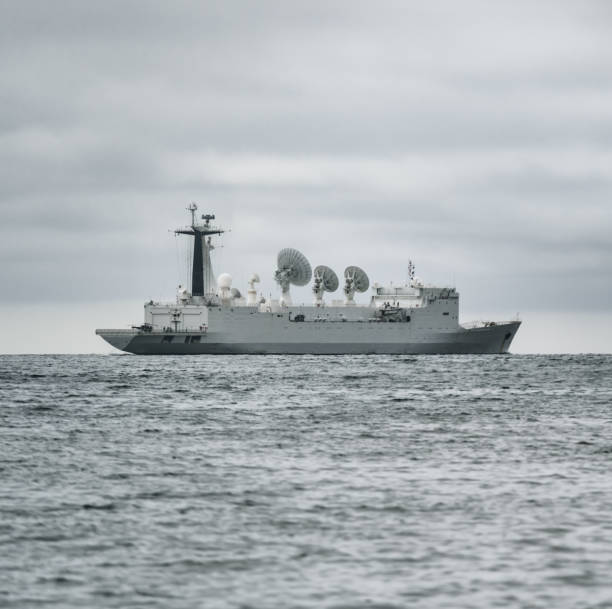
Another reason Wallops stays quiet is its relationship with the Atlantic Fleet. Naval Station Norfolk is a short helicopter ride away, and the U.S. Navy regularly uses the waters off the Virginia coast for training, testing, and exercises. A rocket launch from Wallops requires coordination with the Navy to clear the range. That process is routine, but it means Wallops cannot fire off rockets on a whim. Launch windows are tight. The Navy has priority in those Atlantic waters. When an Antares launch gets delayed, it is often because of naval traffic or weather, not technical issues. The facility works in lockstep with the fleet, not in competition with it. That operational reality further lowers Wallops’ profile. Space enthusiasts do not get excited about launch delays caused by aircraft carrier maneuvers.
Wallops also lacks the tourism infrastructure of the Cape. Kennedy Space Center has a full visitor complex with museum exhibits, IMAX theaters, and astronaut meet-and-greets. Thousands of people show up for every launch. Wallops has a small visitor center and a few beachside viewing spots. When an Antares goes up, you might see a couple hundred cars pulled over on the road to Chincoteague. The local population is sparse. There is no tourist economy built around launch watching. That keeps the facility low-key by default. The media does not send camera crews to Wallops for routine resupply missions. They go to Cape Canaveral for crewed launches and heavy lift events.
What Wallops does best is handle the stuff that does not need a stadium crowd. It runs the NASA Wallops Sounding Rocket Program. It supports the International Space Station cargo chain. It provides a launch site for small satellite companies like Rocket Lab and Astra that need quick access to orbit without the bureaucracy of the Cape. It is, in a very real sense, the working-class launch site. No flash. No hype. Just missions that actually deliver.
Wallops also benefits from being far enough from major population centers that launches rarely cause public disruption. There is no evacuation zone for high-rise condos. No beach closures that anger tourists. The facility sits in a federally managed wildlife refuge. The only neighbors are mosquitoes and wild ponies. That isolation makes it easier to launch without political friction. But it also means the average American never hears about it.
The bottom line is Wallops stays under the radar because it is designed to stay there. The facility does not chase headlines. It chases mission success for medium-lift cargo flights, suborbital science, and small satellite deployment. It works hand in glove with the Navy’s Atlantic Fleet, operates in a remote location, and handles the kind of launches that keep the space program running without the fireworks. For a casual space enthusiast tracking the future of travel and exploration, Wallops is not the sexy headline. It is the silent engine in the background. That is exactly how the facility wants it.
Space News
Latest Articles
New rockets, upcoming launches, and the stories shaping humanity's push off this planet. No astronomy degree required.