Chang'e lunar sample return missions
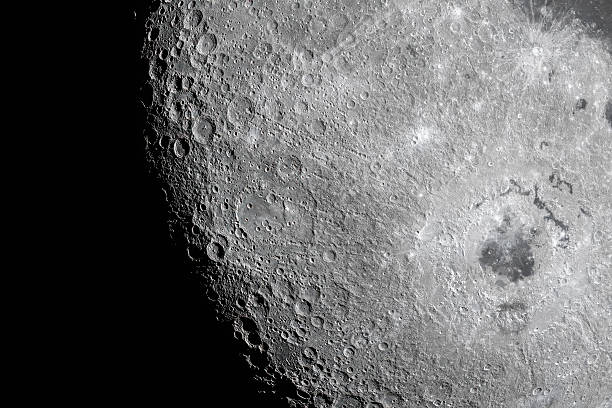
First, let’s get the basics straight. The Chang’e program is named after the Chinese moon goddess, but there’s nothing mythological about the engineering. CNSA started the series with orbiters and landers (Chang’e-1 and -2), then pulled off the first soft landing on the Moon in decades with Chang’e-3 and its Yutu rover. But the real flex came with Chang’e-5, launched in November 2020. This wasn’t a drive-around-and-send-back-photos mission. This was a robotic sample return—the first since the Soviet Union’s Luna 24 in 1976. The goal was to grab up to two kilograms of lunar regolith from a volcanic region called Oceanus Procellarum and fly it home. And CNSA pulled it off in just 23 days.
What made this mission a watershed moment for CNSA wasn’t just the science. It was the organizational maturity. Running a sample return requires a multi-vehicle choreography: an orbiter, a lander, an ascent vehicle, and a reentry capsule, all working together autonomously from lunar orbit to surface operations. CNSA coordinated these elements through the Beijing Aerospace Flight Control Center, managing communications delays, orbital mechanics, and real-time hazard avoidance. When the lander touched down, it used a robotic arm and a drill to collect both surface and subsurface samples. Then the ascent stage launched from the Moon, docked with the waiting orbiter, transferred the sealed sample container, and sent the return capsule barreling back to Earth. The capsule landed in Inner Mongolia, and CNSA teams recovered it within hours. That level of precision, across multiple phases of flight, requires an agency with deep technical bench strength and a culture that does not tolerate failure.
Now here’s where the agency angle gets interesting. CNSA operates differently than NASA or ESA. It’s a state-run organization under the People’s Liberation Army’s General Armaments Department, which means it has direct access to military-grade rocketry, encryption, and supply chain security. It does not disclose budgets or detailed failure analyses the way Western agencies do. But that secrecy comes with an upside for execution. Decisions are made fast. When the Long March 5 rocket—the heavy lifter needed for Chang’e-5—suffered a failure in 2017, CNSA didn’t hold public hearings. It fixed the issue, tested, and flew again. The result was a sample return mission that ran on schedule. Compare that to the delays NASA has experienced with SLS or Starliner, and you begin to see why CNSA is increasingly seen as the agency that actually delivers.
The next mission, Chang’e-6, is scheduled for launch in 2025 and will push the envelope even further. It’s targeting the Moon’s far side, specifically the South Pole-Aitken Basin, a crater region that hasn’t been sampled before. That means CNSA will need to pull off a sample return from terrain that has no direct line-of-sight to Earth. Communications will have to go through a relay satellite parked at the Earth-Moon L2 point. If successful, it will be the first ever far-side sample return, giving scientists access to rocks that could hold clues about the Moon’s early impact history. This is not a vanity mission. It’s CNSA flexing its ability to operate in deep space where no other agency has tried a robotic grab-and-go.
For an American audience used to thinking of space as a NASA-dominated arena, the takeaway is simple. CNSA is not a junior partner or a copycat. It is a self-sufficient national agency that has mastered the full cycle of lunar exploration, from launch to landing to sample return. It does this with older rocket technology in many cases, but with newer operational thinking. The agency’s leadership under Zhang Kejian has emphasized “cooperation and openness” in public statements, but the reality is that CNSA picks its partners carefully and does not rely on Western components. That autonomy is exactly why China’s lunar program keeps hitting its marks.
As the Chang’e series continues, expect CNSA to push for more ambitious targets. There are plans for a permanent lunar research station in the 2030s, likely in conjunction with Russia. But for now, the message from Beijing is clear. The agency that brought back Moon rocks in 2020 is the same one that will be drilling for ice at the south pole before the decade is out. If you’re following the future of space travel, don’t sleep on CNSA. These guys don’t miss.
Space News
Latest Articles
New rockets, upcoming launches, and the stories shaping humanity's push off this planet. No astronomy degree required.