Cosmic microwave background and the bubble collision search
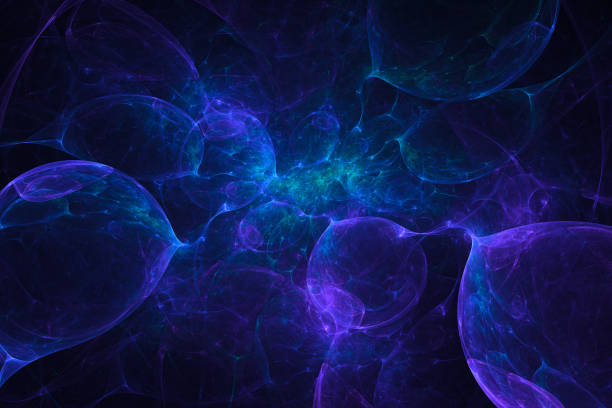
Here’s the straightforward reality. The standard model of cosmology, known as Lambda-CDM, works incredibly well. It explains the CMB’s power spectrum, the distribution of galaxies, and the expansion history of the universe. But it doesn’t explain everything. It doesn’t explain why the Big Bang happened, or what, if anything, came before. That’s where multiverse theories come in, particularly the idea of eternal inflation. In this picture, our universe is just one bubble in a vast, foaming cosmos of other bubble universes, all expanding into a shared high-energy vacuum. Sometimes, those bubbles grow and bump into each other.
If our bubble universe ever collided with another bubble in the distant past, that collision would have left a mark. The impact would have sent ripples through the fabric of spacetime, altering the density of matter and energy in a specific, predictable pattern. That pattern would show up in the CMB as a cold or hot spot with a distinctive circular edge, kind of like the wake of a boat on a calm lake. The detection of such a signal would be the single most profound discovery in the history of science. It would be direct, empirical evidence that we are not alone on the cosmological scale, not just in terms of life, but in terms of fundamental reality.
So, have we found one? The short answer is no, and that’s the interesting part. The WMAP and Planck satellites mapped the CMB with exquisite precision. Teams of scientists have run automated algorithms over every square degree of those maps, looking for the telltale concentric rings or temperature discontinuities that a bubble collision would produce. They have found nothing statistically significant. A few candidates have popped up over the years, such as the famous “Cold Spot” in the southern galactic hemisphere. For a while, that spot generated serious excitement. But follow-up analysis showed it could be explained by a large void in the supercluster structure of our local universe, a mundane astrophysical effect rather than a cosmic scar.
This non-detection is not a failure. It is a constraint. It tells us that if our universe did collide with another bubble, the collision had to have happened very early in inflationary history, or far away in our observable horizon. It also places upper limits on the rate of bubble nucleation in the multiverse. In plain terms, the smoother the CMB turns out to be, the less violent the early universe environment was. This is valuable information for theorists trying to build a consistent model of eternal inflation.
The search continues, but the methodology has matured. Researchers are no longer looking for obvious circles. They are using Bayesian statistics and machine learning to hunt for subtler signatures, such as a systematic polarization pattern or a deficit in the power spectrum on large angular scales. The next generation of CMB experiments, including the Simons Observatory and CMB-S4, will map the polarized component of the CMB with ten times the resolution of Planck. Polarization is a cleaner channel for primordial signals, less contaminated by foreground dust and galaxies. If a bubble collision left a polarized imprint, those experiments have a real shot at spotting it.
For the casual space enthusiast, here is the bottom line. The cosmic microwave background is the oldest photograph we will ever take of the universe. We have already extracted most of the easily accessible information from it. The easy discoveries are done. What remains is the hard stuff, the faint whispers on the edge of detectability that could rewrite physics. The search for bubble collisions is a long shot, but it is a rational, testable hypothesis driven by real theory. It is not pseudoscience or speculation. It is frontier science, and it is happening right now.
So the next time you see one of those CMB maps, remember that every pixel is a data point in a multi-billion-year-old crime scene. We are looking for the cosmic equivalent of a dented fender on an otherwise pristine car. We have not found it yet. But that does not mean we stop looking.
Space News
Latest Articles
New rockets, upcoming launches, and the stories shaping humanity's push off this planet. No astronomy degree required.