Zoo hypothesis and the non-interference idea
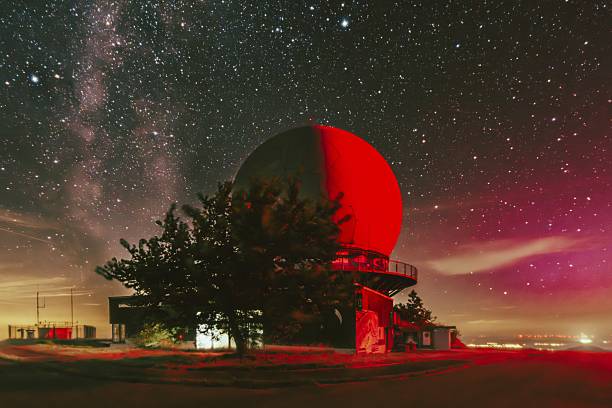
One of the most unsettling—and frankly, humbling—explanations out there is the Zoo Hypothesis. It suggests that advanced extraterrestrial civilizations already know about us. They might have been watching Earth for millions of years. They just choose not to interfere. Not because they can’t, but because they won’t. Think of it like a cosmic wildlife preserve. Humanity is the exhibit. Deep space is the fence.
Here’s the core logic. The Zoo Hypothesis argues that a sufficiently advanced alien species would have the technology to observe our planet from a distance, perhaps from a hidden outpost in the Kuiper Belt or a stationary probe parked in the Oort Cloud. They’d see our wars, our satellite launches, our first clumsy attempts at spaceflight. And they would decide to stay hidden. Why? Because direct contact could derail our natural development. It’s the Prime Directive from Star Trek, but enforced by real physics and a sense of ethical restraint.
Now, let’s get real about what this means for deep space exploration. If the Zoo Hypothesis is true, then every time we push a probe toward the outer planets, we might be brushing up against that invisible fence. Our Voyagers, New Horizons, and future interstellar missions could be seen by these observers as either cute attempts or dangerous provocations. Imagine sending a drone into a national park without asking the rangers. That’s us. The Milky Way is the park. And the rangers might be watching from the dark, cold regions beyond Pluto.
This idea also explains the Great Silence. If multiple civilizations have agreed to a non-interference pact, they’d all keep quiet around developing worlds like ours. Radio silence wouldn’t be a sign of absence. It would be a sign of discipline. They might maintain a low-level observation network across the galaxy, sharing data without breaking the rules. We can’t hear them because they aren’t broadcasting our way. They’re whispering to each other on frequencies we haven’t discovered or using technologies like neutrinos or gravitational waves that we can barely detect.
Critics of the Zoo Hypothesis point out a major problem: coordination. How do you get thousands of star-faring civilizations to agree on a universal non-interference policy? You’d need a stable galactic government or at least a widespread cultural norm. That seems unlikely, given how varied life might be. But this is where the Fermi Paradox cuts both ways. The fact that we see zero evidence of anyone suggests that such coordination might be possible. Or it suggests that interference is so dangerous that any civilization that tries it doesn’t last long. Maybe the first ones who broke the rules got wiped out, and the survivors learned.
For a guy trying to keep up with space travel in the 2020s, the Zoo Hypothesis is more than a sci-fi thought experiment. It has practical implications. If we ever detect an artificial signal from a nearby star, we have to decide whether to answer. That’s a version of the same problem. Should we reach out or stay quiet? The Zoo Hypothesis says the smart play is to keep our heads down. We might already be part of a protected zone, and our best chance to graduate from the zoo to the galactic community is to prove we can handle ourselves without causing a planetary disaster.
In the end, the Zoo Hypothesis is a mirror. It forces us to look at our own behavior. If we were the advanced species, would we interfere with a world like Earth? Would we watch ancient Rome fall, then hop in to prevent World War I? Or would we let humanity figure out its own mess, intervening only if a species was about to nuke itself into extinction? The answer tells us as much about ourselves as it does about aliens.
Deep space is not empty. It’s dark, it’s cold, and it might be full of eyes. The silence we hear is not absence. It might be the sound of a billion civilizations holding their breath, waiting to see if we’re smart enough to join them without breaking the rules.
Space News
Latest Articles
New rockets, upcoming launches, and the stories shaping humanity's push off this planet. No astronomy degree required.