Axion searches and the ADMX experiment
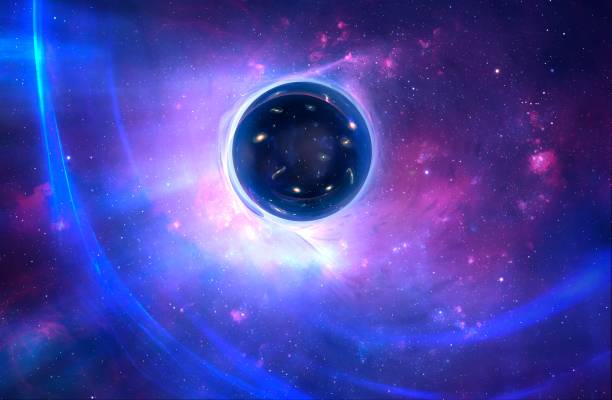
Axions are not like any particle you learned about in high school. They were originally proposed in the 1970s to solve a completely different problem related to the strong nuclear force, but theorists quickly realized they had the right properties to be dark matter. They are incredibly light—trillions of times lighter than an electron—and they barely interact with normal matter. They are not charged. They don’t absorb or emit light. They just drift through the cosmos like ghosts. If axions exist, billions of them are passing through your body every second without you noticing a thing.
That is the bad news. The good news is that axions have a theoretical weakness. In the presence of a strong magnetic field, they can very, very rarely convert into a photon—a particle of light. That conversion is the only realistic way we might detect them. And that is exactly what the Axion Dark Matter eXperiment, or ADMX, is designed to do.
ADMX is located at the University of Washington and basically looks like a giant stainless steel pipe inside a massive superconducting magnet. The whole thing is cryogenically cooled to near absolute zero to eliminate thermal noise. Inside that pipe is a resonant cavity that can be tuned to different frequencies. The idea is simple: if an axion floating through the cavity happens to convert into a photon at just the right frequency, the cavity will resonate and amplify that signal. The experiment then slowly scans through millions of possible frequencies, listening for a whisper in the static.
This is not fast work. ADMX has been running for years and has already ruled out a large range of possible axion masses. But the hunt is accelerating. Recent upgrades have made the detector far more sensitive, and the team is now pushing into the most theoretically favored mass range. If axions are real and they make up dark matter, ADMX has a genuine shot at finding them within the next decade.
Why should you care? Because if ADMX or a similar experiment finds the axion, it changes everything. It would confirm that dark matter is a single, fundamental particle, not some exotic composite object or a flaw in our gravitational theories. It would mean we finally understand what the bulk of the universe is made of. And it would open a completely new window into deep space. Axions would not just be dark matter—they would be a tool. If axions are light enough and abundant enough, they can accumulate around black holes, affect neutron star spin rates, and even produce faint glows in dense magnetic fields. Detecting them on Earth would let us use them as a probe for stuff happening millions of light-years away.
There is also a much stranger possibility. Axions are not just dark matter candidates. If they exist, they could also be the particles that make up a hypothetical fifth force, one that operates at extremely short ranges. That force could subtly influence everything from nuclear decay rates to the behavior of superconducting circuits. In other words, finding an axion would not just solve the dark matter problem. It would force us to rewrite large chunks of particle physics.
Right now, the ADMX team is running in what they call a “quiet” mode, scanning frequencies with a noise floor low enough to detect a signal from an axion field that has been sitting undisturbed since the first few seconds after the Big Bang. That signal, if it comes, will be a faint radio tone, barely above the thermal hiss of the universe itself. But it will be the most important radio signal ever detected. The stars have been telling us for decades that something is out there. ADMX might finally let us answer back.
Until then, the axion remains a hypothesis. But it is a hypothesis backed by solid math, elegant physics, and a growing sense that we are finally looking in the right place. For casual space fans, ADMX is the quietest, coldest, most patient experiment on the planet. And it might just be the one that brings dark matter out of the shadows.
Space News
Latest Articles
New rockets, upcoming launches, and the stories shaping humanity's push off this planet. No astronomy degree required.