Docking simulators and the backup procedure training

Docking simulators today are not crude video games with simplified physics. They run on multi-core workstations that model the full six-degrees-of-freedom dynamics of both vehicles, including the subtle effects of orbital mechanics, thruster plume impingement, and the Coriolis forces that become significant when the target vehicle is rotating for gravity-gradient stabilization. The visual system projects a three-hundred-and-sixty-degree view of the docking target, often rendered with actual star field data from the relevant epoch and lighting conditions that match the orbital sunrise or eclipse the crew will experience. Every thruster input produces a realistic change in the vehicle’s attitude and translation, and every sensor reading from laser rangefinders to optical cameras is simulated to include the kinds of noise or dropout that happen in the real environment. This is not entertainment. It is a proof-of-fidelity training tool where mistakes cost nothing but teach everything.
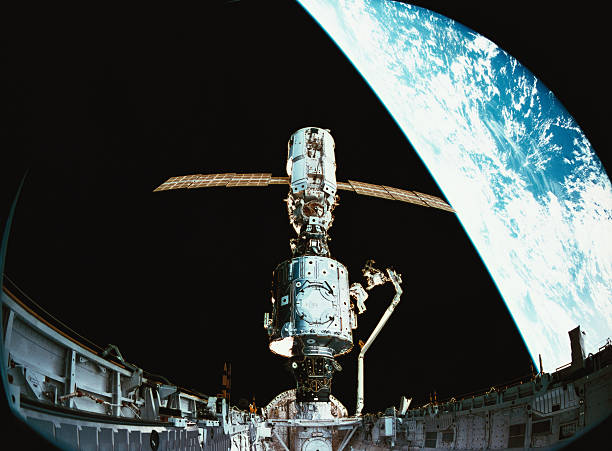
The core of this training is the practice of the nominal docking profile, where the approaching vehicle executes a stable, pre-planned sequence of burns to align its docking port with the target port. Crew members practice flying the trajectory repeatedly until the process becomes reflexive. They learn to read the relative motion display and interpret the rate of closure without consciously calculating numbers. They develop the muscle memory to kill a drift the moment it appears. But nominal operations are only part of the curriculum. The real value of a docking simulator emerges when the crew faces the backup procedures that are rarely needed but absolutely critical.
Backup procedure training for docking is about handling failures in the primary guidance and control systems. These failures are not hypothetical. In 2020, a Russian Progress cargo ship experienced a guidance system fault during a docking attempt that required the crew to manually abort and take over from the ground control station. In 2018, a Soyuz spacecraft suffered a thruster misalignment that forced the crew to execute an unplanned manual docking using a direct rendezvous algorithm. Simulators prepare for these moments by injecting failures into the scenario without warning. The primary computer might stop accepting commands, forcing the crew to switch to a backup controller that uses a different software logic. The laser ranging system might return false readings, requiring the crew to rely on camera-based visual alignment and backup radar data. The hand controller itself can fail, and the crew must learn to fly the vehicle using only keyboard commands or voice-commanded maneuvers. Each backup has its own sequence of steps, its own checklist, and its own failure modes, and simulator time is the only place these sequences can be drilled to the point of automaticity.
The physical layout of the simulation matters. Modern docking simulators frequently use actual flight-certified hand controllers and display panels mounted in a full-scale mock-up of the crew cabin. The seats are positioned to match the exact sight lines the crew will have out the window. The simulation hardware is often wired to the same data bus protocols that the real spacecraft uses, so that when the crew flips a switch in the simulator, the simulated vehicle responds with the same electrical delay and feedback that the real vehicle would produce. This is not a classroom exercise. It is a full-immersion training environment that builds the kind of confidence that cannot be learned from a manual.
The industry-wide move to commercial docking systems, such as the International Docking System Standard used by both SpaceX and Boeing, has made simulator training even more critical. These systems are designed for multiple vehicles from different providers, each with its own guidance software and backup procedures. A commercial crew pilot might need to dock to a station port that was designed for a different spacecraft, using a backup mode that was never tested in flight. Simulators allow the crew to rehearse these mixed-vehicle scenarios before they ever leave the ground.
When a backup procedure works exactly as trained, the public rarely hears about it. That is the point. The failure is handled, the docking is completed, and the mission continues. But the training that made that outcome possible happened months earlier in a simulator bay, where the same failure caused a visible collision on the display and the crew learned exactly what not to do next time. Docking simulators are not a luxury. They are the crucible where human skill meets machine reliability, and they are the reason that the future of space travel will be built on a foundation of digital practice, not luck.
Space News
Latest Articles
New rockets, upcoming launches, and the stories shaping humanity's push off this planet. No astronomy degree required.